
The Biggest Mistake Travelers Make When Planning a Morocco Itinerary
hree Proven One-Week Morocco Itineraries That Actually Work
That is precisely why I have carefully designed three distinct and fully tested one-week Morocco itineraries that work brilliantly in practice. Each option focuses on a specific region of the country, allowing you to truly immerse yourself in the culture, landscape, and atmosphere rather than racing from one postcard sight to the next. Whether you are a first-time visitor or a returning traveler exploring a new corner of this extraordinary country, one of these itineraries is the perfect framework for your trip.
Additionally, for travelers with more flexibility, I have included guidance on longer formats including a Morocco itinerary 7 days deep dive, a Morocco itinerary 10 days extended adventure, and popular structured tours such as the 7 day Morocco tour from Casablanca and the 10 day Morocco tour from Casablanca. I have also covered the most popular desert tour routes, including the 3 day desert tour from Marrakech to Merzouga, the 4 day desert tour from Marrakech to Erg Chebbi, the 4 day desert tour from Marrakech to Fes, and the classic 3 day desert tour from Fes to Marrakech. Whatever your starting point and however many days you have available, there is a perfect Moroccan adventure waiting for you right here.

Understanding Morocco Before You Go
Before diving into the specific itineraries, it is worth taking a moment to understand the country you are about to visit. Morocco sits at the northwestern corner of Africa, separated from Spain by just fourteen kilometers of water at the Strait of Gibraltar. It is a country of extraordinary geographical diversity, ranging from Atlantic and Mediterranean coastlines in the north and west, through the dramatic peaks of the High Atlas Mountains in the center, all the way down to the vast Sahara Desert in the south and east.
This remarkable geographical variety means that Morocco’s cities and regions each carry their own distinct character, climate, and cultural identity. Marrakech, nestled at the foot of the Atlas Mountains, feels completely different from coastal Essaouira just three hours away. Fez in the north feels like an entirely different country compared to the ancient desert kasbahs of the south. Understanding this diversity is absolutely crucial to choosing the right Morocco itinerary for your particular interests, travel style, and the time of year you plan to visit.
When Is the Best Time to Visit Morocco?
Timing your visit correctly can make an enormous difference to your overall experience in Morocco. The most popular and generally recommended periods to visit are spring, specifically March through May, and autumn, specifically September through November. During these shoulder seasons, temperatures are warm but not oppressively hot, tourist crowds are manageable rather than overwhelming, and the landscape is at its most beautiful and photogenic.
Summer in Morocco, particularly July and August, can be brutally hot in inland cities like Marrakech and Fez, where temperatures regularly exceed forty degrees Celsius. However, coastal cities like Essaouira and Agadir benefit from Atlantic breezes that make summer temperatures considerably more bearable. Winter, meanwhile, is more nuanced than many travelers expect. While Marrakech and the coastal cities remain mild and pleasant from December through February, the Atlas Mountains can be snow-covered, and the Sahara Desert can drop to near-freezing temperatures at night. If you are planning a Morocco winter itinerary, packing layers and researching each specific region’s climate in advance is absolutely essential.
Morocco Itinerary Option One: The Magic of Marrakech and Beyond
Why Marrakech Makes the Perfect Base
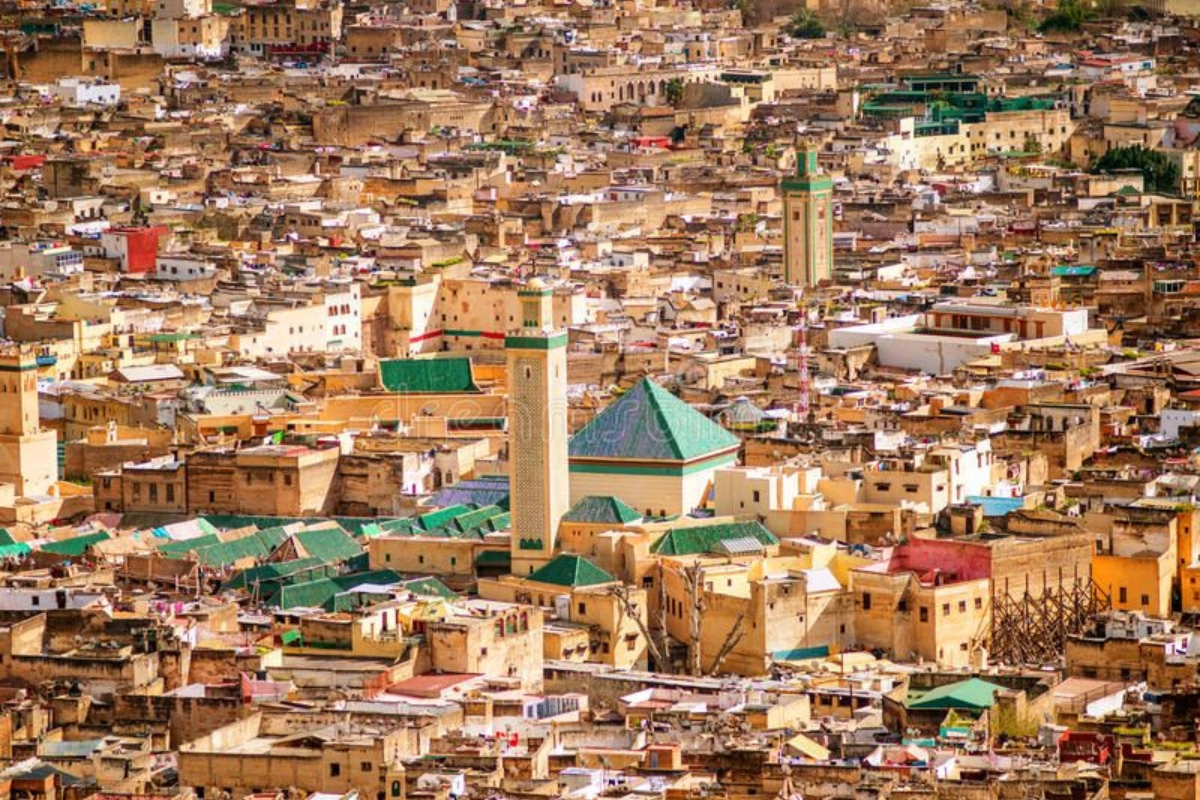
Marrakech is the city that most people picture when they think of Morocco, and for very good reason. It is dramatic, colorful, overwhelming in the best possible way, and absolutely packed with things to see, eat, and experience. The city has been a major trading hub and cultural center for over a thousand years, and that history is visible in every corner of its ancient medina. For first-time visitors planning a one week in Morocco, Marrakech is consistently the most accessible and rewarding starting point.
What makes Marrakech particularly well-suited as the base for this Morocco itinerary is not just the city itself but everything that surrounds it. Within a short distance, you can find snow-capped mountain peaks in the High Atlas, ancient Berber villages in the Ourika Valley, spectacular waterfalls at Setti Fatma, and the charming coastal city of Essaouira on the Atlantic. Using Marrakech as your hub allows you to experience genuine geographical and cultural diversity without the exhausting experience of constantly moving your luggage from one accommodation to the next.
Days One and Two: Diving Deep Into the Marrakech Medina
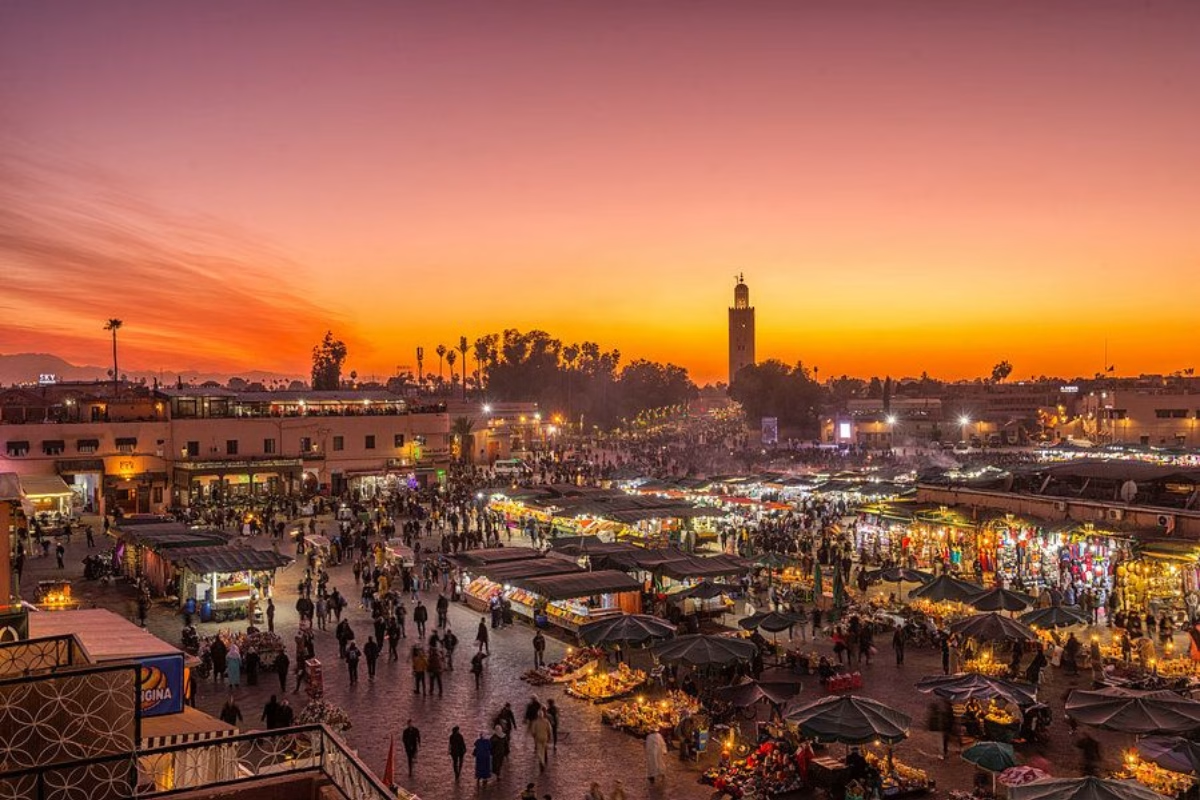
Your first two days should be dedicated entirely to the Marrakech medina, a UNESCO World Heritage Site that has been continuously inhabited for nearly a thousand years. Begin your exploration at Djemaa el-Fna, the famous central square that transforms completely depending on the time of day. In the morning it is relatively calm, filled with orange juice vendors and argan oil sellers. By evening, it becomes one of the most extraordinary spectacles in the world, a vast outdoor theater of storytellers, musicians, acrobats, and food stalls that fills every one of your senses simultaneously.
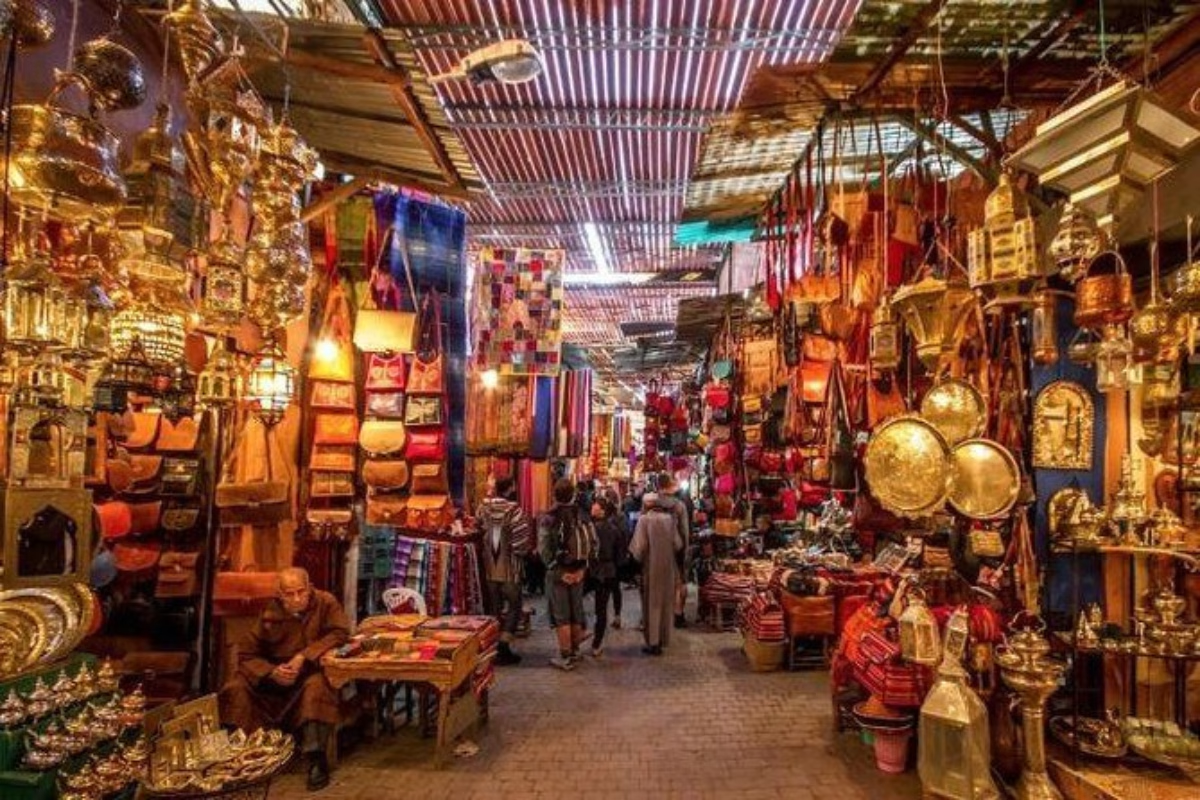
From Djemaa el-Fna, allow yourself to get deliberately lost in the surrounding souks. The market streets of Marrakech are organized loosely by trade, with different areas dedicated to spices, leather, metalwork, textiles, ceramics, and woodcarving. On your second day, dedicate the morning to the Bahia Palace and the Saadian Tombs, two of the city’s most spectacular historical sites located conveniently close together in the southern medina. In the evening, find a rooftop terrace above Djemaa el-Fna, order a pot of mint tea, and watch the square come alive as the sun disappears over the rooftops. This is Morocco at its most magical, and you should not rush it for anything.
Day Three: The Majorelle Garden and Yves Saint Laurent Museum
Day three should begin with a visit to one of Marrakech’s most iconic attractions: the Majorelle Garden. Originally designed by French painter Jacques Majorelle in the 1920s and later purchased and restored by fashion designer Yves Saint Laurent in 1980, this extraordinary garden combines exotic plant species, vivid cobalt blue buildings, and tranquil water features in a setting that feels completely unlike anything else in the city. Arrive early to avoid the largest tour groups and give yourself time to truly absorb the atmosphere.
Immediately adjacent to the Majorelle Garden, you will find the Yves Saint Laurent Museum, a stunning contemporary building that opened in 2017 and houses a permanent collection dedicated to the legendary designer’s work. Even if high fashion is not your primary interest, the museum is worth visiting for its beautifully designed interior spaces and the fascinating story it tells about the deep and creatively transformative relationship between Yves Saint Laurent and the city of Marrakech. Plan to spend at least two to three combined hours at both attractions, and then use the afternoon to explore the Gueliz neighbourhood, Marrakech’s elegant French-built new town, which offers excellent cafés, contemporary art galleries, and a refreshing contrast to the intensity of the medina.

Day Four: A Day Trip to Essaouira
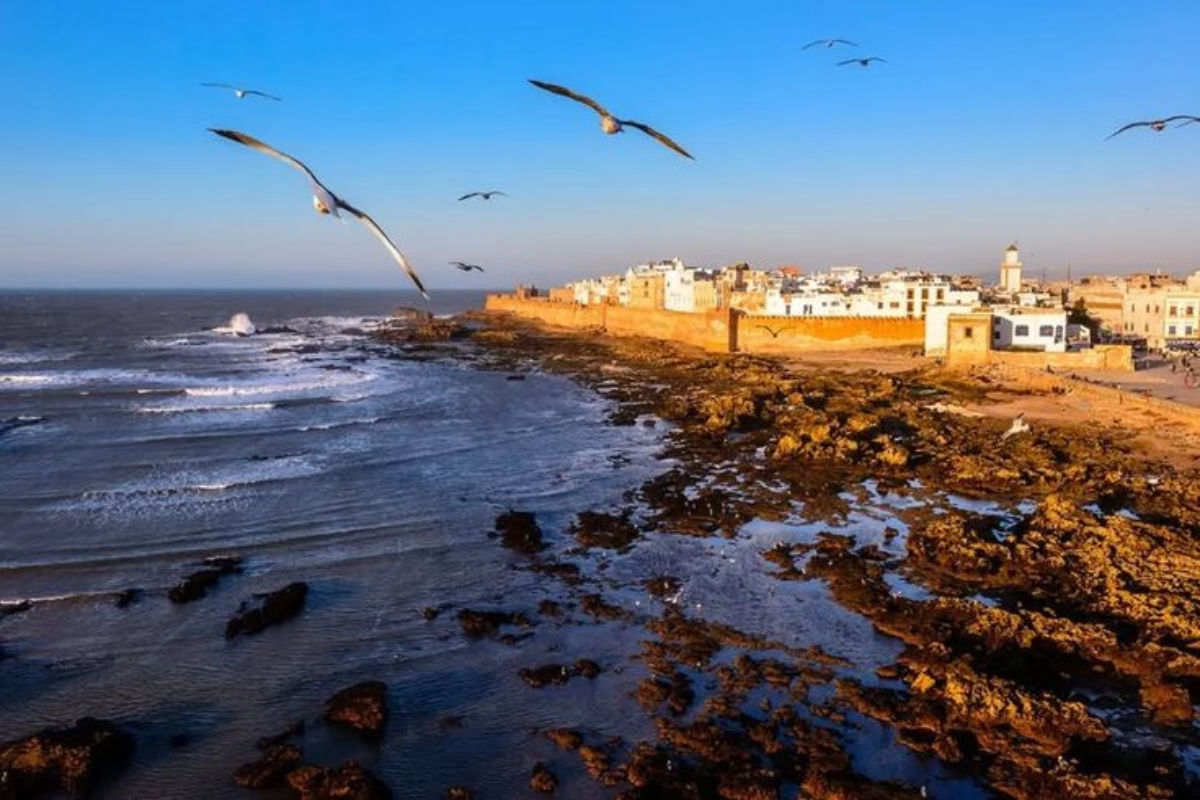
On day four, take full advantage of your Marrakech base with a day trip to the coastal city of Essaouira, approximately three hours away by either private transfer or public bus. Essaouira is everything Marrakech is not: breezy, relaxed, painted in blue and white, and arranged around a dramatic Atlantic coastline that makes you feel like you have been transported to a different continent entirely. The city has long been a favorite of artists, musicians, and independent travelers who find its laid-back atmosphere a deeply welcome contrast to the intensity of Marrakech.
The historic medina of Essaouira is a UNESCO World Heritage Site in its own right, renowned for its well-preserved Portuguese-influenced ramparts, its bustling fishing harbor, and its thriving community of craftspeople working in thuya wood. Spend your morning exploring the medina and the harbor before heading to the long, windswept beach for a lunch of freshly grilled fish at one of the seafood restaurants lining the promenade. Essaouira is famous for its exceptional seafood, and a simple grilled sea bass eaten with the Atlantic breeze in your face is one of the great uncomplicated pleasures of any Morocco trip itinerary.
Day Five: Hiking in the Atlas Mountains
Day five offers the chance to experience a completely different side of Morocco with a guided hiking day trip into the High Atlas Mountains. The most popular destination for day hikes from Marrakech is the Ourika Valley, located approximately sixty kilometers south of the city. The valley is home to a series of traditional Berber villages, a beautiful turquoise river fed by snowmelt in spring, and the spectacular Setti Fatma waterfalls, which can be reached via a moderately challenging forty-minute hike from the village at the valley floor.
Alternatively, for a more challenging and less-visited hiking experience, consider heading to Toubkal National Park and the trailhead village of Imlil, which sits at an altitude of approximately 1,800 meters. The hiking around Imlil is exceptional, offering dramatic mountain scenery, encounters with Berber farming communities, and views that bear absolutely no resemblance to the dusty urban Morocco that most tourists experience. A good local guide is essential and can be easily arranged through virtually any riad or tour operator in Marrakech. The contrast between the Atlas Mountains and the medina is one of the things that makes this particular Morocco itinerary so genuinely satisfying.

Days Six and Seven: Rest, Shopping, and Final Marrakech Experiences
Your final two days should be a relaxed blend of exploration, souk shopping, and any Marrakech experiences you did not manage to fit in earlier in the week. This is the ideal time to visit the magnificent Ben Youssef Madrasa, a fourteenth-century Islamic school whose courtyard is considered one of the finest examples of Moorish architecture in all of North Africa. It is also the perfect moment to treat yourself to a traditional hammam experience, a deeply relaxing ritual of steam, scrubbing, and black soap that has been central to Moroccan bathing culture for centuries and that every visitor to the country should experience at least once.
For shopping, your final days are the ideal time to return to the souks with a clearer head and a better sense of what you want to take home as memories of your Morocco itinerary. Marrakech’s markets offer an extraordinary range of handcrafted goods, from hand-woven Berber rugs and embroidered leather bags to hand-painted ceramics and intricately worked silver jewelry. Bargaining is expected and genuinely enjoyed by most vendors, so do not be shy about negotiating firmly and with a smile. On your final evening, book a table at one of Marrakech’s excellent restaurants and allow yourself a long, unhurried dinner to reflect on everything you have experienced during your remarkable week in this city.
Morocco Itinerary Option Two: Southern Morocco and the Sahara Desert
Why the South Is Unlike Anywhere Else on Earth
Southern Morocco is the Morocco of legend. It is the Morocco of ancient caravan routes, towering golden sand dunes, crumbling mud-brick kasbahs, and skies so full of stars at night that they make you feel genuinely small in the most wonderful possible way. This is a region that rewards adventurous travelers who are willing to embrace longer journey times in exchange for landscapes and experiences that are absolutely unlike anything available in the more easily accessible northern cities.
For most travelers, the most practical and enjoyable approach to southern Morocco is to hire a private driver-guide for at least part of the journey, or alternatively to book a structured small-group tour that handles all logistics on your behalf. The most popular structured options include the 3 day desert tour from Marrakech to Merzouga, the 4 day desert tour from Marrakech to Erg Chebbi, and the 4 day desert tour from Marrakech to Fes, each of which covers the essential southern highlights while managing the significant distances involved. For those with less time, a 2 day desert tour from Marrakech to Zagora is also available and offers a genuine taste of the pre-Saharan landscape without requiring a full week’s commitment to the south.

Day One: Crossing the High Atlas via Tizi n’Tichka
Most international flights into southern Morocco route through Marrakech, making the city your natural starting point for any south-focused Morocco itinerary. From Marrakech, the classic route south takes you over the dramatic Tizi n’Tichka pass, the highest road pass in North Africa at 2,260 meters, through the High Atlas Mountains and down into the pre-Saharan landscape of the Draa Valley. The drive itself is spectacular, with panoramic mountain views, traditional Berber villages clinging to rocky hillsides, and the remarkable transition from green mountain slopes to the ochre and amber tones of the desert landscape below.
This journey also takes you past Aït Benhaddou, arguably the most dramatically beautiful ksar, or fortified village, in the entire country. This extraordinary UNESCO World Heritage Site has served as the filming location for dozens of major productions including Gladiator, Lawrence of Arabia, and Game of Thrones. Allow at least two hours to cross the seasonal river and climb through the ancient alleyways to the granary at the very top, which offers a breathtaking panoramic view across the surrounding desert landscape. Even knowing in advance what to expect, the sight of those ancient mud-brick towers rising against a deep blue North African sky is genuinely moving in a way that photographs never quite capture.
Days Two and Three: The 3 Day Desert Tour from Marrakech to Merzouga
The most famous desert destination in Morocco is undoubtedly the Erg Chebbi dune field near the village of Merzouga, in the far southeastern corner of the country near the Algerian border. This is the destination at the heart of both the 3 day desert tour from Marrakech to Merzouga and the 4 day desert tour from Marrakech to Erg Chebbi, and it is easy to understand why these tours are consistently among the most booked experiences in the entire country. The dunes of Erg Chebbi rise to over 150 meters in places, stretching in every direction in waves of orange, gold, and deep red sand that shift and change with every breath of wind.
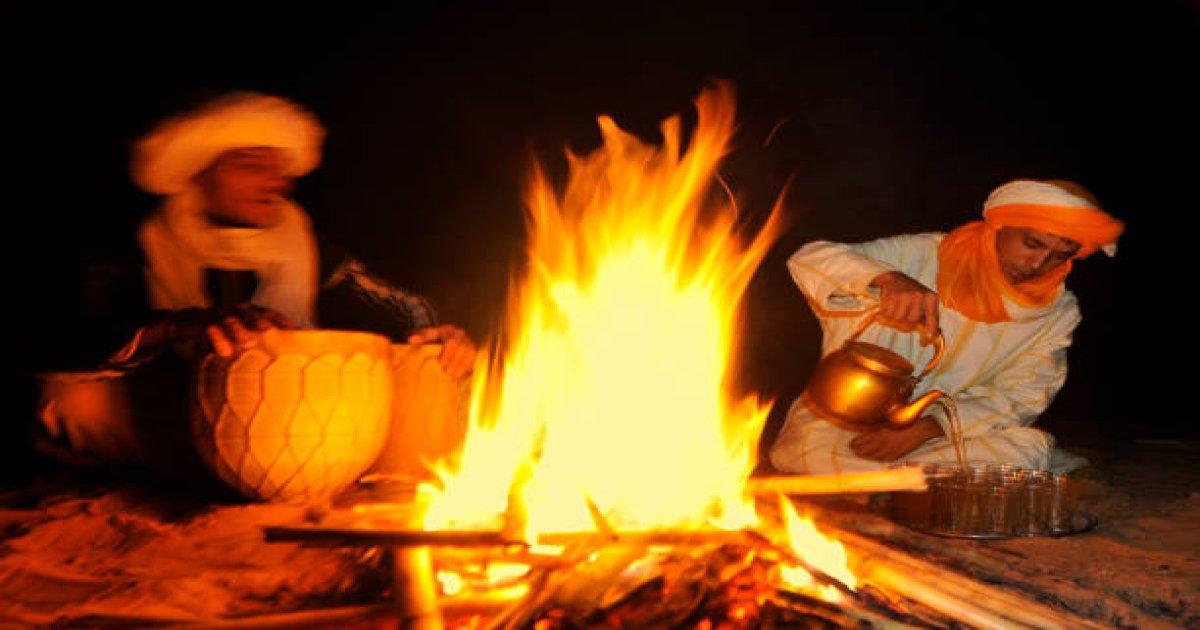
Plan to spend at least two nights in the Merzouga area in order to properly experience the magic of this place. On your first afternoon, organize a camel trek into the dunes to watch the sunset from a high ridge above the sea of sand. Spend your night in one of the many luxury desert camps established within the dunes, where you can sleep under an extraordinary canopy of stars while listening to the silence of the Sahara. Your second day at Merzouga offers the opportunity to explore the surrounding desert landscape more thoroughly, including the fossil-rich black volcanic rock fields to the east, the nomadic Gnawa music communities of the region, and the small village of Khamlia, home to some of the most hypnotic traditional music you will ever hear anywhere in the world.
Day Four: The Valley of Roses and Dadès Gorge
Leaving Merzouga and heading northwest, your journey takes you through two of southern Morocco’s most spectacular natural features: the Valley of Roses near El Kelaa M’Gouna and the extraordinary Dadès Gorge. The Valley of Roses is at its most spectacular in late April and early May when the Damask rose harvest is in full bloom, transforming the entire region into a fragrant landscape of pink and red. Even outside of rose season, the valley is genuinely beautiful, and the locally produced rose water, rose oil, and rose-based cosmetics make wonderfully distinctive Moroccan gifts to take home.
The Dadès Gorge, located a short drive from El Kelaa M’Gouna, is one of the most dramatic natural landscapes in all of Morocco. The road that winds between sheer red rock walls, past ancient kasbahs and Berber villages perched improbably on cliff faces, is truly one of the great scenic drives of North Africa. If at all possible, spend a night in one of the small guesthouses located deep within the gorge, where the only sounds after dark are the river and the wind. Waking up inside the Dadès Gorge to the first light of morning hitting those spectacular red rock walls is an experience that stays with you long after you have returned home.
Day Five: The 5 Day Desert Tour from Marrakech to Fes Route
For travelers following the 4 day desert tour from Marrakech to Fes format, day five begins the northward journey toward Fez through some of Morocco’s most extraordinary and least-visited landscapes. This route takes you through the Ziz Valley, a breathtaking river valley lined with date palm oases and ancient mud-brick villages that appears almost miraculously green against the surrounding desert. The journey also passes through Midelt, a mountain town situated between the Middle Atlas and High Atlas ranges that offers a fascinating transitional landscape unlike anything seen on the more commonly traveled southern circuit.
Furthermore, this route gives you the opportunity to stop at the spectacular Ziz Gorges and the Tunnel du Légionnaire, a dramatic road cut directly through the mountain rock that opens suddenly onto a sweeping panoramic view of the valley below. By the time you arrive in Fez at the end of this extended desert circuit, the contrast between the ancient medina city and the desert landscapes you have just traveled through creates one of the most powerful and memorable transitions in all of Moroccan travel. This is precisely what makes the 4 day desert tour from Marrakech to Fes one of the most satisfying structured itinerary options available.
Days Six and Seven: Return Journey and Final Experiences
Your final days of the southern Morocco itinerary offer time to decompress, explore at a slower pace, and absorb everything you have experienced. If you are following the 3 day desert tour from Fes to Marrakech in reverse, this return journey through the southern landscapes takes on a different quality when traveled in the opposite direction, revealing angles and perspectives that the southward journey did not show you. The road back over the Atlas Mountains to Marrakech, particularly the final descent through the Tizi n’Tichka pass as the late afternoon sun turns the red mountains gold, is one of the great concluding visual experiences of any Morocco road trip itinerary.
Use your final evening in Morocco wisely. Find a good restaurant, order a traditional tagine or a bowl of properly made couscous, drink several glasses of mint tea, and allow yourself to sit with the full weight of everything you have experienced during your extraordinary week in the south. The Sahara Desert has a way of resetting your internal compass in the most profound way. Travelers who have spent even one night sleeping in the dunes consistently report that the experience changes something fundamental in the way they see the world, the night sky, and their own place within both.
Morocco Itinerary Option Three: Fez and Northern Morocco
Why Northern Morocco Deserves Your Full Attention
Fez is one of the oldest and most extraordinary cities in the entire world. Founded in the eighth century, the city’s ancient medina, known as Fes el-Bali, is a UNESCO World Heritage Site widely considered to be the best-preserved medieval Islamic city on the planet. Walking through its nine thousand alleyways, past centuries-old mosques, functioning medieval tanneries, and ancient Quranic schools, is a genuinely otherworldly experience that no amount of travel to other parts of Morocco can fully substitute for or replicate.
Northern Morocco as a whole is significantly less visited than the south and Marrakech, which is simultaneously its greatest challenge and its greatest appeal for travelers who prefer destinations that have not yet been completely reshaped by mass tourism. Cities like Chefchaouen, Tetouan, and Meknes offer extraordinary cultural and historical riches in settings that still feel authentically lived-in rather than curated for tourist consumption. A northern Morocco itinerary is therefore the perfect choice for travelers who prioritize history, architecture, genuine cultural immersion, and the chance to step meaningfully off the beaten path.
Days One and Two: Arriving in Fez and Exploring Fes el-Bali
Fez is served by its own international airport with direct flights from many European cities, making it a perfectly accessible starting point for this northern Morocco itinerary without needing to transit through Marrakech or Casablanca. Your first two days should be dedicated almost entirely to Fes el-Bali, the ancient medina, which is so large, so complex, and so densely packed with history that two full days is genuinely the absolute minimum needed to begin to understand and appreciate it. Resist the temptation to rush.
Hiring a local guide for at least your first day in the medina is not optional advice. It is essential. The medina of Fez has over nine thousand alleyways, many of which are dead ends, and the combination of total sensory overload and genuine navigational difficulty means that independent exploration without any orientation is an exercise in getting completely, hopelessly lost. A skilled local guide will unlock doors, sometimes quite literally, to private palaces, artisan workshops, and hidden architectural treasures that you would never find independently. The investment will transform your entire understanding of this astonishing city and everything it contains.
Day Three: The Tanneries, the Bou Inania Madrasa, and the Souks
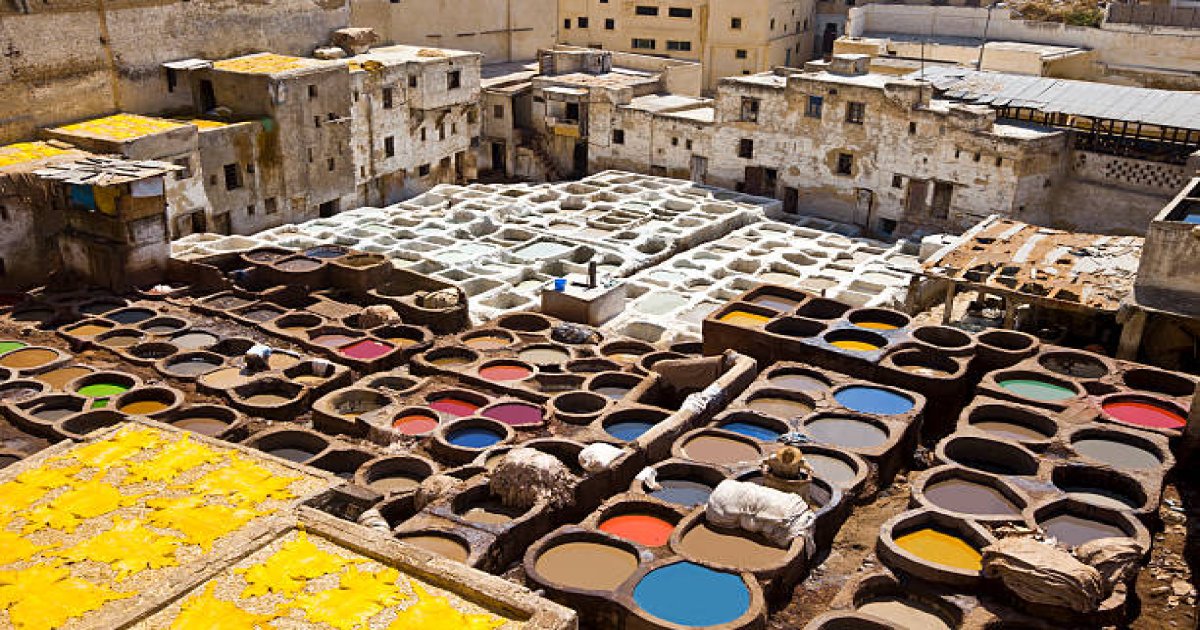
Day three in Fez should be focused on some of the city’s most iconic individual attractions. The Chouara Tannery, one of the oldest leather tanneries in the world, is an experience that engages all five senses, sometimes uncomfortably. From the terraces of the surrounding leather shops, you look down into a medieval landscape of stone vats filled with dyes of vivid yellow, red, and blue, surrounded by workers standing knee-deep in the liquid exactly as their predecessors have done for centuries. It is an extraordinary and profoundly humbling sight that no photograph can fully capture.
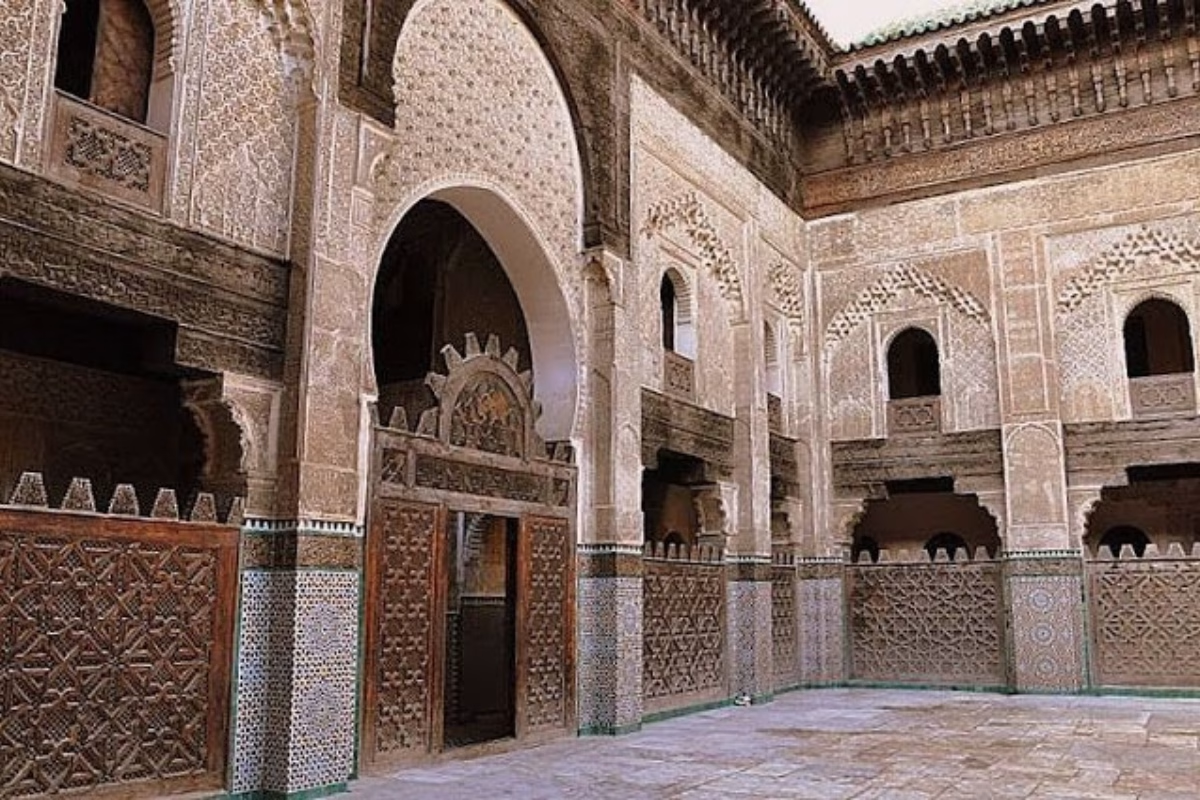
The Bou Inania Madrasa, one of the finest examples of Merinid-era architecture in Morocco, is an absolute must-visit and is in fact the only religious building in the Fez medina currently open to non-Muslim visitors. Built in the fourteenth century as both a religious school and a Friday mosque, it features carved cedar ceilings, intricate tilework, delicate plasterwork walls, and a serene central courtyard that together create one of the most beautiful interior spaces in all of North Africa. Take your time inside this remarkable building. Look closely at every detail. Then reflect for a moment on the fact that craftsmen created this extraordinary perfection centuries ago without any of the modern tools we take entirely for granted today.
Day Four: Meknes and the Roman Ruins of Volubilis
A forty-five-minute drive from Fez brings you to the imperial city of Meknes, the fourth of Morocco’s great imperial cities and consistently the most underestimated by travelers who fail to include it on their Morocco itinerary. Meknes was Morocco’s capital under Sultan Moulay Ismail in the seventeenth century, and the monumental architecture he commissioned during this period genuinely rivals anything found in the more famous imperial cities. The Bab Mansour gate, completed in 1732, is considered one of the finest examples of Moorish architecture anywhere in the Islamic world, and the granaries and stables built to supply Moulay Ismail’s legendary army are a remarkable testament to his extraordinary ambitions.
Just thirty-two kilometers north of Meknes lie the Roman ruins of Volubilis, the best-preserved Roman archaeological site in Morocco and one of the most impressive on the entire African continent. Morocco was once the western frontier of the Roman Empire, and the ruins at Volubilis, including remarkably well-preserved mosaic floors, a triumphal arch, a basilica, and the remains of dozens of Roman townhouses, offer a fascinating window into this often overlooked chapter of the country’s deep history. The site can be visited comfortably in two to three hours, making it a perfect complement to a morning spent in Meknes before returning to Fez for the evening.

Day Five: Chefchaouen — The Unmissable Blue City
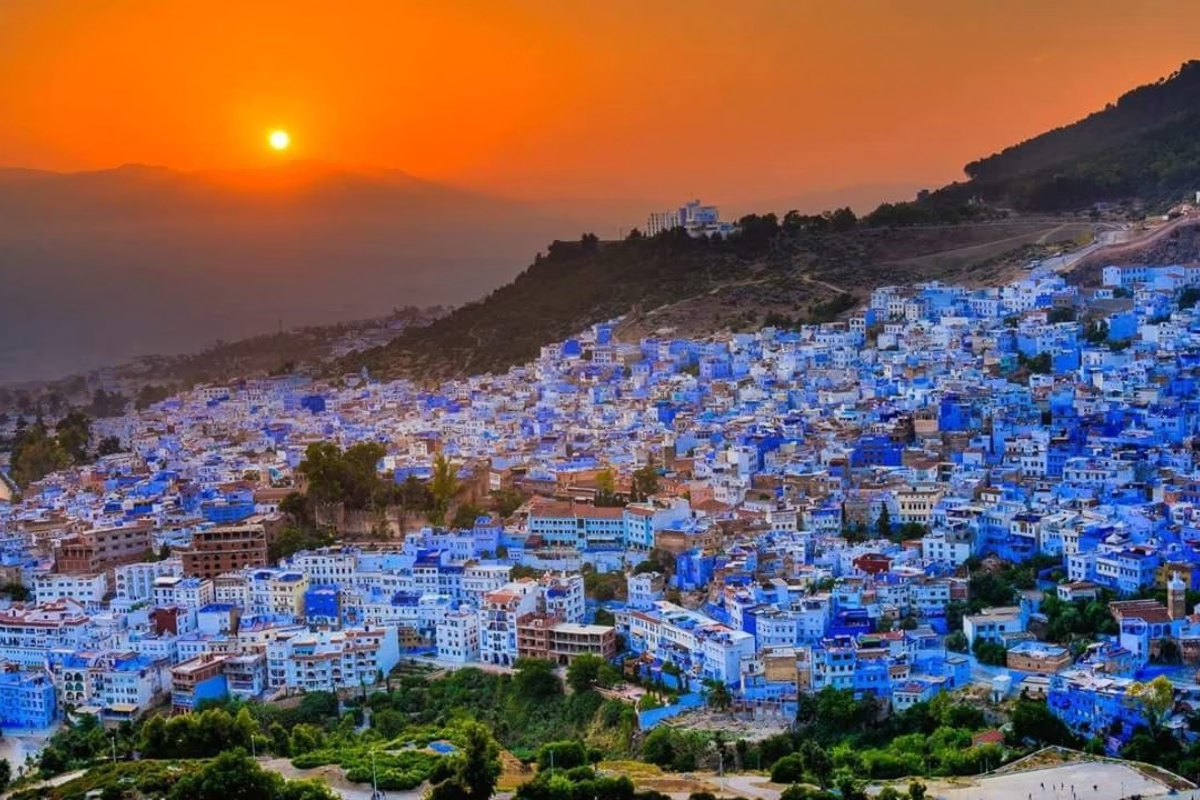
No northern Morocco itinerary is complete without at least one day and night in Chefchaouen, the extraordinary blue-painted mountain city that has become one of the most photographed destinations in all of Africa over the past decade. Located in the Rif Mountains approximately three hours north of Fez, Chefchaouen is a city where nearly every surface of the ancient medina has been painted in shades of blue ranging from pale sky to deep indigo, creating a visual experience that is genuinely unlike anything else you will encounter anywhere in the world.
The city is small enough to explore entirely on foot in a single day, but its photographic and atmospheric riches are so remarkable that one night is really the minimum to do it justice. Wander through the steep, narrow alleyways of the medina in the early morning before the day-trippers arrive from Fez and Tangier, and the blue city reveals itself as a place of extraordinary tranquility and beauty. Climb to the Spanish Mosque above the city for a panoramic view across the rooftops and the surrounding mountains in the late afternoon, and then settle into one of the rooftop restaurants in the main square for dinner as the setting sun turns all that brilliant blue to warm gold. Chefchaouen lives up entirely to its reputation, which is a rarer thing than you might imagine.
Days Six and Seven: The Mediterranean Coast and Return
Your final two days offer the wonderful opportunity to head north to the Mediterranean coast, particularly the historic towns of Tetouan and Martil, before either flying home from Tangier airport or making your way back south to Fez for your departure flight. Tetouan, another UNESCO World Heritage medina, is one of the most authentic and least touristy of Morocco’s historic cities, with a distinctive Andalusian architectural character that directly reflects the waves of Muslim refugees who fled Spain following the Reconquista in the fifteenth century. The medina is genuinely beautiful, the people are consistently welcoming, and the relative absence of mass tourist infrastructure means the experience feels real and unfiltered.
If time and energy allow, a final afternoon on the Mediterranean coast at one of the beaches near Martil is a genuinely lovely way to decompress before your journey home. Swimming in the calm, turquoise Mediterranean with the green hills of northern Morocco behind you and the mountains of Spain visible on the horizon on a clear day is a reminder of just how remarkable this country’s geographic position truly is. Morocco sits at the intersection of Africa and Europe, of the Atlantic and the Mediterranean, of ancient Berber culture and the modern world, and that extraordinary intersection is precisely what makes it one of the most endlessly fascinating countries on earth to explore and to love.
Extended Itinerary Options: 7 Days and 10 Days
Morocco Itinerary 7 Days: Making Every Hour Count
A carefully structured Morocco itinerary 7 days allows you to experience one complete region of the country with genuine depth, or alternatively to combine two complementary destinations with minimal transit stress. The most successful 7-day Morocco itineraries are built around a single geographic focus, whether that is the Marrakech region, the northern cities, or the southern desert circuit. Travelers who attempt to combine all three regions in seven days inevitably sacrifice depth for breadth and leave feeling they have not truly experienced any of them.
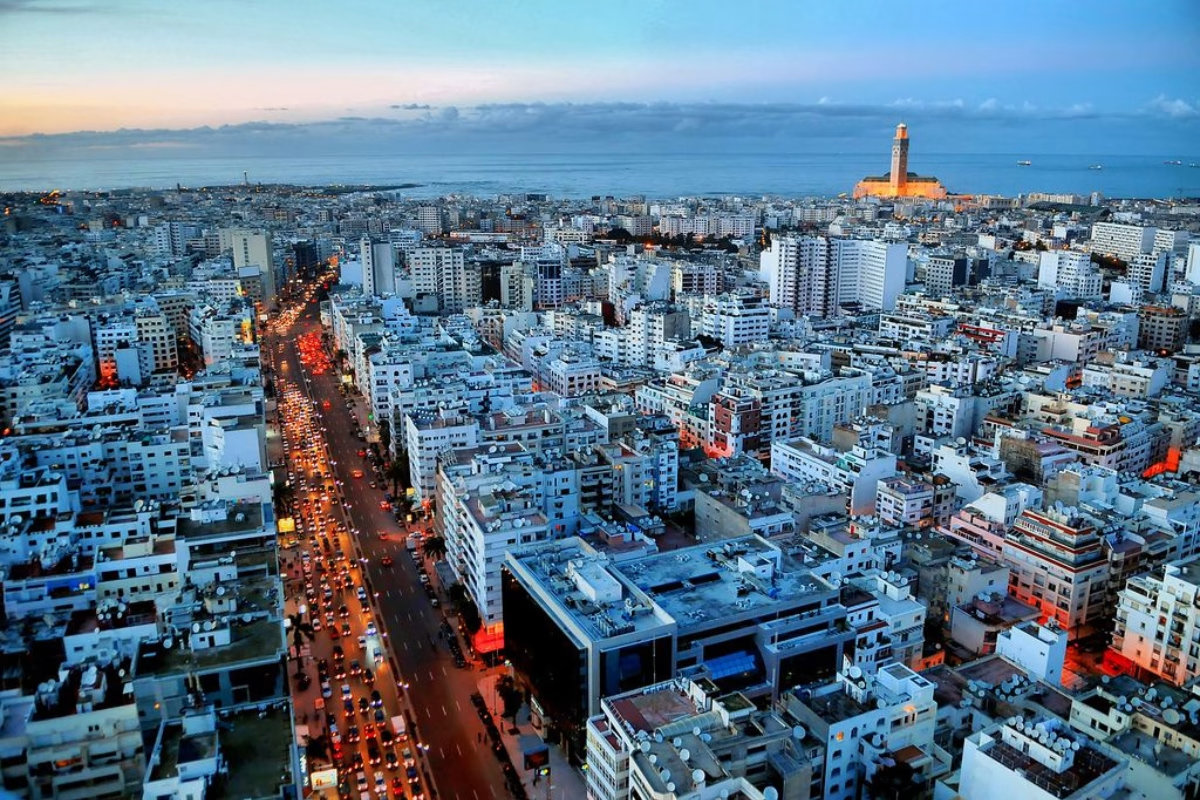
For a 7 day Morocco tour from Casablanca, the most logical and rewarding routing typically begins in Casablanca with a brief orientation, moves south to Marrakech for three nights of intensive exploration, then ventures either into the Atlas Mountains or down to the pre-Saharan region before returning to Casablanca for departure. This structure balances the cosmopolitan energy of Morocco’s largest city with the cultural intensity of Marrakech and the extraordinary natural landscapes that lie beyond it, creating a genuinely rounded introduction to the country for first-time visitors.
Morocco Itinerary 10 Days: The Ultimate Morocco Experience
A Morocco itinerary 10 days is, frankly, the format that genuinely allows you to do this country proper justice. With ten days available, you can combine the cultural riches of both Marrakech and Fez, include a meaningful southern desert excursion, spend time on the Atlantic coast, and still build in sufficient rest days to truly absorb what you are experiencing rather than simply cataloguing it. Ten days is the threshold at which Morocco stops feeling overwhelming and starts feeling like a country you are beginning to understand.
The most popular 10 day Morocco tour from Casablanca typically follows a classic circuit that moves from Casablanca through Rabat, Meknes, Fez, and Chefchaouen in the north, before looping south through the Middle Atlas, Ifrane, Midelt, and Erfoud to reach the Sahara Desert at Merzouga, then returning via the Draa Valley, Ouarzazate, and Aït Benhaddou to Marrakech before the final return to Casablanca. This circuit covers an extraordinary range of Moroccan landscapes and cultural experiences within a manageable timeframe and with enough nights in each location to make the journey feel genuinely immersive rather than frantically rushed.
Practical Tips for Every Morocco Itinerary
Getting Around Morocco
Transportation is one of the most critical practical considerations for any Morocco itinerary, and the best options vary significantly depending on which region you are visiting. In the north, the ONCF rail network connects Casablanca, Rabat, Meknes, Fez, and Tangier with comfortable and reliable train services that represent both the best value and most efficient way to travel between these major cities. Marrakech is connected to Casablanca by a fast train service, though there is currently no direct rail connection between Marrakech and Fez, which requires either a connection in Casablanca or an overnight train.
For destinations not served by train, long-distance buses operated by CTM and Supratours are comfortable, reliable, and affordable. However, journey times in Morocco are almost always longer than they initially appear, and you should always factor in significant buffer time when planning connections and departures. For the desert south and more remote areas, hiring a private car with a driver is by far the most practical and enjoyable option. The cost, when shared among a small group, is often surprisingly reasonable and the flexibility it provides is absolutely invaluable.
Where to Stay: Riads, Desert Camps, and Everything in Between
Morocco offers an extraordinary range of accommodation options to suit every budget and travel style. The most uniquely Moroccan accommodation experience is undoubtedly the riad, a traditional townhouse built around an interior courtyard garden, typically featuring a central fountain, citrus trees, and tilework that creates a genuine oasis of calm within the beautiful chaos of the medina. Staying in a riad in Marrakech or Fez is one of the defining experiences of any Morocco trip, and the range of options spans everything from budget-friendly guesthouses to extraordinary luxury properties with rooftop pools, private hammams, and attentive butler service.
For the desert south, sleeping in a well-appointed desert camp within the Erg Chebbi dunes near Merzouga is genuinely one of the most unforgettable accommodation experiences available anywhere on earth. The camps range from basic traditional setups with shared facilities to genuinely luxurious glamping operations with private en-suite tents, quality bedding, and excellent food served under the stars. Booking in advance is strongly recommended during the peak seasons of spring and autumn, when the best camps fill up many weeks ahead. Whatever your accommodation budget, always read recent traveler reviews carefully, as quality can vary significantly between properties that appear similar on paper.

Food, Drink, and Dining in Morocco
Moroccan food is one of the truly great culinary traditions of the world, and eating well is one of the defining pleasures of any Morocco itinerary. The country’s cuisine draws on Berber, Arab, Andalusian, and sub-Saharan African influences to create a distinctive and deeply satisfying cooking tradition built around slow-cooked tagines, fragrant couscous, fresh bread, vibrant salads, and an extraordinary variety of pastries and sweets. Every meal in Morocco tells a story about the extraordinary civilization that created it over many centuries of cultural exchange and culinary refinement.
Street food is furthermore a huge and unmissable part of Moroccan food culture, and some of the very best eating experiences on any Morocco itinerary are found not in formal restaurants but in the street stalls and market vendors of the ancient medinas. Djemaa el-Fna in Marrakech is particularly famous for its spectacular evening food stalls, where vendors sell everything from freshly grilled merguez sausages to steamed snails and bowl after fragrant bowl of harira, the rich tomato-based soup that is traditionally used to break the fast during Ramadan. Mint tea, served sweet and poured ceremonially from a great height into small glasses, is the universal social lubricant of Moroccan culture, and accepting a cup warmly when it is offered is one of the simplest and most genuine ways to connect with the remarkable people of this country.

Final Thoughts: Making the Most of Your One Week in Morocco
One week in Morocco is not a long time. I will not pretend otherwise. But with the right Morocco itinerary, with a clear focus on a specific region and a genuine commitment to experiencing it deeply rather than rushing through it superficially, one week is absolutely enough time to have an experience that fundamentally changes the way you see the world. Morocco has that power. It is one of those countries that gets under your skin in the most profound and lasting way.
The three core itineraries outlined in this guide represent three very different but equally extraordinary sides of a single remarkable country. The magic and cultural intensity of Marrakech and its mountain and coastal surroundings. The epic desert landscapes and ancient caravan routes of the deep south. The medieval magnificence and cultural depth of Fez and the northern cities. Each of these Morocco itinerary options is complete in itself, capable of delivering a genuinely fulfilling and deeply memorable travel experience within the constraints of a single week. Meanwhile, the extended Morocco itinerary 7 days and Morocco itinerary 10 days formats, along with the popular 7 day Morocco tour from Casablanca and 10 day Morocco tour from Casablanca circuits, offer additional frameworks for travelers who want to go further and deeper into this extraordinary country.
The hardest part, honestly, is simply choosing where to begin. Because here is the secret that every Morocco veteran knows and treasures. No single trip is ever enough. The country is too vast, too varied, and too endlessly surprising to experience fully in one visit. You will come home from your first week in Morocco already planning your return. You will find yourself recommending it to everyone you meet. You will pull up photographs on your phone and attempt to describe the smell of the souks, the silence of the Sahara, the blue of Chefchaouen’s alleyways at dawn, and find that no words are ever quite adequate to the task. That is the Morocco effect. There is absolutely nothing you can do about it except book your ticket, pack your bags, and let this extraordinary country do what it does best.