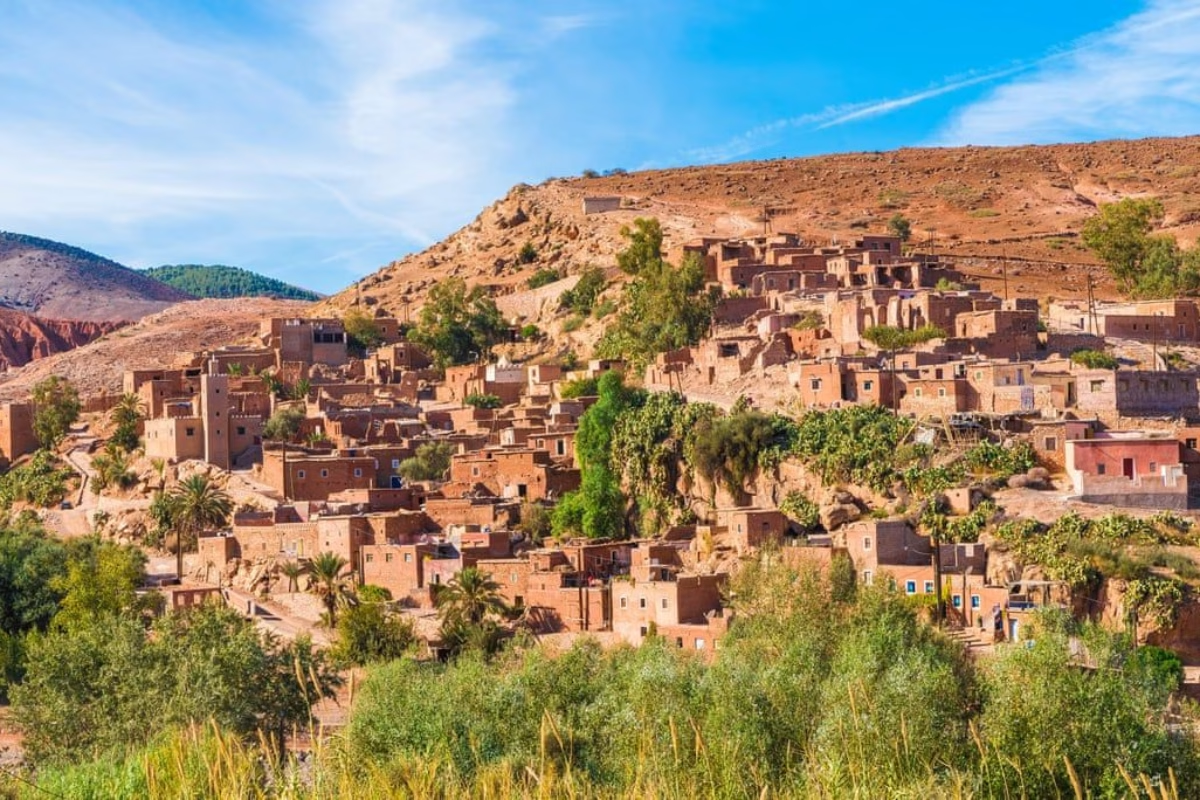
Set between the palm-filled landscapes of the Draa Valley and the rugged volcanic mountains of Jbel Saghro, Nkob Morocco is a traditional Ait Atta village that offers a quieter, more authentic perspective on southern Morocco. Famous for its legendary “45 Kasbahs,” earthen architecture, and lush palm groves, this oasis settlement makes an unforgettable stop for travellers who want to explore beyond the country’s most familiar tourist routes.
Nkob Morocco is particularly appealing to visitors interested in traditional kasbahs, rural Amazigh culture, mountain scenery, and scenic road trips through the south. The village provides a perfect base for discovering the dramatic transition between green oasis landscapes and the rocky, lunar terrain of the Saghro region. It is also an ideal place to slow down during a journey between the Draa Valley and destinations further north or east toward Merzouga.
Although Nkob Morocco is often associated with its stunning collection of mudbrick fortresses, the experience goes far beyond architecture. Visitors can explore quiet village lanes, observe everyday oasis life, enjoy panoramic views of the surrounding Anti-Atlas mountains, and learn how local communities have adapted to a dry desert environment for centuries. This guide covers nine authentic experiences, practical travel advice, and nearby places to consider when planning your visit to this hidden gem.
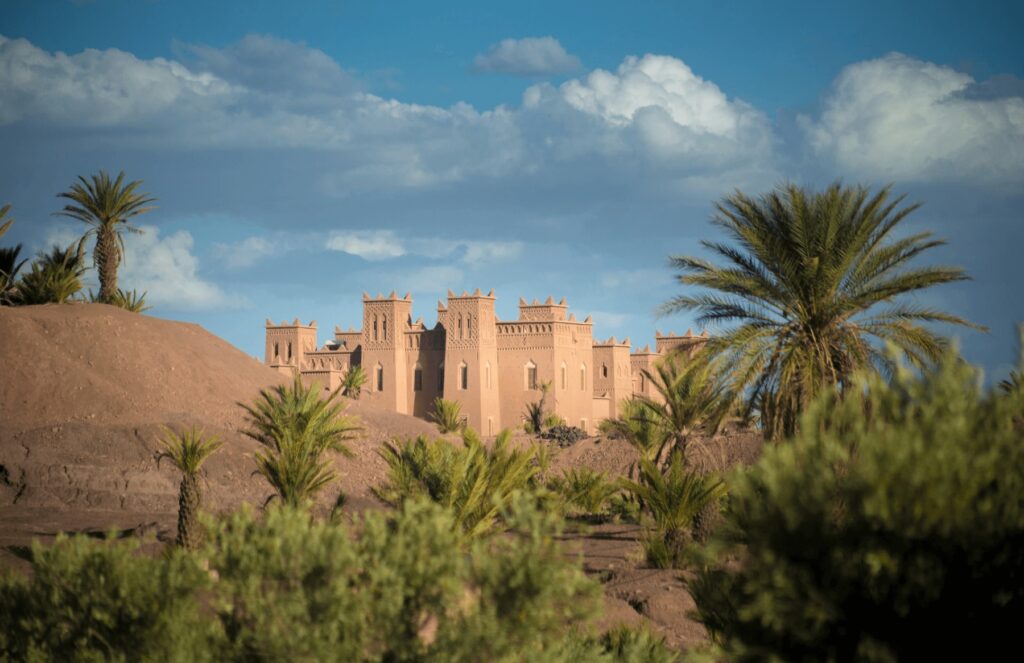
Table of Contents
- 1. Where Is Nkob Morocco Located?
- 2. Why Visit Nkob Morocco?
- 3. Discover the 45 Kasbahs of Nkob Morocco
- 4. Walk Through the Historic Village of Nkob
- 5. Explore the Palm Grove of Nkob Morocco
- 6. Admire the Jbel Saghro Landscape Near Nkob Morocco
- 7. Experience Local Culture and Daily Life in Nkob
- 8. Enjoy Photography and Quiet Views in Nkob Morocco
- 9. Discover Places Around Nkob Morocco
- How to Plan Your Visit to Nkob Morocco
- Frequently Asked Questions
1. Where Is Nkob Morocco Located?
Nkob Morocco (also spelled N’Kob) is a village in the Drâa-Tafilalet region of southeastern Morocco, situated approximately 35 kilometres east of Tansikht and sitting at the gateway between the Draa Valley oases and the wild Jbel Saghro mountains. According to Visit Morocco’s official tourism portal, this area lies along the scenic R108 road that connects the palm-filled Draa Valley with the route toward Merzouga and the Erg Chebbi dunes.
The surrounding landscape changes dramatically as you approach Nkob Morocco. Dense palm groves and cultivated garden plots create vibrant green corridors around the settlement, while the wider countryside is characterised by dark volcanic hills, rocky hamada plains, and the jagged peaks of Jbel Saghro rising to the north. This striking contrast between life-giving water and arid wilderness is one of the features that makes the village visually distinctive and photogenic.
Nkob Morocco can easily be included in a road trip through southern Morocco, particularly for travellers exploring the Draa Valley, the Saghro mountain region, and the routes connecting the inland valleys to the Sahara. Because public transport options are limited compared with larger towns like Ouarzazate or Zagora, it is highly recommended to plan your journey in advance—ideally by booking a Morocco desert tour with private driver that can navigate the mountain passes safely.
2. Why Visit Nkob Morocco?
Nkob Morocco is an ideal destination for travellers who prefer cultural discovery and dramatic landscapes over crowded attractions. Its authentic earthen architecture gives the village a strong visual identity, while its strategic location offers access to a completely different side of southern Morocco than the busy medinas of Marrakech or the tourist camps of Merzouga.
One of the main reasons to visit Nkob Morocco is the extraordinary opportunity to see dozens of traditional kasbahs within a living, working village. Unlike isolated museum sites, these buildings are part of the area’s ongoing heritage and provide real insight into how Amazigh families designed their homes using local materials to withstand extreme desert temperatures.
The village also serves as an excellent educational base for understanding the transition between oasis agriculture and mountain environments. The palm grove, cultivated fields, and dry surrounding hills illustrate how communities make sustainable use of different parts of the landscape. For travellers interested in hiking or off-road adventures, Nkob Morocco can serve as a starting point for exploring the wider Jbel Saghro area, though such excursions require appropriate planning, a 4×4 vehicle, and should never be treated as casual walks without checking conditions first.
3. Discover the 45 Kasbahs of Nkob Morocco
Traditional kasbahs are among the most recognisable and photographed features of Nkob Morocco. The village earned its nickname “The Village of 45 Kasbahs” because of the extraordinary concentration of fortified earthen towers rising directly from the palm groves. Their ochre-coloured walls, crenellated towers, and compact geometric forms reflect architectural traditions found across the pre-Saharan regions of southern Morocco.

These buildings were designed around practical needs as well as aesthetics. Thick rammed-earth walls help moderate indoor temperatures during scorching summers and cold winter nights, while the arrangement of rooms, courtyards, and small windows reflects traditional Amazigh ways of organising domestic and family spaces with privacy and security in mind. The use of local earth as the primary building material—documented extensively in UNESCO’s records on Moroccan earthen heritage—connects the architecture directly to the surrounding landscape.
Walking through Nkob Morocco gives visitors a chance to notice subtle differences between buildings. Some structures are beautifully preserved and operate as heritage guesthouses, others remain private family homes, and a few ruins are slowly returning to the earth. Not every historic property is open to the public, so always ask permission before entering. If you want to learn more about the construction techniques and history, consider arranging a visit with a local guide or asking your accommodation host about suitable viewpoints. A knowledgeable guide can explain the function of different architectural features—such as the defensive towers, grain storage rooms, and irrigation channels—providing context that is impossible to grasp from the outside alone.
Visitors should strictly avoid entering abandoned or unstable structures. Old earthen buildings can deteriorate rapidly, and a building that appears accessible from the road is not necessarily structurally safe to explore inside.
4. Walk Through the Historic Village of Nkob
A slow walk through Nkob Morocco is one of the simplest yet most rewarding ways to appreciate the authentic character of the destination. Rather than rushing directly between a few landmarks, take time to observe the narrow earthen streets, the relationship between the kasbahs and the palm trees, and the way the village sits nestled against the backdrop of Jbel Saghro.
Depending on your route, you may pass traditional houses with carved wooden doors, small family-run shops selling dates and henna, quiet lanes shaded by date palms, and viewpoints offering sweeping vistas toward the mountains. The village is a lived-in place, so everyday activities—farmers tending gardens, children walking to school, elders chatting over mint tea—are all part of the experience. Dress modestly (covering shoulders and knees), wear comfortable closed-toe shoes suitable for uneven dusty surfaces, and if you visit during warmer months, plan your walk for early morning or late afternoon while carrying plenty of drinking water.
Walking with a licensed local guide from Nkob Morocco can make the visit far more meaningful. A guide can explain the history of the Ait Atta settlement, point out hidden architectural details on the kasbah walls, and help you understand which areas are appropriate to enter respectfully.
5. Explore the Palm Grove of Nkob Morocco
The extensive palm grove adds another essential dimension to the landscape of Nkob Morocco. The green oasis contrasts sharply with the dry rocky terrain of Jbel Saghro and demonstrates how agriculture remains deeply connected to local settlement patterns in this arid region.
Walking near the palm grove helps visitors understand the vital relationship between cultivated land, water management, and traditional homes. Depending on the season, you may see farmers harvesting dates, tending irrigation channels called seguias, or growing henna, pomegranates, and alfalfa in the shade of the towering palms. It is important to remember that these are working agricultural landscapes, not public parks. Some paths may pass close to private gardens or cultivated plots, so always ask before entering, avoid walking through crops, and never interfere with the water channels that sustain the entire community.
If you are interested in local agriculture, ask a guide or your host in Nkob Morocco about the crops grown in the area and how seasonal conditions and water scarcity influence farming. This provides a far richer understanding than simply treating the palm trees as a scenic backdrop for photos.
6. Admire the Jbel Saghro Landscape Near Nkob Morocco
One of the most striking advantages of visiting Nkob Morocco is its immediate proximity to Jbel Saghro, a wild volcanic mountain range that links the Anti-Atlas to the High Atlas. This mountain area is known for its rugged rock formations, wide open spaces, dramatic canyons, and a dry lunar landscape that differs completely from the greener sections of the Draa Valley.

The Saghro region is particularly interesting for travellers who enjoy mountain scenery and off-road exploration. Its rocky terrain creates dramatic views, especially during golden hour when changing light highlights the shapes and textures of the black volcanic peaks. Famous landmarks like the rock towers of Bab n’Ali can be reached via a challenging mountain piste connecting Nkob to Boumalne Dades.
However, mountain excursions from Nkob Morocco require significantly more preparation than a short village walk. Routes may be exposed, water sources can be extremely limited, and weather conditions in the mountains can change rapidly. Travellers should check local conditions, choose an activity suitable for their fitness level and experience, and strongly consider hiring a qualified local mountain guide with a 4×4 vehicle. Do not assume that every dirt track is suitable for an ordinary rental car—some routes require high-clearance vehicles and local knowledge. Confirm road conditions before setting out and never attempt unfamiliar mountain routes without reliable guidance.
Even if you do not plan a full trek, the surrounding landscape can be enjoyed from suitable roadside viewpoints near Nkob Morocco. A short scenic stop may be enough to appreciate the dramatic contrast between the dark mountains and the green oasis below.
7. Experience Local Culture and Daily Life in Nkob
Nkob Morocco offers wonderful opportunities to observe everyday life in a traditional southern Moroccan village. The best experiences are often the simplest: walking through appropriate public areas, speaking respectfully with local hosts, and learning about the region’s architecture and agricultural environment.
Local accommodation can be a valuable part of the experience. Staying in a restored heritage kasbah or family-run guesthouse in Nkob Morocco allows you to experience genuine Amazigh hospitality, enjoy home-cooked tagines prepared in earthen ovens, and receive practical advice about places to explore. Ask questions respectfully and remember that hosts are sharing their time and knowledge generously.
Food is also an essential part of discovering this destination. If your accommodation or a local restaurant offers regional Draa Valley dishes, ask about the ingredients and traditional preparation methods. Availability varies by season, so it is sensible to arrange meals in advance if you have specific dietary needs or are travelling outside busy periods. Shopping locally for dates, henna, or handwoven textiles—where suitable options are available—can help support small village businesses. Always ask about prices before purchasing and never assume every resident wants to participate in tourism-related activities.
8. Enjoy Photography and Quiet Views in Nkob Morocco
Nkob Morocco provides an exceptional range of subjects for photographers, from the geometric shapes of earthen kasbahs and rustling palm trees to the dramatic mountain scenery of Jbel Saghro and quiet village streets. The contrast between warm terracotta-coloured buildings and