Khamlia village Morocco offers
a cultural experience unlike
the famous camel
rides and golden dunes of Merzouga. Located near the Erg Chebbi desert, this small southeastern Moroccan village is especially known for its musical traditions, welcoming atmosphere, and connections to the wider history of Saharan communities.
For travelers planning a Morocco desert tour, Khamlia provides an opportunity to discover another side of the Sahara. Beyond dramatic landscapes, the region is home to living communities with distinctive histories, music, food, and traditions.
One of
the village’s best-known attractions
is its association with Gnawa music, a Moroccan musical tradition characterized by rhythmic percussion, distinctive instruments, call-and-response singing, and deep cultural significance.
A visit to Khamlia can include a musical performance, conversations with local residents, a walk through the village, and an introduction to the cultural diversity of the Merzouga region.
This guide explores the best cultural experiences in Khamlia, how to visit from Merzouga, what to expect during a musical performance, and how to support respectful, community-centered tourism.
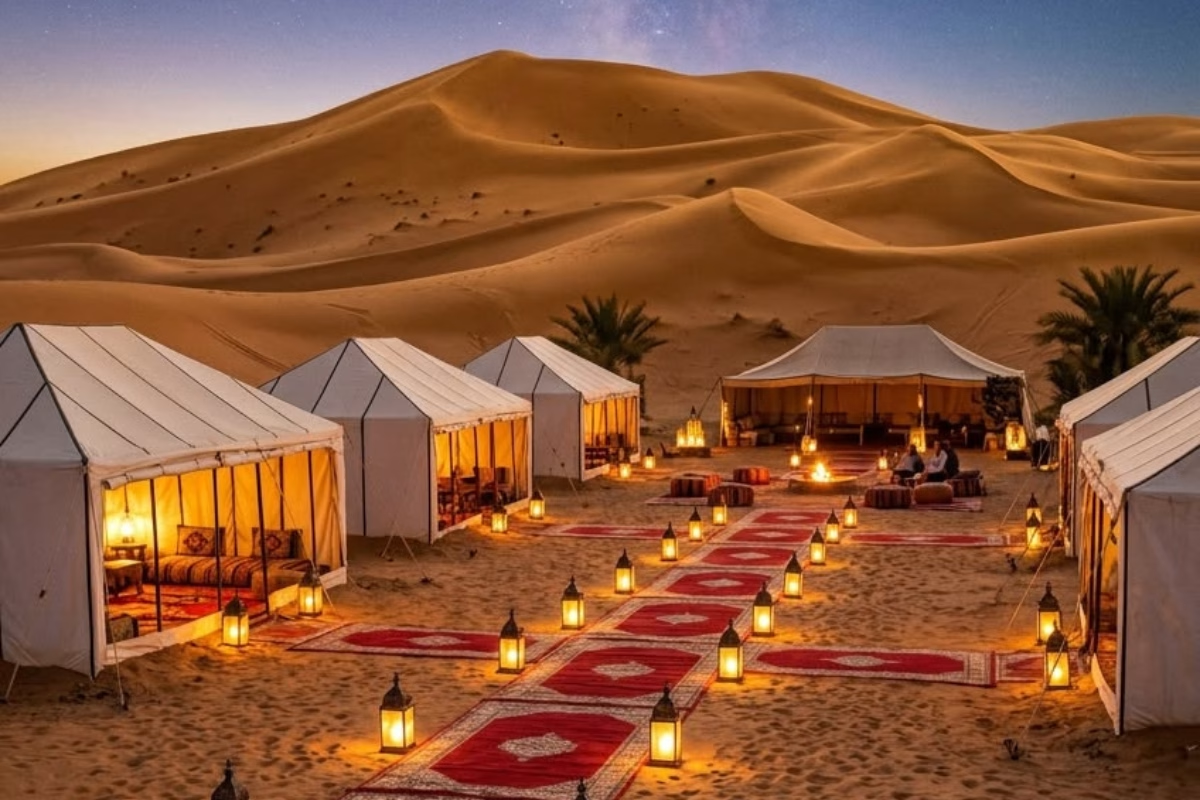
Table of Contents
- Where Is Khamlia Village Morocco?
- Why Visit Khamlia Village?
- The History and Cultural Heritage of Khamlia
- Understanding Gnawa Music in Morocco
- 9 Best Cultural Experiences in Khamlia Village Morocco
- How to Visit Khamlia from Merzouga
- Best Time to Visit Khamlia Village Morocco
- Suggested Half-Day Khamlia Village Itinerary
- How Much Does a Khamlia Visit Cost?
- Responsible Tourism and Cultural Etiquette
- Khamlia Village vs Merzouga Desert Experiences
- Combining Khamlia with a Sahara Desert Tour
- Frequently Asked Questions About Khamlia Village Morocco
- Final Thoughts: Discover the Cultural Side of the Sahara
Where Is Khamlia Village Morocco?
Khamlia is a small village in southeastern Morocco, situated a short distance from Merzouga and the impressive Erg Chebbi sand dunes.
The village lies within the wider Drâa-Tafilalet region, an area known for desert landscapes, oasis settlements, historic trading routes, and cultural diversity.
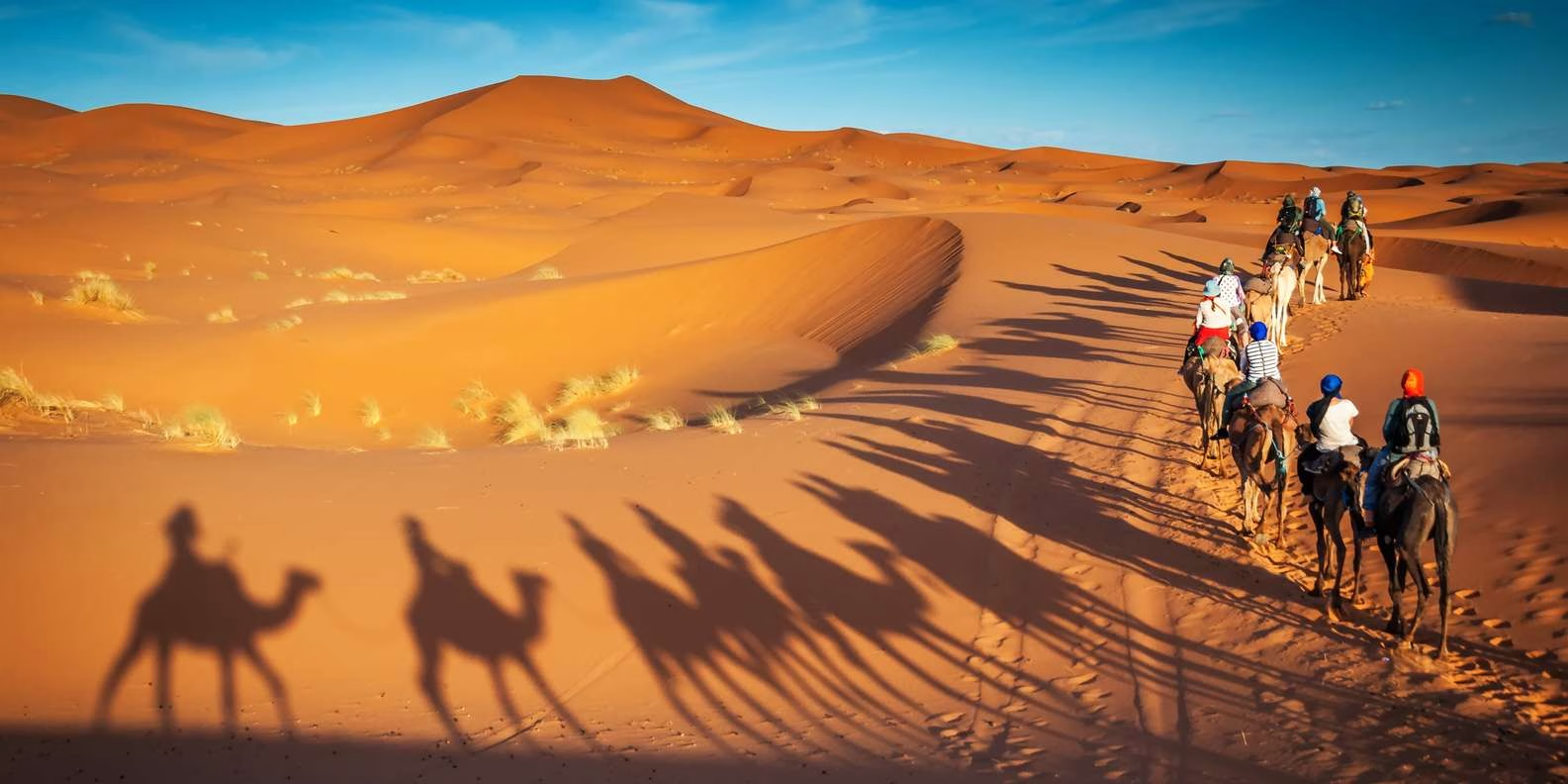
Merzouga is the main tourist gateway to Erg Chebbi, attracting visitors interested in camel trekking, desert camping, photography, and Sahara excursions.
Khamlia offers a complementary experience focused on music and community life.
Travelers commonly visit the village during a local excursion from Merzouga, often combining it with other stops around the dunes.
Although the journey is relatively short, road conditions and the exact departure point can affect travel time.
For visitors unfamiliar with the area, arranging transportation through a local guide or accommodation provider is often convenient.
Why Visit Khamlia Village?
The main reason to visit Khamlia village Morocco is its cultural character.
Many travelers arrive in Merzouga expecting beautiful dunes, sunsets, and overnight desert camps. However, the surrounding region also offers opportunities to learn about music, local traditions, and the communities that live near the Sahara.
Khamlia is particularly associated with musical performances rooted in Gnawa-related traditions.
A village visit can introduce travelers to instruments, rhythms, and musical expressions that differ from the experiences usually featured in conventional desert itineraries.
Other reasons to visit include discovering local hospitality, exploring the village surroundings, and supporting community-based tourism.
The most rewarding visits are approached with curiosity and respect rather than treating the village as a performance created solely for tourists.
The History and Cultural Heritage of Khamlia
Khamlia’s cultural identity is connected to the wider history of southeastern Morocco and the movement of communities across the Sahara.
The region has long been shaped by trade, migration, agriculture, and exchanges between different populations.
Khamlia is particularly associated with communities whose heritage includes connections to sub-Saharan Africa and musical traditions passed down through generations.
These histories are complex and should not be reduced to a single origin story.
Local residents may describe their community’s past through family histories, oral traditions, and cultural practices.
Listening to these perspectives can provide a more meaningful understanding of the village than relying on simplified descriptions found in tourist brochures.
Music remains one of the most visible expressions of Khamlia’s cultural heritage.
However, village life includes far more than performances, and visitors should remember that Khamlia is a residential community with its own daily routines and priorities.
Understanding Gnawa Music in Morocco
Gnawa, also written Gnaoua, refers to a Moroccan musical and cultural tradition with historical connections to communities of sub-Saharan African heritage.
The tradition combines music, rhythm, poetry, and, in certain contexts, spiritual practices.
Gnawa music is widely recognized for its repetitive rhythmic patterns, call-and-response singing, and distinctive instruments.
Traditional Gnawa Instruments
One of the best-known instruments is the guembri, a three-stringed bass lute used in many Gnawa musical traditions.
Metal castanets, commonly called qraqeb or krakebs, create powerful rhythmic patterns.
Vocals may alternate between a lead singer and responding musicians.
Together, these elements create layered musical performances.
The precise instruments and styles encountered in Khamlia can vary by group and occasion.
Is Khamlia Music the Same as All Gnawa Music?
Morocco’s Gnawa tradition was inscribed on UNESCO’s Representative List of the Intangible Cultural Heritage of Humanity in 2019.
9 Best Cultural Experiences in Khamlia Village Morocco
1. Listen to a Traditional Musical Performance
The most popular reason to visit Khamlia village Morocco is to experience a local musical performance.
Visitors may have the opportunity to hear musicians performing rhythmic pieces with percussion, vocals, and traditional instruments.
These performances offer an introduction to the village’s musical identity.
Rather than viewing the experience only as entertainment, pay attention to the musicians’ coordination, rhythmic changes, and interaction.
Performance availability is not guaranteed throughout the day, so confirm arrangements before visiting.
2. Learn About Gnawa Musical Instruments
A cultural visit can be an opportunity to learn about the instruments used in Gnawa-related music.
The guembri and metal qraqeb are especially recognizable within the wider tradition.
If musicians are available to explain their instruments, visitors may discover how different sounds contribute to a performance.
Ask questions respectfully and avoid touching instruments without permission.
Not every performance includes an educational presentation, so arrange this in advance if it is important to your visit.
3. Discover the Village’s Cultural Heritage
Khamlia offers opportunities to learn about the history of local families and the region’s cultural connections.
A knowledgeable community guide can explain aspects of village life, musical heritage, and the surrounding desert environment.
Personal accounts are especially valuable because they provide perspectives that cannot always be captured in general travel guides.
Avoid assuming that every resident shares the same background or wishes to discuss personal history.
Cultural exchange works best when conversations are voluntary and respectful.
4. Enjoy Traditional Moroccan Hospitality
Hospitality is an important part of social life across Morocco.
Depending on the visit arrangements, travelers may be offered tea or welcomed into a space where music and conversation take place.
Accepting hospitality respectfully can create a relaxed atmosphere.
However, visitors should not assume that tea, refreshments, or private home visits are automatically included in every excursion.
Ask your host or guide what is planned and whether any contribution is expected.
5. Explore the Village Surroundings
Khamlia is situated in a distinctive desert environment near Erg Chebbi.
A short walk through accessible public areas can provide views of local architecture, open landscapes, and the surrounding terrain.
The village atmosphere contrasts with the more tourism-focused areas of Merzouga.
Walking at a relaxed pace allows travelers to appreciate the setting without turning the visit into a rushed stop.
Avoid entering private courtyards, homes, or agricultural areas without permission.
6. Meet Local Musicians and Community Members
One of the most meaningful experiences in Khamlia village Morocco can be speaking with local people.
When residents or musicians are happy to engage, visitors may learn about musical training, family traditions, and everyday life.
A local guide can help with language differences and introductions.
Keep conversations respectful and avoid asking intrusive questions about personal backgrounds.
Meaningful cultural experiences depend on mutual interest rather than expecting residents to explain their lives to every visitor.
7. Support Community-Based Cultural Activities
Tourism can provide economic opportunities for musicians, guides, and small local businesses.
Choosing locally organized experiences can help ensure that tourism benefits the people sharing their knowledge and cultural traditions.
When arranging a performance, ask whether payment goes directly to the musicians or the organization hosting the activity.
If there is an entrance fee or suggested contribution, clarify it before the performance begins.
Supporting local cultural activities is more meaningful than simply collecting photographs.
8. Experience Desert Photography Respectfully
Khamlia’s location near Erg Chebbi creates opportunities for landscape photography.
Visitors may photograph desert scenery, village streets, and architectural details from appropriate public locations.
Photographing musicians or residents requires greater care.
Always ask permission before taking identifiable photographs, especially during performances or personal conversations.
Some groups may welcome photography, while others may have restrictions.
If photography is permitted, avoid using flash without agreement and do not interrupt the performance.
9. Combine Music with a Merzouga Desert Excursion
A Khamlia visit fits naturally into a wider exploration of the Merzouga region.
Travelers can combine a musical experience with viewpoints around Erg Chebbi, visits to accessible desert settlements, or other locally arranged activities.
Some regional excursions also include stops associated with desert geology, seasonal lakes, or traditional routes.
Availability depends on weather, road conditions, and local arrangements.
The advantage of combining experiences is that visitors gain a broader understanding of the region beyond its famous sand dunes.
How to Visit Khamlia from Merzouga
Merzouga is the most convenient starting point for visiting Khamlia.
Travelers staying in Merzouga or nearby desert accommodations can arrange transportation through their hotel, guesthouse, or local tour operator.
By Private Driver
A private vehicle offers flexibility for travelers who want to combine Khamlia with other stops.
It can also make coordinating a musical performance easier.
Confirm the route, duration, and included activities before departure.
With a Local Guide
A local guide can provide cultural context and help visitors communicate with musicians or community members.
This option is particularly useful for travelers interested in learning rather than simply attending a short performance.
As Part of a Merzouga Excursion
Some tours around Erg Chebbi include Khamlia as one of several stops.
Ask how much time is allocated to the village.
A very short visit may be enough for a brief musical introduction, but it may not allow meaningful conversation or exploration.
Best Time to Visit Khamlia Village Morocco
Khamlia can be visited throughout the year, but southeastern Morocco’s climate affects comfort.
Spring: March to May
Spring often offers pleasant conditions for cultural excursions and exploring the Merzouga area.
Daytime temperatures are generally more comfortable than during peak summer heat, although weather varies.
Autumn: September to November
Autumn is another appealing season for visiting the village and nearby desert landscapes.
The weather can be suitable for combining cultural activities with outdoor excursions.
Summer: June to August
Summer can bring very high temperatures.
Plan visits for cooler parts of the day, carry drinking water, and avoid unnecessary exposure to intense midday heat.
Winter: December to February
Winter days can be enjoyable, but mornings and evenings may be cold.
Bring layers, particularly if combining Khamlia with a desert camp stay.
Important: Musical performances depend on local arrangements rather than the season alone. Confirm availability before traveling.
Suggested Half-Day Khamlia Village Itinerary
A half-day excursion can provide a comfortable introduction to Khamlia without rushing.
Morning: Depart from Merzouga
Begin your excursion from your accommodation in Merzouga.
Travel toward Khamlia with a driver or guide familiar with the area.
Arrive and Explore the Village
Spend some time observing the surroundings and learning about the community.
If accompanied by a guide, ask about the village’s cultural history.
Attend a Musical Performance
If a performance has been arranged, enjoy the music and learn about the instruments.
Allow time for questions when the musicians are available and willing to speak.
Enjoy Tea or a Short Break
Depending on the arrangements, pause for refreshments or a relaxed conversation.
Confirm whether refreshments are included in your excursion.
Return to Merzouga
After the cultural visit, return to Merzouga or continue to another nearby destination.
Travelers planning an overnight desert camp can schedule their Khamlia visit earlier in the day.
This itinerary is flexible, and the exact order depends on local availability.
How Much Does a Khamlia Visit Cost?
The cost of visiting Khamlia village Morocco depends on the type of experience you choose.
A simple village stop may involve transportation expenses, while an organized cultural visit may include a guide, musical performance, and refreshments.
Some performances may have an established fee or suggested contribution.
Others may be included in a wider Merzouga excursion.
There is no single price that applies to every visit.
Before booking, ask:
- Is transportation included?
- Is the musical performance confirmed?
- Are musician fees included?
- Is a local guide provided?
- How long will the visit last?
- Are refreshments included?
- Are there additional contributions or optional purchases?
Clear arrangements help visitors avoid misunderstandings and ensure local participants are compensated fairly.
Responsible Tourism and Cultural Etiquette
Responsible tourism is particularly important when visiting small communities.
Khamlia is not simply a tourist attraction. It is a village where people live, work, and maintain cultural traditions.
Respect the Musicians
Listen attentively during performances and avoid interrupting.
Ask before recording audio or video.
If musicians request payment for a performance or recording, respect their conditions.
Request Photography Permission
Do not assume that participation in a cultural activity automatically means everyone agrees to be photographed.
Ask permission before taking identifiable pictures.
Support Local Businesses
Where possible, choose community-led activities and locally operated services.
This can help distribute tourism benefits more directly.
Avoid Cultural Stereotypes
The Sahara region includes communities with varied histories and identities.
Avoid reducing people to a single cultural label or treating their traditions as unchanging.
Respect Private Spaces
Remain in public or visitor-designated areas unless invited elsewhere.
Do not enter homes or private spaces without permission.
Travel with Environmental Awareness
Avoid littering, unnecessary off-road driving, and activities that damage the surrounding landscape.
Small actions can help protect the environment around Merzouga.
Khamlia Village vs Merzouga Desert Experiences
Khamlia and Merzouga offer different but complementary experiences.
| Experience | Khamlia Village | Merzouga Desert |
|---|---|---|
| Main attraction | Music and local culture | Erg Chebbi dunes |
| Popular activity | Musical performance | Camel trekking |
| Cultural focus | Community heritage | Desert travel traditions |
| Landscape | Desert village surroundings | Sand dunes |
| Typical visit | Short cultural excursion | Half-day or overnight adventure |
| Best for | Culture and music enthusiasts | Desert scenery and outdoor experiences |
Travelers interested in a complete Sahara experience may enjoy both.
Khamlia introduces the cultural heritage of the region, while Merzouga provides access to the iconic dunes.
Combining Khamlia with a Sahara Desert Tour
Khamlia village Morocco can be included in several multi-day desert itineraries.
Marrakech to Merzouga Desert Tour
Travelers departing from Marrakech commonly pass through the High Atlas, Ouarzazate, and southern Morocco before reaching Merzouga.
A Khamlia visit can be arranged during additional time in the Merzouga region.
Shorter itineraries may not allow enough time for a meaningful cultural excursion.
Fes to Merzouga Desert Tour
The journey from Fes to Merzouga often passes through the Middle Atlas, Midelt, and the Ziz Valley.
After reaching Merzouga, travelers can explore Khamlia as part of a local excursion.
Private Morocco Desert Tour
Private tours can offer more flexibility when travelers want to prioritize cultural experiences.
You may be able to arrange a longer visit, a scheduled performance, or a guided introduction to local heritage.
When comparing tours, confirm whether Khamlia is included and whether the visit is arranged with local participants.
A tour listing the village as a stop does not necessarily guarantee a musical performance.
Frequently Asked Questions About Khamlia Village Morocco
Where is Khamlia village located?
Khamlia is located near Merzouga in southeastern Morocco, close to the Erg Chebbi dunes.
What is Khamlia village famous for?
Khamlia is especially known for its musical heritage and performances associated with Gnawa-related traditions.
Is Khamlia village worth visiting?
Yes, particularly for travelers interested in music, cultural heritage, and discovering communities beyond the main Sahara tourist attractions.
How far is Khamlia from Merzouga?
Khamlia is a short drive from Merzouga. The exact distance and travel time depend on your accommodation and chosen route.
Can tourists listen to Gnawa music in Khamlia?
Visitors may be able to attend musical performances arranged by local groups. Confirm availability before visiting.
Do I need a guide to visit Khamlia?
A guide is not always necessary, but a knowledgeable local guide can provide cultural context and help coordinate respectful visits.
How long should I spend in Khamlia?
A short visit may take around an hour, while a more relaxed cultural experience can take longer, especially if it includes conversation and exploration.
Can I photograph the musicians?
Photography may be permitted, but visitors should always ask permission before taking photographs or recording performances.
Is Khamlia suitable for families?
Yes, a cultural excursion can be suitable for families interested in music and local traditions. Confirm the arrangements and choose a comfortable schedule.
Can I visit Khamlia and Erg Chebbi on the same day?
Yes. The village is close to the dunes, making it possible to combine cultural sightseeing with a Merzouga desert experience.
What is the best season to visit Khamlia?
Spring and autumn are often comfortable seasons, although visits are possible throughout the year with appropriate planning.
Is Gnawa music recognized by UNESCO?
Yes. Gnawa was inscribed on UNESCO’s Representative List of the Intangible Cultural Heritage of Humanity in 2019.
Final Thoughts: Discover the Cultural Side of the Sahara
Khamlia village Morocco offers an opportunity to experience the Sahara beyond its famous sand dunes.
Through music, cultural exchange, and community-led experiences, visitors can discover traditions that contribute to the rich identity of southeastern Morocco.
A respectful visit can be a memorable addition to a Merzouga desert itinerary, particularly for travelers interested in music and local heritage.
Whether you attend a musical performance, learn about traditional instruments, or explore the village surroundings, approach the experience with curiosity and respect.
Combining Khamlia with Erg Chebbi allows travelers to appreciate both the natural beauty and the living cultures of Morocco’s Sahara region.