
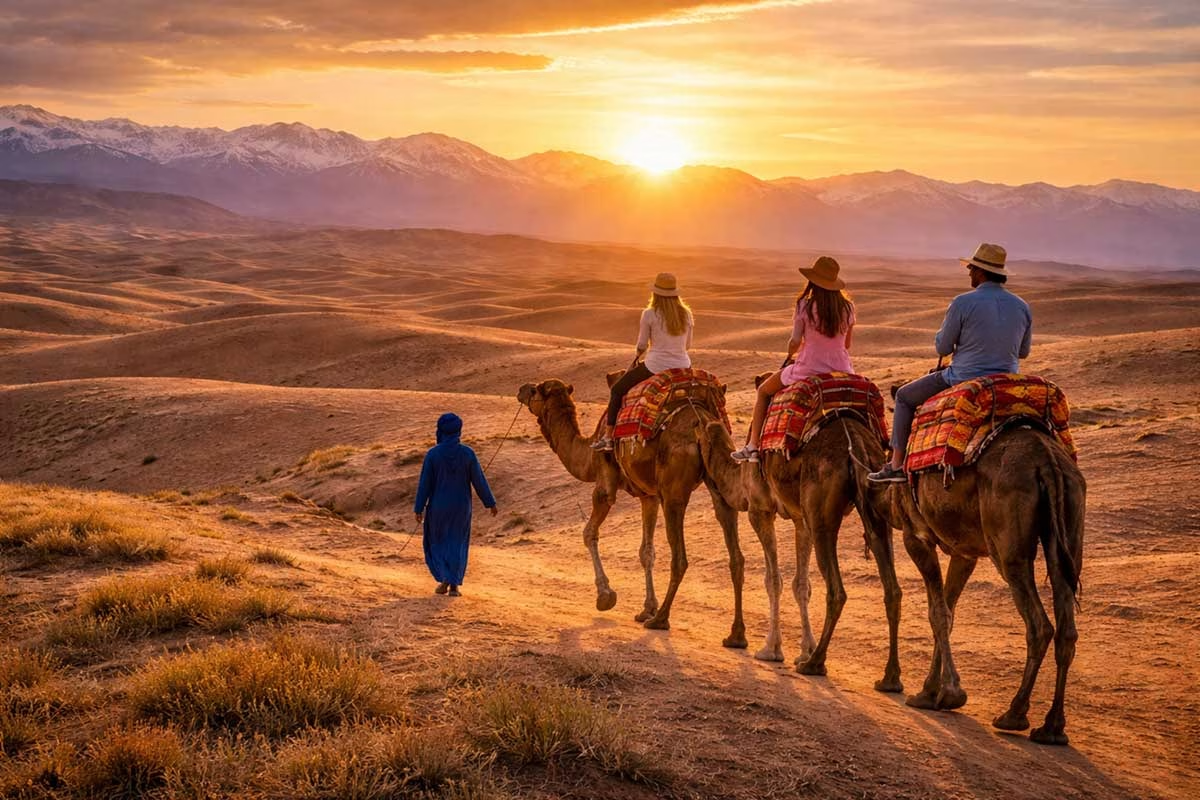
Dayet Srij Lake Merzouga offers a different perspective on the Moroccan Sahara. Beyond the familiar dune photographs lies a basin that can hold water, attract birds and open up a quieter kind of desert experience. When conditions cooperate, watching flamingos across the shallows can become a memorable part of a Merzouga stay.
The essential detail is that this is an
intermittent wetland
. Water levels depend on rainfall and subsequent drying, and the basin can be dry. Flamingos are never guaranteed, even when water is present. Plan around recent observations, leave room to change your route, and appreciate the landscape you actually find.
This guide to Dayet Srij Lake Merzouga explains how to make that approach practical, from choosing a viewing position to planning a flexible half-day outing.
Understanding Dayet Srij Lake Merzouga
Dayet Srij, also written Dayet Srji, is near Merzouga in southeastern Morocco, within the wider Erg Chebbi landscape. The
Moroccan National Tourist Office’s Merzouga overview
includes the lake among the area’s natural attractions and highlights its birdlife. Think of it as one part of a varied desert environment, alongside dunes, open plains and palm groves.
“Seasonal lake” is convenient shorthand, but it can suggest a timetable that nature does not follow. Intermittent is more useful: water can appear after favorable rainfall, persist for a variable period, then retreat. A wet photograph from a previous visit says little about what will be visible on your travel date.
There is documented birding interest here. A
Naturetrek report from March 2025
describes Dayet Srij holding water after autumn rains, with flamingos, ducks and waders observed. That is a dated observation, not a prediction. Neither a long species list nor an impressive flock photograph establishes what the next visitor will see.
Seasonality: When Should You Visit?
For Dayet Srij Lake Merzouga, recent rainfall matters more than a supposedly perfect month. Cooler periods can make time outdoors more comfortable, while spring is worth investigating for birdwatching if suitable wetland conditions exist. However, choosing spring does not reserve a flamingo encounter, and winter does not ensure a full lake.
In warmer weather, plan especially carefully around heat, exposure and the possibility of a dry basin. Autumn conditions also vary: useful rainfall may change the landscape, but the season’s arrival alone tells you nothing about water levels. Avoid itineraries that label whole months as guaranteed “lake season” or “flamingo season.”
A sensible booking strategy is to choose dates that suit your wider Morocco journey, then decide how much time to give the lake closer to arrival. If birds are your main interest, allow flexibility within your Merzouga stay rather than relying on one brief stop between transfers.
Getting to the Lake from Merzouga
Before visiting Dayet Srij Lake Merzouga, start by asking your accommodation or a knowledgeable local driver about the current approach and a suitable viewing place. The best stopping point depends on ground conditions and where water is present. A map pin identifies a destination; it does not establish that every track leading toward it is safe or accessible.
Discuss your vehicle before setting out. Rough approaches, soft patches or recent rain can affect suitability, and a four-wheel-drive vehicle does not make the lake bed safe to cross. Follow established access routes and respect local restrictions. Do not drive toward a flock simply because the ground appears open.
Walking may suit some visitors, but first confirm the route, exposure and return arrangements locally. Bring drinking water, sun protection, closed shoes, a charged phone and an extra layer when appropriate. Do not plan around permanent toilets, shade, refreshments or bird hides. Arrange necessary stops in Merzouga, and agree transport and guiding costs before departure.
Explain what kind of outing you want when arranging it. A general sightseeing circuit may allow only a brief lake stop, whereas patient birdwatching needs time to scan and wait. Ask whether binoculars are supplied, whether the driver will remain available, and how the plan can change if the viewing is poor. These practical details matter more than an ambitious list of stops.
9 Useful Wildlife and Viewing Tips
1. Ask for a Recent, Specific Conditions Report
Ask when the person last visited, whether they saw standing water, and whether any birds were actually present. “There are sometimes flamingos” is background information; “I observed birds yesterday morning” is useful planning evidence. Even the latter is not a guarantee for tomorrow.
Check the date of photographs shared with you and distinguish first-hand observations from repeated stories. Also ask whether access has changed after weather. If reports are uncertain, treat the outing as a short landscape visit with optional birdwatching, rather than making it the sole purpose of your desert trip.
2. Choose Comfortable Light and Weather
Consider an early outing when the forecast suits, especially if you want gentler light and less time in the heat. Late afternoon may also work, provided you can return comfortably before darkness complicates unfamiliar tracks. These are viewing choices, not promises that birds will arrive at certain hours.
Wind, glare and heat shimmer can make distant observation frustrating. Choose a safe position with helpful light rather than insisting on a particular viewpoint. If visibility deteriorates, shorten the stop. A comfortable observer is more likely to notice small movements than someone struggling with blowing dust or harsh sun.

3. Scan with Binoculars Before Moving
Bring binoculars if wildlife is a priority; a spotting scope can help when birds remain far out. Before leaving your first suitable stopping place, scan slowly across the visible water and margins. Pause between sweeps so movement becomes easier to detect.
For beginners, locate a bird with your eyes first, keep looking at the same point, then raise the binoculars. Practise focusing before the visit. In a group, describe positions using obvious landscape features instead of pointing vaguely. Sharing a scope can give everyone a useful view while keeping the group in one place.
4. Watch Flamingos Without Approaching Them
At Dayet Srij Lake Merzouga, if flamingos are present, remain well back and observe through optics. Watch how individuals feed, rest or move within the group. A sustained view of undisturbed behavior offers more than a close photograph obtained by pushing birds away.
Do not walk toward the flock, surround it or use a vehicle to reduce the gap. If birds stop their activity, become alert to your presence or move away, withdraw calmly and increase your distance. Do not wait for them to fly before responding. Never try to provoke a takeoff for a dramatic photograph.
5. Look Beyond the Most Obvious Birds
Divide your view into open water, shallow margins and the surrounding ground. Look for differences in shape and movement: a swimming bird, a bird probing at the edge, or a small silhouette standing almost still. This simple method makes a mixed scene easier to understand.
You do not need a complete species list to enjoy the visit. Record bill shape, leg length, approximate size and behavior before reaching for a name. If the view is poor, leave the identification open. A local birding guide can help interpret observations without turning uncertain silhouettes into confident claims.
6. Spend Time Observing the Surrounding Habitat
Give the wider landscape a quiet interval rather than searching only for pink birds. From your established route, examine changes between bare ground, vegetation and any damp margins. Notice where movement occurs and how the scene changes as the light shifts.
If you find tracks or small animals, observe without handling, following or cornering them. Leave stones, plants and burrows undisturbed. Avoid assigning every mark to a named desert animal; tracks can be unclear, old or overlapping. This slower approach remains worthwhile when the lake is dry, though wildlife sightings may still be limited.
7. Photograph the Whole Scene from a Distance
Start with a wide composition that explains the setting: open sky, the basin and whatever water or birds are actually visible. A few distant birds can convey scale. For closer framing, use a telephoto lens or crop the image afterward instead of moving toward wildlife.
Keep the horizon level, check bright areas for lost detail, and choose a shutter speed suited to movement. With a phone, favor a clear landscape photograph over extreme digital zoom. Reflections depend on water, wind and your viewpoint; treat them as an opportunity, not a shot you must force.
Prepare camera settings before settling into your viewing position. Carry a protective bag for dust, keep spare batteries accessible and avoid changing lenses in blowing sand. Take a few photographs, then lower the camera and watch; observation often suggests a better composition.
Keep drones away from wildlife and avoid staging or baiting.
Audubon’s ethical photography guidance
puts birds’ welfare before the image. That principle should guide every decision about where to stand and when to stop.
8. Keep Your Viewing Position on Suitable Ground
Do not step onto uncertain mud or a dry-looking crust to reach a better angle. Surface appearance is not a reliable test of what lies underneath. Use locally advised, firm access points and keep vehicles away from soft margins.
Keep children close and establish a clear boundary before unpacking cameras. If someone needs a shorter walk or more stable footing, discuss that when arranging transport. Choose a comfortable stop within their abilities rather than assuming the shoreline will be accessible. Changing the viewpoint is always preferable to taking a ground or heat risk.
9. Keep a Useful, Honest Wildlife Record
Note the date, approximate observation time, water conditions and what you could confidently identify. Distinguish an estimate from a count, and mark uncertain sightings as uncertain. A short factual record can be more useful to another traveler than an enthusiastic claim that the lake is “full of wildlife.”
When sharing photographs, include when they were taken and avoid presenting old images as current conditions. Leave out precise locations of sensitive nests or resting birds. Back at your accommodation, compare notes with your guide and separate confirmed observations from possible identifications before posting.
Birding Etiquette and Responsible Tourism
Keep voices low, avoid playback recordings and do not feed wildlife. Stay away from nests, eggs, chicks and breeding activity if encountered; never enter a nesting area to inspect it. A quiet or motionless bird is not necessarily comfortable with your presence. The
American Birding Association’s ethics code
provides useful principles for protecting birds and habitat.
Keep your group compact so others can pass without spreading across sensitive ground. Carry out every wrapper and bottle, including small pieces that wind can scatter. Use refillable containers where practical, but take enough drinking water for the outing.
Support local expertise by choosing guides who welcome questions about wildlife and access. Agree that the group will leave if conditions are unsuitable. Respect private land, cultivation and residents’ daily routines, and ask before photographing people. A responsible visit should be acceptable both to the people who live nearby and to the wildlife using the area.
A Flexible Half-Day Merzouga Itinerary
For a visit to Dayet Srij Lake Merzouga, use this as a suggested sequence rather than a fixed timetable. Allow roughly three to four hours overall, adjusting the plan with your driver for your starting point, weather and interests. Transfer times are not included as promises.
- Before departure: Confirm recent conditions, pack water and optics, use facilities at your accommodation, and agree on a backup stop.
- First viewing stop: Reach a suitable place without approaching wildlife. Spend a few minutes scanning before deciding whether to stay.
- Unhurried observation: If conditions reward it, allow approximately an hour for birdwatching, landscape photography and sharing the binoculars.
- One complementary experience: Choose a suitable dune viewpoint or an arranged cultural visit, leaving time to enjoy it.
- Return to Merzouga: Finish with a meal or rest, and leave the hotter part of the day flexible.
If the basin is dry and bird activity is limited, shorten the lake stop. Photograph the landscape from safe ground, then continue to your agreed alternative. There is no need to spend the half-day driving around searching for a flock reported weeks earlier.
Nearby Merzouga Experiences to Combine with the Lake
Erg Chebbi offers a natural contrast to Dayet Srij Lake Merzouga. A modest dune walk or a viewpoint visit lets you compare the shapes and colors of sand with the flatter wetland landscape. Match walking plans to temperature, fitness and local advice.
Palm-grove surroundings can add another perspective where visitors are welcome. Treat cultivated areas as working places: use permitted paths, avoid irrigation channels and do not enter gardens without permission. Choose a guided walk if access is unclear.
A visit to Khamlia can focus on
local Gnawa musical traditions
when arranged with willing hosts. Confirm availability and payment beforehand, listen respectfully and ask before recording. Keep cultural visits separate from wildlife expectations; each deserves time rather than being squeezed into a hurried circuit.
Frequently Asked Questions
Is Dayet Srij Lake Merzouga permanent?
No. Dayet Srij Lake Merzouga is an intermittent wetland whose appearance changes with rainfall and drying. You may find standing water, reduced wet areas or a dry basin. Confirm recent conditions rather than relying on the word “lake” on a map.
Are flamingos guaranteed at the lake?
No. Flamingos have been recorded here, but their presence and numbers vary. Water alone does not guarantee them, and a recent sighting does not ensure they will remain. Visit with an interest in the wider landscape and other possible birdlife.
What is the best month for birdwatching?
There is no universally reliable month. Spring can be worth considering when water is present, but rainfall history and current observations are more useful than a calendar label. Choose comfortable weather and seek a recent local report.
Do I need a guide?
A knowledgeable guide can help with changing access, suitable viewing positions and identification. If visiting independently, first confirm the route and conditions locally. Do not assume that following a navigation app across open ground is appropriate.
Is there an entrance fee?
This guide does not quote a fixed admission fee. Check current local access arrangements and distinguish any site-related charge from transport or guiding costs. Ask what is included before agreeing to an excursion.
Is the visit suitable for children?
A short visit may suit children who enjoy nature, with close supervision and a firm stopping place. Bring water and sun protection, share binoculars, and explain why birds need space. Shorten the outing if heat, wind or ground conditions make it uncomfortable.
Plan Your Dayet Srij Visit with Realistic Expectations
Dayet Srij Lake Merzouga rewards curiosity and flexibility. Check conditions, bring optics, keep your distance and let the day’s landscape determine the experience. Flamingos can be a highlight, but an ethical visit never depends on finding or approaching them. When discussing your Morocco itinerary with
, mention your interest in birdwatching and request a flexible lake stop with a suitable alternative.