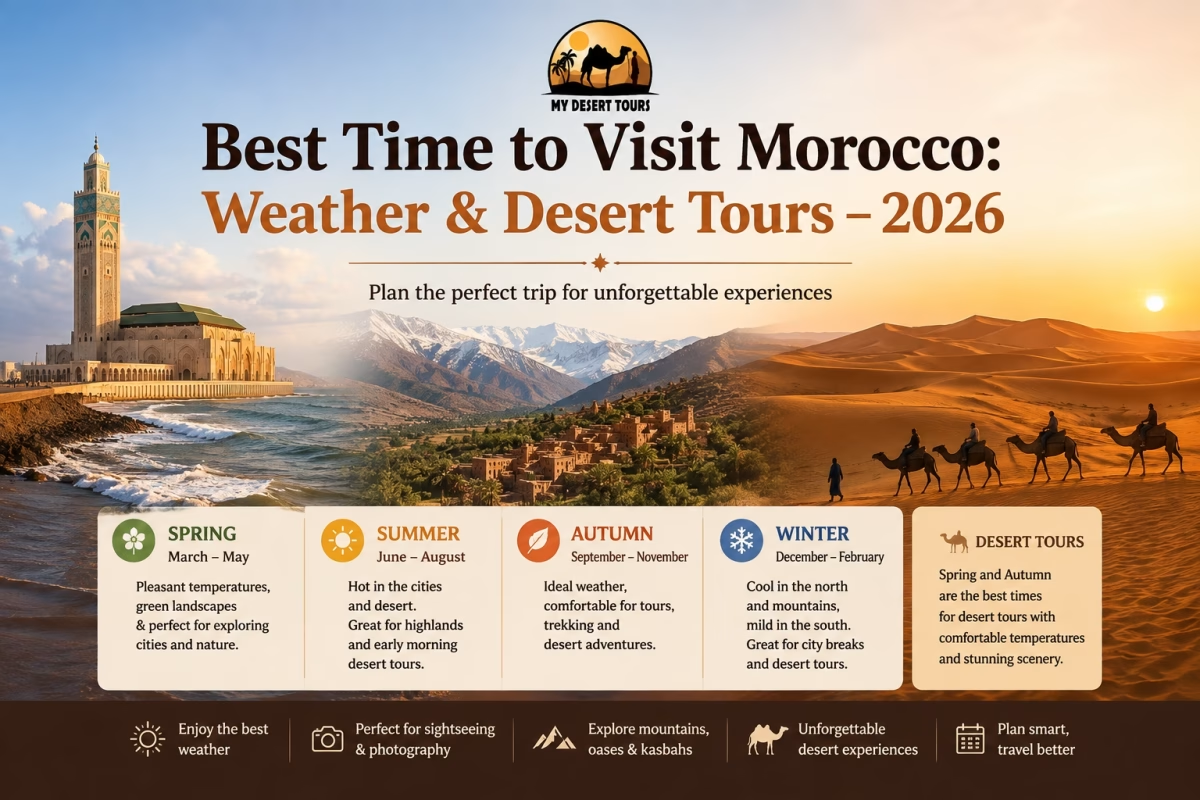
Best Time to Visit Morocco: Weather, Regions and Desert Tour Planning
The best time to visit Morocco depends on where you plan to go and what you want to do. A comfortable month for exploring Marrakech may feel very different in the High Atlas or the Sahara, while Morocco’s Atlantic coast follows another seasonal pattern.
For most travelers seeking moderate conditions, spring and autumn are the strongest starting points. Spring generally combines milder temperatures with greener landscapes, while autumn brings relief from summer heat and favorable conditions for activities such as Atlas trekking and Morocco desert tours.
That does not make winter or summer automatically bad choices. Winter can work well for the Atlantic coast, surfing and certain Sahara desert tours Morocco itineraries, although nights in the desert and conditions at altitude can become very cold. Summer requires considerably more care inland and in the Sahara, while coastal places such as Essaouira and Agadir can provide an alternative to the heat.
Your departure city matters, too. Tours From Marrakech, Tours From Fes, Tours From Casablanca, Tours From Tangier, Tours from Agadir and Tours from Rabat can cross different climatic regions. A route from Marrakech or Fes into the Sahara, for example, should be planned around desert and mountain conditions rather than the departure city’s weather alone.
The useful question, then, is not simply “What is Morocco’s best season?” It is “Which season is best for my destinations, route, activities and tolerance for heat, cold and changing conditions?”
When Is the Best Time to Visit Morocco?
Spring, from March to May, and autumn, from September to November, are generally the most versatile seasons for a Morocco trip.
These periods avoid the most challenging extremes associated with summer heat and winter cold at altitude. They are particularly useful when an itinerary combines several environments rather than staying in one place.
Spring stands out for green valleys, flowering landscapes and more moderate conditions before the hottest part of the year. Marrakech’s gardens are another reason to consider this period.
Autumn is a strong alternative after the summer heat. It can be particularly attractive for hiking in the Atlas Mountains, where drier trails and crisp air can favor trekking.
There are important exceptions. Someone primarily interested in Atlantic surfing may prefer winter. A traveler visiting the coast during summer can encounter considerably more comfortable conditions than someone traveling inland. A Morocco desert tour also needs to account for the Sahara’s large difference between daytime and nighttime conditions.
A practical way to choose is to prioritize your most climate-sensitive destination first. If the Sahara or High Atlas is central to the trip, let those conditions influence your dates more than the weather in a single city.
Morocco’s Seasons at a Glance
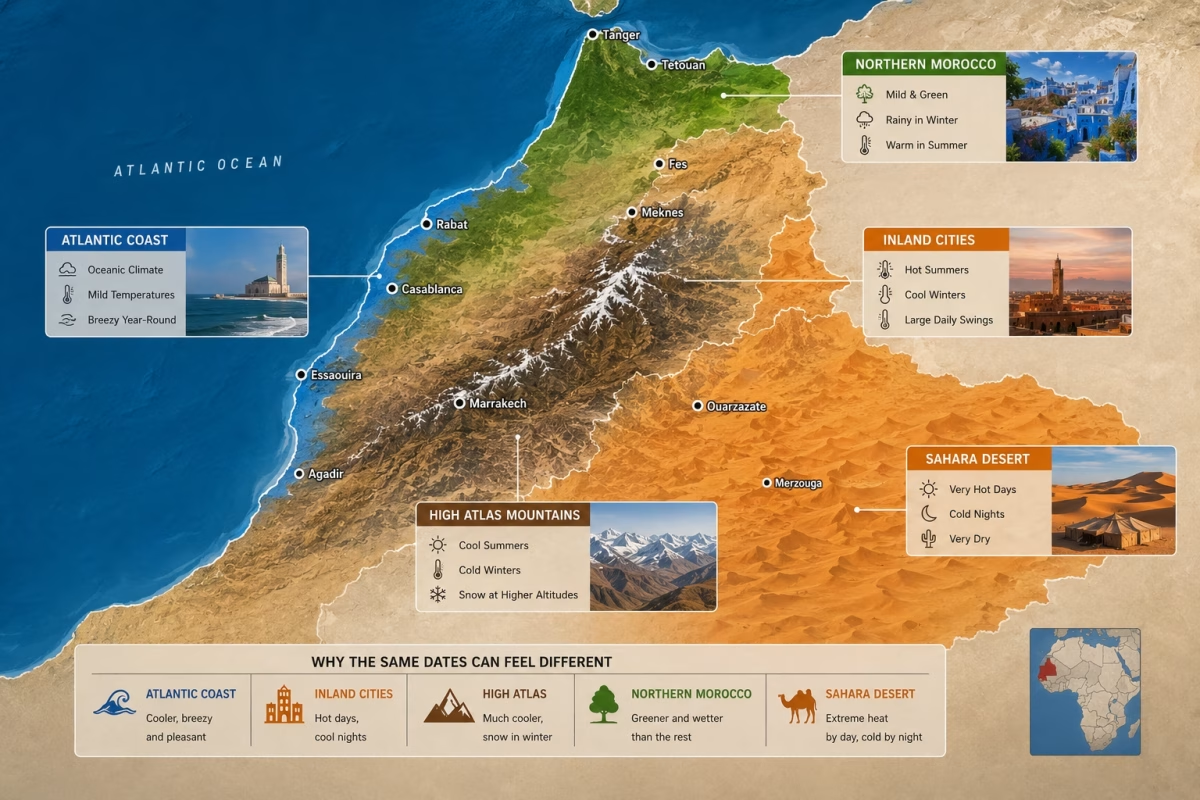
Morocco’s geography makes seasonal labels useful but imperfect. Conditions can change substantially between the coast, inland cities, high mountain passes and the Sahara.
Spring
Spring runs from March through May and offers one of the best overall balances for travel.
Winter rainfall can leave valleys greener, while almond blossoms in southern areas add seasonal color. Inland destinations have not yet reached their summer heat, making spring particularly appealing for sightseeing and outdoor itineraries.
Marrakech is well suited to this period if you want to explore before the highest summer temperatures arrive. Spring is also a useful window for desert tours from Marrakech because daytime conditions are generally more manageable than during the hottest part of summer.
The Rose Festival in Kelaat M’Gouna is associated with early May. Because festival schedules can vary, travelers planning a trip specifically around it should confirm the dates for their year of travel rather than relying on a fixed annual date.
Spring is particularly suitable for travelers combining cities, landscapes and desert travel, photographers interested in greener scenery, and visitors who prefer to avoid peak summer heat.
Summer
Summer creates the sharpest geographical divide.
The Sahara is the biggest concern. Temperatures can become extreme in July and August, with conditions capable of exceeding 50°C. Marrakech can also experience temperatures above 40°C in July.
Those conditions change how a trip needs to be planned. Sightseeing becomes more comfortable earlier in the day, while accommodation with a pool can make a significant difference for travelers staying in Marrakech.
The Atlantic coast provides an alternative. Essaouira and Agadir are influenced by the Atlantic and can remain substantially cooler than inland Morocco. When Marrakech is around 40°C, coastal conditions can be closer to 25°C.
Summer therefore should not be treated as one uniform “too hot” season. It is a difficult period for intensive inland sightseeing and especially for desert exposure, but it can make considerably more sense for a coast-focused itinerary.
This distinction is especially important when considering Marrakech desert tours or a Merzouga desert tour. The fact that a tour operates does not by itself mean the season is ideal. Travelers should evaluate the expected conditions of the entire route.
Autumn
September through November provides another broadly useful period.
As summer heat recedes, autumn brings clearer conditions and warm light. It is particularly relevant for travelers planning outdoor activities in the Atlas Mountains.
Dry trails and crisp air make autumn a strong trekking period. Rural travel can also coincide with date and olive harvest seasons, adding another dimension to a trip.
September should not automatically be treated as equivalent to November, however. Autumn is a transition period, so travelers should consider their actual dates and destinations rather than relying only on the season name.
For a multi-region Morocco itinerary, autumn has much the same strategic advantage as spring: it can make it easier to combine inland cities, mountains and desert travel without deliberately choosing the most extreme part of the year.
Winter
Winter requires more preparation but can be rewarding for the right itinerary.
The north can be cool and rainy, while high elevations in the Atlas Mountains can receive snow. Snow typically occurs in the High Atlas between December and March, although actual conditions should always be checked close to travel.
The Sahara presents a different winter challenge. Days can be bright and sunny while nights become extremely cold, potentially falling below freezing. Anyone considering a Morocco desert tour with desert camp accommodation needs to plan for nighttime conditions rather than packing solely for daytime sunshine.
On the Atlantic, winter can be relatively mild. It is also the main period identified for consistent surfing swells, particularly from December through February.
Winter can therefore work well for coastal trips, surfing, desert travel with suitable cold-weather preparation, and travelers visiting Morocco around Christmas or New Year. Holiday-period accommodation and desert experiences should be planned ahead rather than treated as ordinary low-season travel.
Morocco Month by Month
A month-by-month calendar is useful only when it acknowledges uncertainty. Morocco’s conditions vary too much by region to attach one national weather label to every date.
The following planning framework distinguishes information established for specific months from months where the more reliable decision is to work from the broader seasonal pattern.
January
January is winter, bringing cold desert nights and cooler, potentially rainy conditions in northern Morocco.
The Atlantic coast can be a better fit for travelers trying to avoid the coldest inland or mountain conditions. January also falls within the December-to-February period associated with more consistent Atlantic surfing swells.
Snow is possible in the High Atlas, and Oukaïmedene is associated with winter skiing. Mountain conditions need to be checked for the actual travel dates.
For Sahara travel, do not let sunny daytime weather dictate your packing. Nights can be much colder, particularly if your itinerary includes a Merzouga desert camp.
February
February remains a winter month, and high-altitude conditions deserve particular attention.
The supplied travel experience from Tizi n’Tichka illustrates how quickly conditions can diverge: in late February, temperatures shifted from light-shirt conditions around Marrakech to an intense snowstorm at the pass, at approximately 2,260 meters, where the reported temperature fell to -2°C.
That example should not be treated as a February weather forecast. Its value is the planning lesson: a route that combines Marrakech, a mountain crossing and the desert can expose a traveler to radically different conditions in the same journey.
Layered clothing and checking mountain conditions close to departure are therefore more useful than packing according to Marrakech alone.
March
March begins the spring travel window.
Conditions become milder, landscapes can be green after winter rainfall, and the month can work well for walking in valleys and incorporating desert travel.
Travelers still need to respect elevation. March remains within the period when snow can occur in the High Atlas, so a pleasant day in Marrakech does not guarantee equally mild mountain conditions.
For travelers who value spring scenery without waiting until later in the season, March can be a practical starting point.
April
April sits in the middle of the broadly favorable March-to-May spring window.
It is also identified as one of the peak months for a Marrakech to Fes desert tour. That makes it particularly relevant for travelers whose itinerary connects inland cities with the Sahara.
The main advantage is the broader spring pattern: conditions have not yet moved into the most intense summer heat.
Specific weather still varies by destination and year, so travelers should use the seasonal recommendation as a planning framework rather than as a guarantee of a particular daily temperature.
May
May is the final month of the main spring window.
It remains relevant for travelers interested in spring landscapes and is associated with the Rose Festival in Kelaat M’Gouna, generally held around early May. Festival dates should be verified for the particular year.
Because May leads into the hotter season, destination choice becomes increasingly important. A trip centered on landscapes, Marrakech and the desert should be planned with more attention to daytime heat than an earlier spring itinerary.
June
June marks a more noticeable separation between inland and coastal travel.
Inland Morocco becomes hot, while the Atlantic coast becomes comparatively appealing. Taghazout and Essaouira are options for travelers prioritizing the coast and surfing rather than extensive inland sightseeing.
This is a useful example of why “Morocco in summer” is too broad to be a complete travel recommendation. A June coastal holiday and a June Sahara itinerary can involve very different comfort levels.
July
July presents significant heat challenges, especially in Marrakech and the Sahara.
Marrakech can exceed 40°C. The Sahara is even more heat-sensitive, and July is one of the months specifically identified as a period to avoid for desert travel when possible.
Travelers who do visit Marrakech in July can reduce heat exposure by concentrating sightseeing in the earlier part of the day and choosing accommodation suited to hot conditions.
For a traveler with flexible dates whose main goals are Marrakech and the Sahara, spring or autumn provides a more comfortable planning baseline.
August
August shares the main summer problem of July: extreme desert heat.
It is one of the two months specifically identified as unsuitable for Sahara travel when alternatives are available, with desert temperatures capable of exceeding 50°C.
If Morocco travel is fixed for August, itinerary design matters. A coast-oriented trip can make more sense than building the journey around prolonged desert exposure.
Anyone considering a Sahara desert tour from Marrakech despite the heat should evaluate appropriate transport and accommodation rather than assuming a standard itinerary will provide adequate comfort.
September
September opens the autumn travel window.
The key advantage is the transition away from summer conditions. Autumn as a whole offers a favorable combination for trekking and multi-region trips, although early-autumn conditions should not be assumed to be identical to those later in the season.
Travelers particularly sensitive to heat should evaluate their exact itinerary rather than relying solely on the “autumn” label.
October
October is one of the strongest months for travelers combining the desert with other parts of Morocco.
It falls within the favorable autumn period and is specifically identified, alongside April, as a peak month for the Marrakech-to-Fes desert route. Warm, clearer autumn conditions can also favor photography.
For an itinerary involving inland cities, the Atlas and Sahara, October offers a useful balance without choosing the most intense summer period.
November
November closes the main September-to-November autumn window.
It belongs to the broader shoulder-season period but transitions toward winter. That makes it particularly important to think regionally: conditions in the mountains, northern Morocco, the Atlantic coast and Sahara will not change in exactly the same way.
Late November also begins the period described as the lower season extending into early March, when better flight and riad deals may be available. Actual prices and availability vary and should be checked for the specific dates.
December
December is cold but can still bring sunny conditions. It is a popular time conceptually for combining Christmas or New Year travel with traditional riad stays or Sahara experiences.
The important tradeoff is temperature. Desert nights can be very cold, and December lies within the High Atlas snow period. Warm clothing is therefore essential when an itinerary extends beyond milder daytime locations.
Christmas and New Year’s Eve can also create booking demand that does not behave like an ordinary winter low-season period. Travelers planning a Sahara stay over New Year should arrange important components ahead of time.
Best Time to Visit Morocco by Region
National averages can hide the most useful travel information. Morocco’s geography means region should be considered alongside month, particularly for tours that begin in one city and continue through several climate zones.
Marrakech and Central Inland Morocco
Marrakech becomes particularly demanding during summer heat. July temperatures can rise above 40°C, making long periods of daytime sightseeing uncomfortable.
Spring offers a more moderate alternative, with gardens in bloom before summer reaches its highest temperatures. Autumn similarly gives travelers a chance to visit after the strongest summer heat.
This matters for both city stays and desert tours from Marrakech. A 2 day desert tour from Marrakech to Zagora and longer itineraries such as a 3 day desert tour from Marrakech to Merzouga or 4 day desert tour from Marrakech to Merzouga all extend beyond Marrakech itself. Their seasonal suitability therefore depends on the route and desert conditions, not just the weather at departure.
The same principle applies to a private desert tour from Marrakech: privacy does not remove climatic constraints.
If summer dates cannot change, itinerary design becomes important. Do outdoor sightseeing earlier in the day and choose accommodation that gives you somewhere comfortable to retreat during hotter hours.
Fes and Northern Morocco
Northern Morocco is more exposed to cool and rainy winter conditions than the drier south.
The supplied climate information does not establish detailed month-by-month conditions for Fes, Chefchaouen or the wider north, so precise temperature claims would create false certainty. For planning purposes, remember that an itinerary spanning northern Morocco and the Sahara crosses different climate zones.
This is especially relevant to Fes desert tours and desert tours from Fes. A Fes to Merzouga desert tour starts in northern inland Morocco but ultimately needs to be planned around Sahara conditions as well.
Likewise, a 3 day desert tour from Fes to Marrakech or 4 day desert tour from Fes to Marrakech connects different environments rather than staying within one local weather pattern.
If your itinerary includes a Fes city tour before or after the desert, evaluate both parts separately. Comfortable city conditions do not guarantee comfortable desert nights or mountain crossings.
Chefchaouen and the Rif
Chefchaouen’s appeal is closely connected to exploring the city on foot. That makes excessive heat or wet winter conditions practically relevant, not merely statistical.
The available research does not provide enough verified detail to identify one specific month as the definitive best month for Chefchaouen. A more reliable approach is to place it within a spring or autumn multi-city itinerary and check the local forecast before arrival.
Travelers beginning in northern Morocco may also encounter itineraries such as Tangier to Merzouga. With routes of this kind, planning around only Tangier’s conditions would overlook the very different Sahara environment later in the trip.
Atlantic Coast: Essaouira, Agadir and Taghazout
The Atlantic coast is one of Morocco’s most important seasonal alternatives.
The Canary Current moderates coastal conditions, helping Essaouira and Agadir remain cooler in summer and relatively mild in winter. During periods when Marrakech can reach around 40°C, the coast can be closer to 25°C.
That difference makes the coast especially useful for summer travel and changes the seasonal calculation for Tours from Agadir compared with itineraries originating inland.
Surfing adds another timing consideration. December through February is associated with the most consistent Atlantic swells. Taghazout and Essaouira therefore deserve attention from travelers choosing dates primarily around surfing rather than general sightseeing.
A route such as a 6 Days Tour from Agadir to the Desert Via Marrakech crosses from the Atlantic zone through inland Morocco toward desert conditions. The best planning decision should therefore account for the hottest and coldest parts of the complete route rather than the pleasant coastal starting point.
High Atlas Mountains
Altitude changes the rules.
The High Atlas can experience snow between December and March. The reported late-February experience at Tizi n’Tichka—moving from Marrakech sunshine into a snowstorm at roughly 2,260 meters—demonstrates why city weather should never be used as a proxy for mountain weather.
Autumn is identified as a strong period for trekking because trails can be dry and the air crisp.
The High Atlas also matters to travelers whose primary goal is not hiking. A Morocco desert tour can cross mountain terrain on the way between cities and the desert, so altitude may affect an itinerary even when the Sahara is the headline destination.
For any route involving high mountain passes, check actual conditions rather than assuming a generally favorable Morocco season means the mountains will behave the same way.
Merzouga and the Sahara Desert
The Sahara is among the most climate-sensitive parts of a Morocco itinerary, and Merzouga is a central destination in many of the desert routes considered by travelers.
July and August present the strongest heat concerns, with temperatures capable of exceeding 50°C. Travelers with flexible dates have good reason to avoid these months for desert-focused travel.
Winter creates the opposite challenge. Days may be sunny, but nights can fall below freezing. Morocco desert tours with camel ride experiences and overnight desert stays therefore require preparation for the conditions outside daylight hours.
The supplied research does not establish the specifications of any individual Merzouga desert camp, so travelers should verify the facilities, bedding and seasonal arrangements of the accommodation they intend to use. This is especially important when planning an Overnight in Merzouga desert & Camel trekking experience or 2 nights in Merzouga desert and camel trekking.
April and October are particularly relevant for a Marrakech-to-Fes desert itinerary and sit within the broader spring/autumn periods that avoid the most obvious temperature extremes.
Choosing the Right Season for Morocco Desert Tours
The most useful way to evaluate Morocco desert tours is by combining season, route and overnight arrangements.
Trip duration alone does not determine which tour is appropriate. A 3 day desert tour from Marrakech to Merzouga, for example, should not be judged simply against a 4 day desert tour from Marrakech to Fes based on the number of days. Their endpoints and route design are also relevant.
The keyword “desert tour” can describe different trip patterns. Common search interests include a Marrakech to Merzouga desert tour, Marrakech to Fes desert tour, Fes to Merzouga desert tour and Merzouga Sahara tour. All share the same basic seasonal issue: the Sahara’s conditions can be substantially different from those at the point of departure.
Travelers researching Morocco private tours or a private Sahara desert tour Morocco should apply the same weather considerations. A private format may change how a trip is organized, but it does not change seasonal desert heat, cold nights or mountain weather.
When comparing an itinerary, focus on:
- The regions crossed between the departure city and Sahara.
- The season and expected desert conditions.
- Whether the trip includes a desert camp overnight.
- Preparation for cold desert nights in winter.
- Exposure to extreme daytime heat in summer.
- Mountain conditions if the journey crosses high-altitude terrain.
- The actual destinations and activities rather than duration alone.
This approach is more useful than selecting an itinerary solely because it is labeled two, three, four or six days.
Tours From Marrakech
Marrakech is associated with several desert itinerary formats, including the 2 Days desert tour from Marrakech to Zagora, 3 Days desert tour from Marrakech to Merzouga, 3 Days desert tour from Marrakech to Fes, 4 Days desert tour from Marrakech to Merzouga, 4 Days desert tour from Marrakech to Fes and 6 Days desert tour from Marrakech to Merzouga.
The available research does not provide enough evidence to compare the inclusions, distances or daily schedules of those products. What can be established is the seasonal principle: routes leaving Marrakech for the Sahara must be evaluated against both inland and desert conditions.
Spring and autumn provide the strongest broad starting point. July and August create the greatest concern for desert heat, while winter requires preparation for cold nights and potentially wintry mountain conditions.
Tours From Fes
The same route-based reasoning applies to Tours From Fes, including a 2 Days desert tour from Fes to Merzouga, 3 Days desert tour from Fes to Merzouga, 3 Days desert tour from Fes to Marrakech, 4 Days desert tour from Fes to Marrakech, 5 Days desert tour from Fes to Marrakech and 6 Days desert tour from Fes to Marrakech.
These search terms represent different lengths and endpoints, but there is not enough supplied information to claim which itinerary offers better value, more stops or a particular schedule.
For seasonal planning, focus instead on the conditions in Fes, the desert and every climate-sensitive section of the route.
Tours From Casablanca, Tangier and Rabat
Longer Morocco itineraries can originate farther from the desert. Searchers may compare a 5 Days desert tour from Casablanca, 6 Days desert tour from Casablanca, 7 Days desert tour from Casablanca, 8 Days desert tour from Casablanca, 9 Days desert tour from Casablanca or 10 Days desert tour from Casablanca.
Similarly, Tours From Tangier may include searches for a 4 Days desert tour from Tangier through to a 9 Days desert tour from Tangier, while travelers may also research an itinirary 5days desert tour from rabat to marrakech.
The supplied research does not establish the content or logistics of these particular itineraries, so choosing among them requires more than seasonal advice. However, longer multi-region trips make the main climate lesson even more important: pack and plan for the entire route, not just Casablanca, Tangier or Rabat.
That principle also applies to a 7 day Morocco itinerary. The more climate zones an itinerary includes, the less useful a single national weather description becomes.
Best Time to Visit Morocco by Activity
Choosing by activity can be more useful than asking for one universal “best month.”
Sahara Desert Trips and Camel Trekking
Spring and autumn are the strongest general windows for desert travel.
April and October stand out for Marrakech-to-Fes desert routes. July and August should be avoided when possible because of extreme heat, while winter remains feasible if you prepare for very cold nights.
This is important for a Morocco desert tour with desert camp accommodation and for camel trekking. The critical mistake is planning only around daytime temperatures. Overnight desert conditions can transform what clothing and accommodation you need.
Travelers considering an overnight stay should also check what their selected camp provides. The available material supports the need for adequate winter bedding, but not assumptions about the equipment or comfort level of every camp.
Atlas Hiking and Trekking
Autumn is identified as a peak period for Atlas trekking, with dry trails and crisp air among its advantages.
Winter requires more caution because snow can affect the High Atlas between December and March. Conditions also change with altitude, so forecasts for Marrakech are not sufficient for evaluating a mountain itinerary.
Surfing
Winter is the key season identified for Atlantic surfing.
December through February produces the most consistent swells. Travelers whose primary goal is surfing should therefore evaluate the Atlantic coast independently of broader recommendations that position spring and autumn as Morocco’s best overall seasons.
City Sightseeing and Photography
Spring and autumn make the strongest general choices for exploring cities on foot without deliberately choosing the greatest summer heat.
Spring can bring greener landscapes and flowering scenery. Autumn is associated with clearer skies and warm light after summer.
Summer sightseeing in Marrakech requires more adaptation because temperatures can exceed 40°C. Earlier sightseeing and a comfortable place to retreat during the hottest part of the day become more important.
Coastal Holidays
The coast has one of the widest useful seasonal windows.
Its moderated climate makes Essaouira and Agadir particularly relevant when inland Morocco becomes hot. Winter also remains an option for travelers seeking a milder coastal environment, with the additional benefit of the Atlantic surf season for those interested in waves.
Spring vs Autumn: Which Is Better?
For many travelers, the decision ultimately comes down to spring versus autumn.
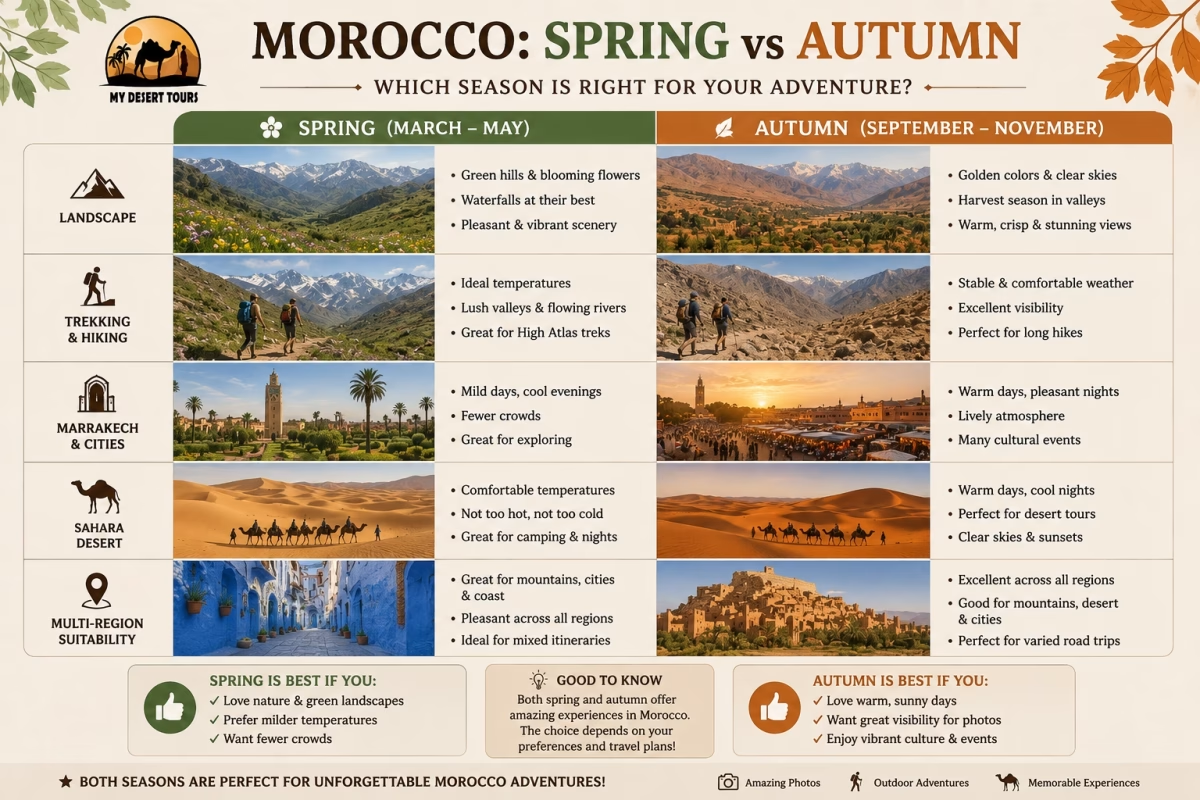
Spring has the advantage of greener valleys, flowering landscapes and temperatures before the height of summer. It is especially attractive for travelers prioritizing scenery, Marrakech and desert travel in one journey.
Autumn offers relief after summer and is particularly compelling for Atlas trekking. Harvest periods for dates and olives can also add seasonal character to rural areas.
There is no universal winner. Choose spring if green landscapes and spring flowering are major priorities. Choose autumn if hiking and post-summer conditions better match the itinerary.
For desert-focused travel, April and October both stand out, so the decision may come down to the rest of the route.
Crowds, Prices and Booking Demand by Season
Weather is only one definition of “best.”
Late November through early March is described as a lower-season period in which travelers may find better flight and riad deals. That does not mean every winter date is automatically cheaper or quieter.
Christmas and New Year require separate treatment. Sahara experiences and accommodation around major holiday dates can attract demand, so planning ahead is sensible.
There is not enough supplied evidence to provide reliable average prices or quantify seasonal savings. Those figures would also vary by destination, property, provider and booking date.
The same caution applies when comparing a private Morocco desert tour with other tour formats. A trustworthy comparison should use actual inclusions and current prices rather than assuming that one format is automatically better value.
The more useful distinction is between “best weather” and “best value.” Spring and autumn may offer the broadest climatic comfort, while parts of winter can appeal to travelers prioritizing value and willing to accept colder or wetter conditions.
Ramadan, Festivals and Holiday Travel
The best travel dates can also depend on Morocco’s cultural calendar.
Ramadan provides an opportunity to encounter a different daily rhythm. Daytime activity may feel quieter, while evenings become more animated around the breaking of the fast and community gatherings.
Ramadan does not occur on the same Gregorian dates every year. Travelers should therefore verify when it falls during their intended visit and check practical details that matter to their itinerary.
Rather than assuming that every restaurant, attraction, service or tour operates exactly as usual, confirm anything essential for the day in question. This is particularly important when fixed schedules matter.
Kelaat M’Gouna’s Rose Festival is another timing consideration and is generally associated with early May. Because event dates can change, confirm the current year’s schedule before organizing flights or accommodation around it.
Christmas and New Year’s Eve create a different kind of seasonal trip. Desert celebrations may include traditional music and campfires, while riad stays can form part of Christmas travel. These dates deserve advance planning rather than being treated as ordinary low-season winter dates.
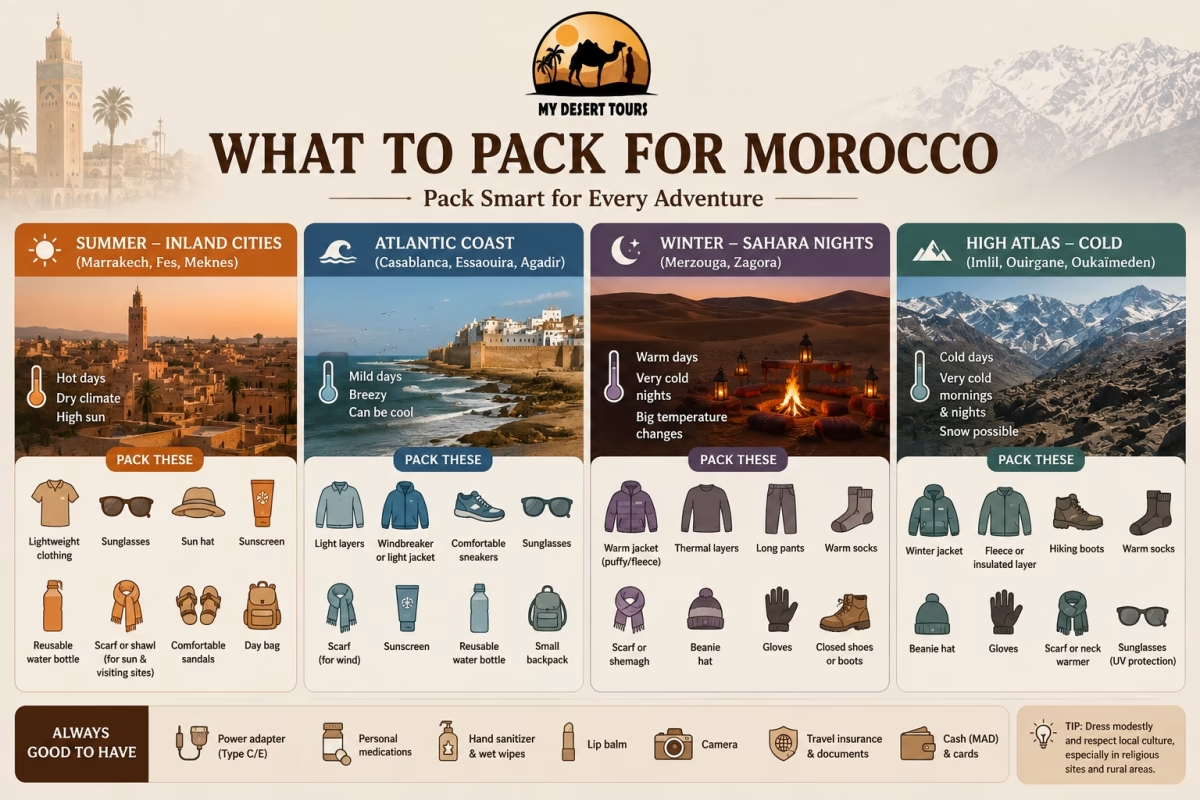
What Morocco’s Climate Means for Packing and Itinerary Planning
The most important packing principle is to prepare for the climates on your route rather than for “Morocco” as a single destination.
A journey combining Marrakech, the Atlantic coast, the High Atlas and Sahara may expose you to intense inland heat, windier coastal conditions, cold mountains and large desert day-to-night changes.
A practical packing approach is to prioritize:
- Layered clothing that can adapt to substantial temperature changes.
- Warm nighttime clothing for winter desert stays.
- Proper cold-weather layers when mountain conditions may include snow.
- Hot-weather clothing suitable for inland and desert conditions.
- An itinerary that reduces prolonged outdoor activity during extreme summer heat.
This matters especially on routes crossing the High Atlas. The late-February Tizi n’Tichka example shows that what feels like light-shirt weather in Marrakech can become sub-zero mountain weather later on the same route.
Desert Day-to-Night Changes
Never use a sunny desert afternoon as evidence that the entire night will be warm.
Winter Sahara nights can fall below freezing. If your itinerary includes sleeping in a desert camp, assess the overnight conditions, available bedding and clothing requirements before departure.
At the other seasonal extreme, air-conditioned transport and appropriately equipped accommodation become particularly important for anyone attempting summer desert travel.
Mountain and High-Altitude Conditions
Altitude deserves separate weather planning.
Snow can occur in the High Atlas from December through March, and mountain passes can encounter conditions that differ dramatically from Marrakech.
Check current mountain conditions close to the travel date whenever your route depends on a high pass or involves hiking.
Coast vs Inland Conditions
In summer, the Atlantic coast can provide a practical escape from the inland heat. That makes itinerary geography a powerful planning tool.
If travel dates are fixed during a very hot period, changing where you spend more of your trip may be more realistic than trying to find an inland location unaffected by summer.
How to Choose Your Morocco Tour Dates
Start with the part of your itinerary that is least flexible climatically, then work outward.
If the Sahara is the priority, spring and autumn are the clearest general choices, with April and October particularly relevant for routes linking Marrakech and Fes through the desert. Avoid July and August when possible.
If Marrakech and city sightseeing are your priorities, spring and autumn avoid deliberately choosing the highest summer heat. If summer dates are fixed, adapt your sightseeing schedule and accommodation choices.
If you are traveling primarily for Atlas trekking, autumn deserves particular consideration. For a winter mountain trip, prepare for snow and check current conditions.
If surfing drives the journey, winter changes the equation: December through February is associated with the most consistent Atlantic swells.
For a summer Morocco holiday, consider shifting the emphasis toward Essaouira, Agadir or other Atlantic destinations rather than building the trip around the Sahara.
For Morocco private tours that combine several parts of the country, consider the entire route. Tours From Casablanca, Tours From Tangier and Tours from Rabat can encounter several seasonal environments before reaching Marrakech, Fes or Merzouga.
Most importantly, do not choose between two tours based only on their names or duration. A 3 day desert tour from Fes to Merzouga, 5 Days desert tour from Fes to Marrakech and 6 Days desert tour from Marrakech to Merzouga represent different travel patterns. Compare the actual itinerary, season, destinations, overnight arrangements and current conditions before deciding.
The Best Time for Your Morocco Trip
There is no single month that is best for every Morocco itinerary. Geography and travel style matter too much for that.
For the broadest balance, start with spring from March to May or autumn from September to November. Spring is particularly attractive for green scenery, flowering landscapes and comfortable sightseeing before summer. Autumn pairs well with Atlas trekking and travel after the summer heat.
Choose differently when your trip has a specific focus. The Atlantic coast can make summer much more manageable than inland Morocco. Winter offers the strongest surf window identified for the Atlantic and can still work for a Sahara desert trip if you prepare for very cold nights. July and August are the periods to approach most cautiously for desert travel because of extreme heat.
The same principle should guide any Marrakech to Merzouga desert tour, Fes to Merzouga desert tour, Tangier to Merzouga journey or broader Morocco desert tours itinerary: plan for the most climate-sensitive part of the route, not simply the city where you begin.
Most importantly, plan Morocco by route rather than by country-wide weather. Marrakech, Fes, the Atlantic coast, High Atlas and Sahara can require different clothing and expectations within the same trip. Once you match your travel dates to your destinations and activities, choosing the right season—and the right desert itinerary—becomes much easier.