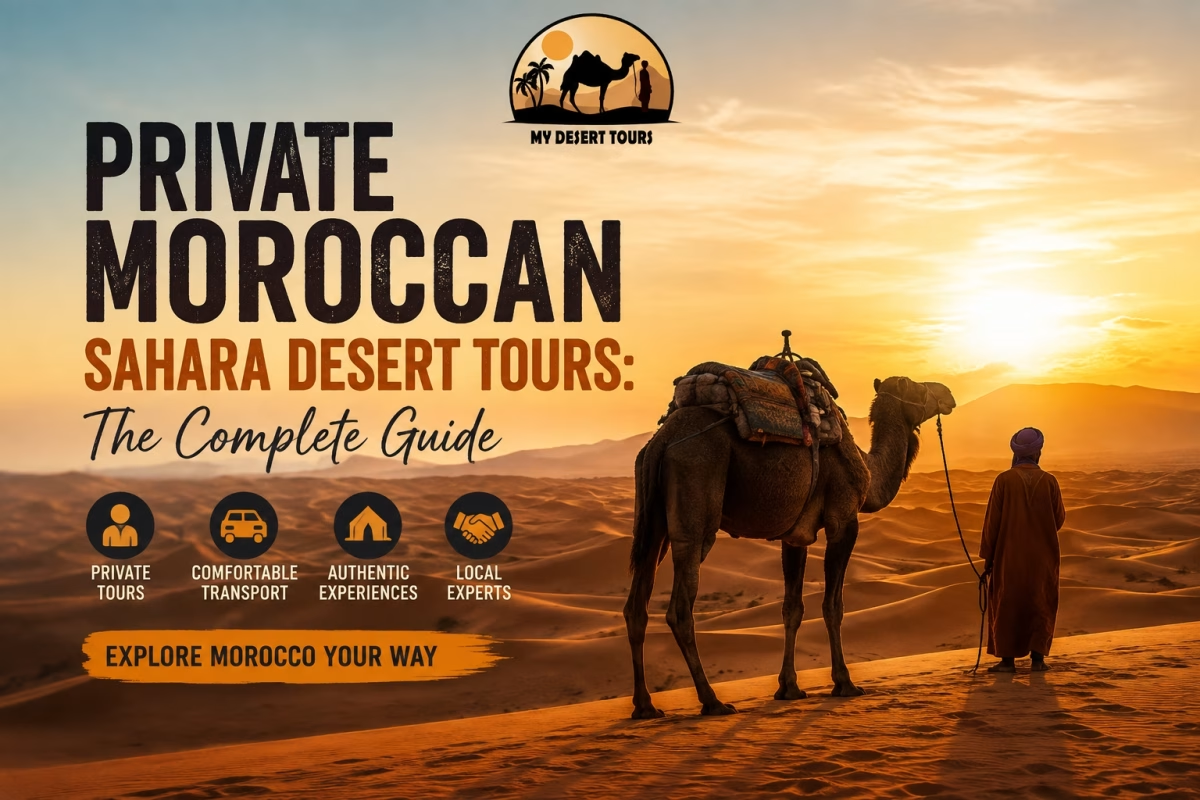
Private Moroccan Sahara Desert Tours: The Complete Guide
Planning a private Moroccan Sahara desert tour involves more decisions than most travelers expect. You need to choose your departure city — whether that means tours from Marrakech, tours from Fes, or a longer itinerary from Casablanca — decide between Erg Chebbi and Erg Chegaga, figure out how many days you actually need, and sort through dozens of tour operators offering seemingly identical packages. This guide breaks down every major decision point so you can plan a desert experience that matches your schedule, budget, and comfort expectations — without the guesswork.
Why Choose a Private Sahara Desert Tour in Morocco?
Morocco’s Sahara desert tours generally come in two formats: shared group tours and private tours. Understanding the difference is the first step toward choosing the right experience.
Private vs. Group Tours: Key Differences
A private desert tour means you travel with your own dedicated vehicle, driver, and guide. The itinerary is yours to shape. You decide when to stop for photographs, how long to linger at a viewpoint, and which restaurants suit your preferences. The pace is entirely under your control.
A shared group tour places you in a vehicle or minibus with other travelers on a fixed itinerary. Departure times, stops, meal locations, and camp assignments are predetermined. Group tours are typically less expensive per person but offer limited flexibility.
Here is how the two formats compare across the factors that matter most:
- Itinerary: Private tours are fully customizable. Group tours follow a fixed schedule.
- Pace: On a private tour, you set the schedule. On a group tour, the pace is group-determined.
- Vehicle: Private tours provide a dedicated 4×4 or minivan. Group tours use a shared minibus or van.
- Guide and driver: Private tours assign a guide and driver dedicated to your party. Group tours share these among all passengers.
- Photo stops: Private tours stop whenever you want. Group tours stop at scheduled points only.
- Accommodation choice: Private tours let you select or upgrade your hotels and camps. Group tours use pre-assigned accommodation.
- Cost per person: Private tours cost more per person, but the price decreases significantly with larger groups. Group tours are cheaper per person.
- Best for: Private tours suit couples, families, and travelers with specific needs. Group tours suit solo travelers on a tight budget.
Benefits of a Private Tour
The primary advantage of a private Sahara tour is control over your time. The drive from Marrakech to Merzouga covers significant distance through the Atlas Mountains, and the scenery along the way — particularly the Tizi n’Tichka pass and the kasbahs near Ouarzazate — deserves more than a rushed glance. A private tour lets you spend an extra twenty minutes at a viewpoint or skip a stop that doesn’t interest you.
Private tours also tend to provide more experienced drivers and guides who can offer deeper cultural context about the regions you pass through, from the Berber villages of the High Atlas to the oasis towns of the Ziz Valley.
Important note: The cost difference between private and group tours narrows significantly when you’re traveling with three or more people, since the vehicle and driver costs are split across your party.
How Many Days Do You Need for a Sahara Desert Tour?
Tour operators in Morocco offer desert excursions ranging from two days to two weeks. The right duration depends on your departure city, your overall Morocco itinerary, and how much time you want to spend in the desert itself versus on the road.
2-Day Desert Tours: Quick Overview
A two-day, one-night desert tour is the fastest way to reach the Sahara and return. The most common options include a 2 Days desert tour from Marrakech to Zagora, which reaches the closer Zagora dunes, and a 2 Days desert tour from Fes to Merzouga, which covers the longer distance to the Erg Chebbi dunes in a compressed timeframe.
What to know: Two-day tours involve a significant amount of driving relative to time spent in the desert. You will experience an overnight in Merzouga desert and camel trekking at sunset, but the schedule is tight. The return journey follows the same route, which means less variety in scenery.
Best for: Travelers with very limited time who still want to experience the Sahara.
3-Day Desert Tours: The Most Popular Option
Three-day, two-night tours are the most widely booked format, and for good reason. Popular options include the 3 Days desert tour from Marrakech to Merzouga, the 3 Days desert tour from Marrakech to Fes, and the 3 Days desert tour from Fes to Marrakech. The extra day compared to a two-day tour allows for a more relaxed pace, a different return route, and an overnight stop in one of the scenic valleys between the Atlas Mountains and the desert — typically the Dades Valley or the Todgha Gorges.
What to know: A 3 Days desert tour from Fes to Merzouga is particularly efficient because the Fes-to-Merzouga route is somewhat shorter than the Marrakech route. Meanwhile, the 3 Days desert tour from Marrakech to Fes (or its reverse) is the classic cross-country option that connects two major imperial cities while incorporating the desert experience along the way. You avoid backtracking entirely.
Best for: Most first-time visitors to Morocco who want a genuine desert experience with 2 nights in Merzouga desert and camel trekking without dedicating their entire trip to the south.
4-Day Desert Tours: A Deeper Experience
Four-day tours add breathing room to the itinerary. Options like the 4 Days desert tour from Marrakech to Merzouga or the 4 Days desert tour from Marrakech to Fes give you an additional night in the desert region, allowing time for activities like sandboarding, a longer camel trek deeper into the dunes, or a visit to the market town of Rissani. The 4 Days desert tour from Fes to Marrakech follows the same principle in reverse, with shorter driving segments and more time at each stop.
Best for: Travelers who want to explore beyond the standard tourist circuit and experience the Sahara at a more relaxed pace.
5 to 7+ Day Tours: Extended Morocco and Sahara Experiences
Longer tours combine the Sahara with a broader Morocco itinerary. A 5 Days desert tour from Fes to Marrakech or a 6 Days desert tour from Marrakech to Merzouga might include extra nights in the desert, visits to coastal towns, or detours to the remote Erg Chegaga dunes. Extended tours from Casablanca and Tangier — which we cover in detail below — can range from five to ten days and provide comprehensive coverage of the country.
Best for: Travelers making Morocco their primary destination who want to see the imperial cities, the coast, and the Sahara in a single trip.
Which Duration Is Right for You?
Ask yourself three questions:
- How many total days do you have in Morocco? If your entire trip is five days or fewer, a two-day or three-day desert tour may be your only realistic option. If you have seven or more days, a longer tour fits comfortably.
- Are you connecting two cities? A three-day Marrakech-to-Fes or Fes-to-Marrakech tour is an efficient way to travel between the two cities while seeing the desert.
- How much driving are you comfortable with? The distances in Morocco are larger than many travelers expect. If long driving days concern you, opt for a longer tour with shorter daily segments.
Best Sahara Desert Tours by Departure City
Your arrival city largely determines which desert region is most accessible and how long your tour needs to be. Below is a detailed breakdown of tour options from each major Moroccan city.
Tours From Marrakech
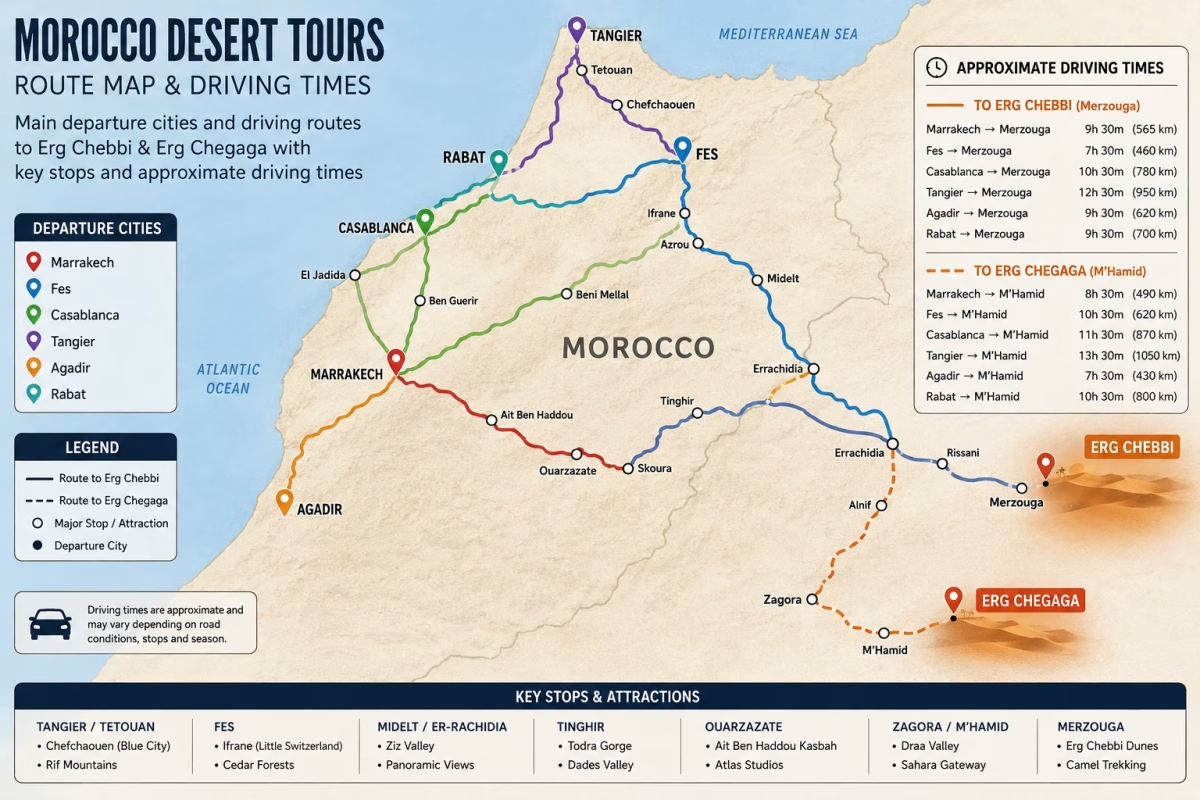
Marrakech is the most popular departure point for Sahara tours, and for good reason. The standard route heads southeast over the High Atlas Mountains via the Tizi n’Tichka pass, descends through Ouarzazate and the Draa Valley region, and continues to the Erg Chebbi dunes near Merzouga.
Key stops along the Marrakech route:
- Tizi n’Tichka — the highest major mountain pass in the Atlas range, offering dramatic panoramic views
- Ait Benhaddou — a UNESCO World Heritage Site and one of Morocco’s most photographed kasbahs, used as a filming location for numerous movies and television series
- Ouarzazate — often called the “Gateway to the Desert,” known for its film studios and the Taourirt Kasbah
- Dades Valley and Todgha Gorges — dramatic rock formations and palm-lined river valleys that serve as common overnight stops
Popular tour options from Marrakech:
- 2 Days desert tour from Marrakech to Zagora (2 days / 1 night): A quick Sahara experience reaching the Zagora dunes with a shorter drive. Ideal when time is very limited.
- 3 Days desert tour from Marrakech to Merzouga (3 days / 2 nights): The classic route via Ait Benhaddou, the Dades Valley, and the Erg Chebbi dunes with a camel trek and desert camp.
- 3 Days desert tour from Marrakech to Fes (3 days / 2 nights): A cross-country route that ends in Fes, eliminating backtracking entirely.
- 4 Days desert tour from Marrakech to Merzouga (4 days / 3 nights): Adds an extra night in the desert region for Rissani, sandboarding, and a longer camel trek.
- 4 Days desert tour from Marrakech to Fes (4 days / 3 nights): A relaxed cross-country option with extended desert time before finishing in Fes.
- 6 Days desert tour from Marrakech to Merzouga (6 days / 5 nights): A comprehensive southern Morocco itinerary with multiple desert nights and deeper exploration of the valleys and gorges.
Practical note: The 2 Days desert tour from Marrakech to Zagora is the only realistic two-day option from Marrakech because the drive to Merzouga is too long for a two-day round trip. If reaching the Erg Chebbi dunes is a priority, plan for at least three days.
Tours From Fes
Fes sits farther north, which means the drive to Merzouga follows a different route through the Middle Atlas and the Ziz Valley. The scenery is distinct — cedar forests, alpine landscapes, and the dramatic Ziz Gorge before the terrain opens into the desert.
Key stops along the Fes route:
- Ifrane and Azrou — cedar forest towns in the Middle Atlas, known for Barbary macaques
- Ziz Valley — one of Morocco’s largest palm groves, stretching for kilometers along the river
- Erfoud — a market town near Merzouga known for its fossil workshops
Popular tour options from Fes:
- 2 Days desert tour from Fes to Merzouga (2 days / 1 night): The fastest route to the Erg Chebbi dunes with an overnight camp and sunset camel trek.
- 3 Days desert tour from Fes to Merzouga (3 days / 2 nights): Includes the Ziz Valley, 2 nights in Merzouga, and an extended camel trek into the dunes.
- 3 Days desert tour from Fes to Marrakech (3 days / 2 nights): A cross-country route via Ait Benhaddou and the High Atlas that finishes in Marrakech.
- 4 Days desert tour from Fes to Marrakech (4 days / 3 nights): Adds an extra desert night and a more relaxed pace on the cross-country route. See details for 4 Days desert tour from Fes to Marrakech.
- 5 Days desert tour from Fes to Marrakech (5 days / 4 nights): Extended stops at the Todgha Gorges, Dades Valley, and other highlights along the way.
- 6 Days desert tour from Fes to Marrakech (6 days / 5 nights): A comprehensive route with coastal or valley detours for travelers who want to see as much of Morocco as possible. Detailed on 6 Days desert tour from Fes to Marrakech.
Practical note: The 2 Days desert tour from Fes to Merzouga is more feasible than a two-day tour from Marrakech because the Fes-to-Merzouga distance is shorter. However, three days remains the more comfortable choice and allows for a genuinely enjoyable experience rather than a driving marathon.
Tours From Casablanca
Casablanca hosts Morocco’s largest international airport (Mohammed V International), making it a common entry point for international travelers. However, the city sits on the Atlantic coast, far from the Sahara. Reaching the desert from Casablanca requires significantly more time than from Marrakech or Fes.
Most tours from Casablanca route through Marrakech first, then continue to the desert. The longer duration allows you to experience multiple regions of Morocco in a single trip.
Popular tour options from Casablanca:
- 5 Days desert tour from Casablanca (5 days / 4 nights): A compact overview routing through Marrakech to Merzouga and back. Best for travelers who want a taste of the desert without a lengthy commitment.
- 6 Days desert tour from Casablanca (6 days / 5 nights): A cross-country option that continues from the desert to Fes, combining the Sahara with the imperial cities.
- 7 Days desert tour from Casablanca (7 days / 6 nights): Adds Chefchaouen or extended time in Fes to the imperial cities and Sahara combination.
- 8 Days desert tour from Casablanca (8 days / 7 nights): A comprehensive northern and southern loop that may include Rabat, Fes, the desert, and Marrakech.
- 9 Days desert tour from Casablanca (9 days / 8 nights): An in-depth exploration covering the full range of Moroccan landscapes and cities.
- 10 Days desert tour from Casablanca (10 days / 9 nights): The complete Morocco experience, often including coastal stops, the imperial cities, the Atlas Mountains, and multiple nights in the Sahara.
Practical advice: If you fly into Casablanca and have fewer than five days, consider spending a day or two in the city, then transferring to Marrakech (approximately three hours by car or train) before beginning a shorter desert tour. This is more efficient than attempting a direct Casablanca-to-Sahara route on a tight schedule.
Tours From Tangier
Tangier, located at the northern tip of Morocco near the Strait of Gibraltar, is a popular entry point for travelers arriving by ferry from Spain. Because Tangier is the farthest major city from the Sahara, desert tours from here are necessarily longer and typically route south through Chefchaouen, Fes, and the Middle Atlas before reaching the desert.
Popular tour options from Tangier:
- 4 Days desert tour from Tangier (4 days / 3 nights): A fast-paced northern route through Chefchaouen and Fes to Merzouga. Involves long driving days but covers the essentials.
- 5 Days desert tour from Tangier (5 days / 4 nights): A more comfortable pace with a proper desert overnight and time to appreciate Chefchaouen.
- 6 Days desert tour from Tangier (6 days / 5 nights): Extends the itinerary to include the Dades Valley or additional desert time.
- 7 Days desert tour from Tangier (7 days / 6 nights): A full north-to-south crossing that finishes in Marrakech via the Sahara and the High Atlas.
- 8 Days desert tour from Tangier (8 days / 7 nights): A comprehensive Morocco itinerary that may add coastal stops or extra time in the imperial cities.
- 9 Days desert tour from Tangier (9 days / 8 nights): An in-depth cultural and desert exploration for travelers who want to see everything Morocco has to offer.
Practical note: A 4 Days desert tour from Tangier is the minimum realistic option and involves long driving days. If your schedule allows, five or six days provides a much more enjoyable pace and lets you appreciate the blue city of Chefchaouen and the imperial city of Fes before reaching the Sahara.
Tours From Agadir
Agadir, the coastal resort city in southern Morocco, offers a unique advantage: proximity to the remote Erg Chegaga dunes. Rather than driving all the way to Merzouga in the east, tours from Agadir can reach the Sahara via the Draa Valley and the anti-Atlas region.
The most popular option is a 6 Days Tour from Agadir to the Desert Via Marrakech, which combines the coastal south, the High Atlas, and the Sahara in a single itinerary. This route typically heads east from Agadir through Taroudant and the Draa Valley, reaches the Erg Chegaga or Erg Chebbi dunes, and returns via Marrakech.
Best for: Travelers flying into Agadir who want to combine beach time with a desert experience, or those specifically interested in the more remote Erg Chegaga dunes.
Tours From Rabat
Rabat, Morocco’s capital, is less commonly used as a starting point for desert tours but is a viable option for travelers arriving at Rabat-Salé Airport or those who begin their Morocco itinerary in the capital. A typical itinerary for a 5 days desert tour from Rabat to Marrakech might route through Casablanca and the Atlas Mountains before reaching the Sahara, combining cultural stops in the imperial cities with the desert experience.
Best for: Travelers whose international flights land in Rabat or who want to include the capital’s UNESCO-listed medina and Hassan Tower in their itinerary before heading south.
Erg Chebbi vs. Erg Chegaga: Which Desert Should You Visit?
Morocco has two major sand dune systems that attract tourists, and choosing between them is one of the most important decisions in planning your tour.
Erg Chebbi (Merzouga): Overview
Erg Chebbi is the more famous and more accessible of the two dune systems. Located near the town of Merzouga in eastern Morocco, its dunes rise to approximately 150 meters and shift in color from golden to deep orange depending on the light.
Accessibility: The road to Merzouga is fully paved all the way to the edge of the dunes. You can reach Erg Chebbi by standard vehicle, and the camel trek from the road to most desert camps takes roughly one to two hours.
Infrastructure: Merzouga has the most developed tourist infrastructure in the Moroccan Sahara. You will find a wide range of hotels, riads, and desert camps — from basic Berber-style tents to luxury camps with private bathrooms, hot showers, air conditioning, and WiFi.
Crowds: Because of its accessibility, Erg Chebbi receives the most visitors. During peak season, the dunes near the main camp areas can feel busy.
Erg Chegaga: Overview
Erg Chegaga is the larger and more remote dune system, situated deep in the Sahara south of the Draa Valley. Its dunes are wider and more spread out, and the landscape feels significantly more isolated.
Accessibility: Reaching Erg Chegaga requires several hours of off-road driving through rocky desert terrain (hamada). A 4×4 vehicle is essential, and the drive demands an experienced driver. Most tours to Chegaga require at least three to four days from Marrakech or Agadir.
Infrastructure: Tourist infrastructure around Erg Chegaga is minimal. Camps are more basic, and there are no towns nearby comparable to Merzouga.
Crowds: Chegaga receives far fewer visitors than Chebbi. If solitude and a sense of remoteness are priorities, Chegaga delivers an experience that Chebbi increasingly struggles to match.
Comparing the Two Desert Regions
When deciding between Erg Chebbi and Erg Chegaga, consider these key differences:
- Dune size: Erg Chebbi features tall, dramatic dunes reaching up to roughly 150 meters. Erg Chegaga’s dunes are wider and more expansive across a broader area.
- Accessibility: Erg Chebbi has a paved road to the dune edge, making it reachable by standard car. Erg Chegaga requires hours of off-road driving in a 4×4.
- Camp comfort: Erg Chebbi offers the full range from basic to luxury camps. Erg Chegaga camps are mostly basic to mid-range due to the remote location.
- Crowd level: Erg Chebbi sees moderate to high visitor numbers in peak season. Erg Chegaga remains quiet year-round.
- Minimum tour duration: Erg Chebbi can be reached in 2 days from Fes or 3 days from Marrakech. Erg Chegaga requires at least 3 to 4 days from Marrakech or Agadir.
- Best for: Erg Chebbi suits first-time visitors, families, and comfort seekers. Erg Chegaga suits adventurous travelers and solitude seekers.
- Departure cities: Erg Chebbi is accessible from Marrakech, Fes, and Casablanca. Erg Chegaga is best reached from Marrakech or Agadir.
The bottom line: If this is your first trip to Morocco and you want a comfortable, well-organized desert experience, Erg Chebbi is the practical choice. If you have extra time, a sense of adventure, and a preference for remote landscapes, Erg Chegaga offers a more authentic wilderness experience.
Sample Itineraries for Private Sahara Desert Tours
The following itineraries illustrate how typical private desert tours are structured. Actual itineraries vary by operator and can be customized.
3 Days Desert Tour from Marrakech to Fes
This is the most popular private desert tour in Morocco because it connects the two most visited imperial cities while crossing the Sahara.
Day 1: Marrakech → Ait Benhaddou → Dades Valley
Depart Marrakech in the morning and cross the High Atlas via the Tizi n’Tichka pass. Stop at Ait Benhaddou to explore the UNESCO-listed kasbah. Continue through Ouarzazate and the Valley of Roses toward the Dades Valley, where you spend the night in a hotel or guesthouse surrounded by dramatic rock formations.
Day 2: Dades Valley → Todgha Gorges → Merzouga
Drive through the Todgha Gorges, where towering canyon walls narrow to a dramatic passage. Continue south through the Ziz Valley and the town of Erfoud to reach Merzouga in the late afternoon. Mount camels for a trek into the Erg Chebbi dunes as the sun sets. This overnight in Merzouga desert and camel trekking experience is the highlight of the tour for most travelers. Spend the night in a desert camp beneath the stars.
Day 3: Merzouga → Ziz Valley → Fes
Wake early for sunrise over the dunes. After breakfast at the camp, drive north through the Ziz Valley and the Middle Atlas cedar forests, arriving in Fes by evening.
3 Days Desert Tour from Fes to Marrakech
This follows the same route in reverse. You depart Fes, cross the Middle Atlas, spend a night in the Dades Valley or Todgha Gorges region, continue to Merzouga for a night in the desert, and finish in Marrakech via Ait Benhaddou and the High Atlas. The 3 Days desert tour from Fes to Marrakech is equally popular and offers the same cross-country efficiency.
2 Days Desert Tour from Fes to Merzouga
A 2 Days desert tour from Fes to Merzouga condenses the journey into a single long driving day in each direction. You depart Fes early, cross the Middle Atlas and the Ziz Valley, and arrive in Merzouga by late afternoon. After a camel trek into the dunes for sunset, you spend the night at a desert camp. The following morning, you return to Fes via the same route. This format works from Fes because the distance is manageable in a single day, though it leaves little time for extended stops.
4 Days Desert Tour from Marrakech to Merzouga
A 4 Days desert tour from Marrakech to Merzouga adds a night in the Merzouga area, giving you time for a longer camel trek, a visit to the Rissani souk, sandboarding on the dunes, or a 4×4 excursion to the Gnawa music village of Khamlia. The extra day also shortens the driving segments, making the trip significantly more comfortable. This option is ideal if you want 2 nights in Merzouga desert and camel trekking with enough time to truly absorb the landscape.
What to Expect on Your Private Desert Tour
Understanding the practical details of a desert tour helps set accurate expectations and reduces surprises.
Transport and Vehicles
Most private desert tours use Toyota or Mitsubishi 4×4 vehicles — typically Land Cruisers or similar models that seat four to six passengers comfortably. These vehicles handle both paved highways and the off-road sections required for certain routes, particularly around Erg Chegaga.
The roads to Merzouga from both Marrakech and Fes are fully paved. The drive is long but straightforward, and the scenery changes dramatically as you cross the Atlas Mountains and descend into the pre-Saharan plains.
Your driver typically serves as your primary point of contact throughout the tour. On private tours, drivers often speak English, French, or Spanish in addition to Arabic and Amazigh (Berber), though language proficiency varies. Confirm language capabilities when booking.
Camel Trekking in the Sahara
The camels used for desert treks in Morocco are dromedaries (single-humped camels). They are domesticated animals that have been used for Saharan transport for centuries.
A typical camel trek to a desert camp lasts between one and two hours. The camels walk in a caravan, led by a camel guide on foot. The ride is generally smooth, though the rocking motion can be uncomfortable for some riders after extended periods.
Practical tips:
- Wear long pants to prevent chafing against the saddle.
- Hold onto the saddle pommel during the camel’s standing and sitting motions, which are the most jarring moments.
- Camel treks are most enjoyable in calm weather. Windy conditions can make the experience less pleasant due to blowing sand.
- If you have back problems or mobility concerns, discuss alternatives with your tour operator. Some camps can be reached by 4×4 vehicle.
Desert Camps: Standard vs. Luxury
Desert camps in the Moroccan Sahara have evolved significantly in recent years. Most operators now offer two tiers:
Standard (Berber-style) camps: These provide basic tents with mattresses, blankets, and shared toilet facilities. They offer an authentic, stripped-down desert experience at a lower cost.
Luxury camps: These feature larger tents with proper beds, private bathrooms with hot showers, electricity, lighting, and in some cases air conditioning and WiFi. The level of comfort can be surprisingly high given the remote location.
Regulatory note: In recent years, Moroccan authorities have restricted the placement of camps directly in the middle of the Erg Chebbi dunes to protect the environment and preserve the dune landscape. Most camps are now situated at the edges of the dune field, though many still offer expansive desert views and a genuine sense of isolation.
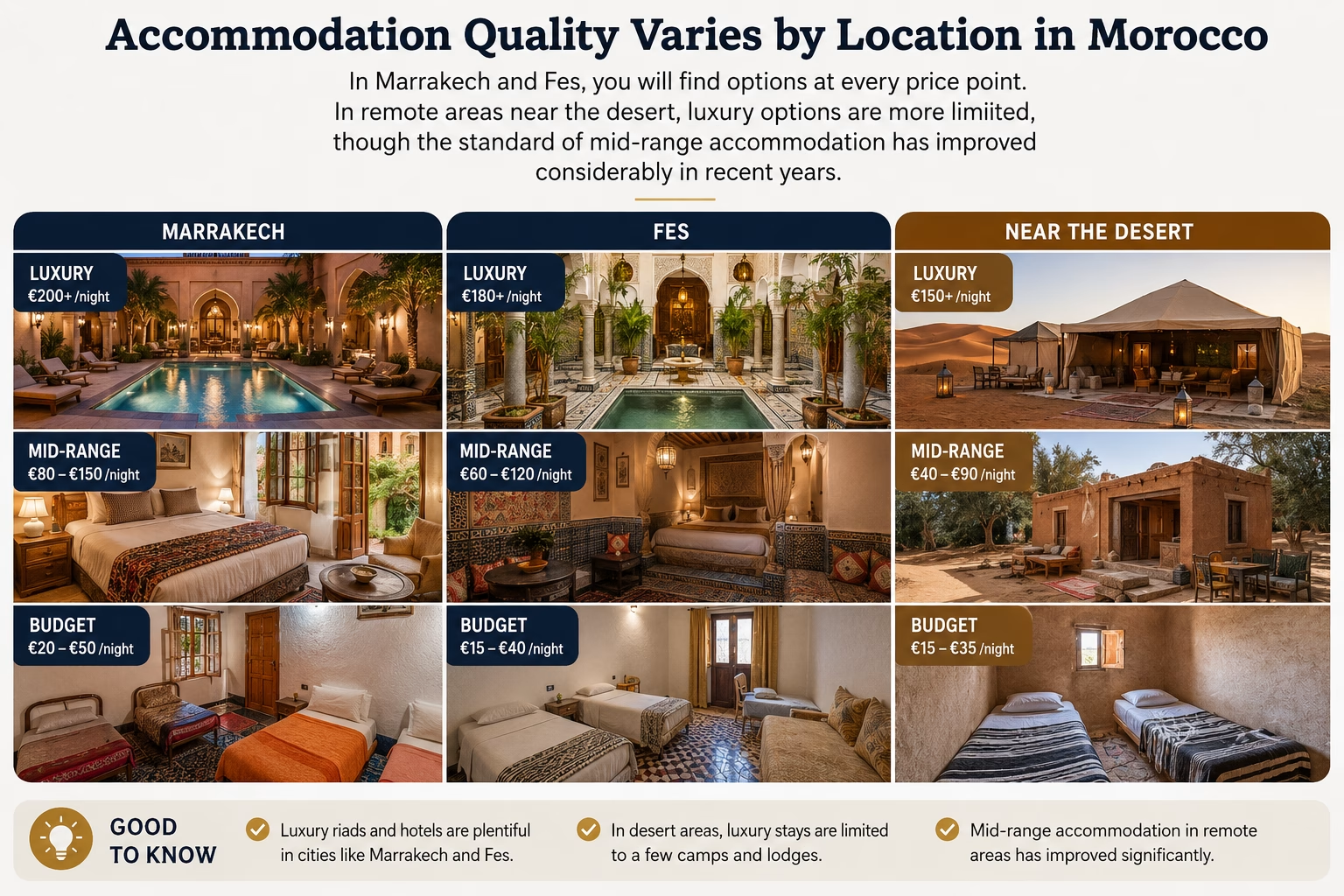
Hotels and Accommodation Along the Route
Outside the desert itself, your overnight stops will be in hotels, guesthouses, or traditional Moroccan accommodations. The terminology can be confusing:
- Riad: A traditional Moroccan house built around an interior courtyard, typically found in the medinas of Marrakech and Fes. Riads are known for their intricate zellij tilework and mosaic decoration.
- Kasbah: A fortified building or complex, often converted into a hotel. Many kasbahs along the desert route offer atmospheric rooms with views of the surrounding valleys.
- Auberge: A small guesthouse or inn, common in rural areas and smaller towns.
- Hotel: Standard hotel accommodation, ranging from basic to upscale.
Meals and Moroccan Cuisine on the Road
Most private desert tour packages include breakfast and dinner. Lunch is typically arranged at roadside restaurants along the route.
Moroccan cuisine is a highlight of any trip. Expect to encounter tagine (slow-cooked stews prepared in a conical clay pot), couscous (traditionally served on Fridays but available throughout the week), harira (a hearty tomato and lentil soup), and fresh bread with olive oil and honey.
Roadside restaurants along the desert routes are accustomed to serving tourists and generally maintain reasonable hygiene standards. Your driver can recommend reliable stops. Meal costs at roadside restaurants are modest by international standards.
Dietary considerations: If you have specific dietary requirements (vegetarian, vegan, gluten-free, allergies), communicate these to your tour operator well in advance. Moroccan cuisine is adaptable, but remote desert camps have limited ingredient availability.
Photo Stops and Scenic Highlights
One of the greatest advantages of a private tour is the freedom to stop whenever the landscape demands it. The routes through the Atlas Mountains, the Dades Valley, and the Ziz Gorge offer some of the most photogenic scenery in North Africa. Your driver will know the best viewpoints and will typically suggest stops without prompting.
Keep your camera accessible throughout the drive. The light in the Sahara changes rapidly, and the best shots often come unexpectedly.
How Much Does a Private Sahara Desert Tour Cost?
Tour pricing in Morocco varies widely depending on several factors, and transparent pricing is not always easy to find online. Rather than quoting specific figures that may be outdated by the time you read this, here is a framework for understanding what drives cost.
Factors That Affect Price
- Duration: A 2 Days desert tour from Marrakech to Zagora costs less in total than a 6 Days desert tour from Marrakech to Merzouga, though the per-day cost may be higher due to fixed expenses like the vehicle and driver.
- Comfort level: Luxury camps and upscale hotels increase the price significantly compared to standard accommodation.
- Group size: Private tour costs are split among your party. A couple will pay more per person than a family of four sharing the same vehicle.
- Departure city: Tours from Casablanca or Tangier involve more driving days and therefore higher total costs than tours from Marrakech or Fes.
- Season: Peak season (spring and autumn) may carry higher rates than the summer low season.
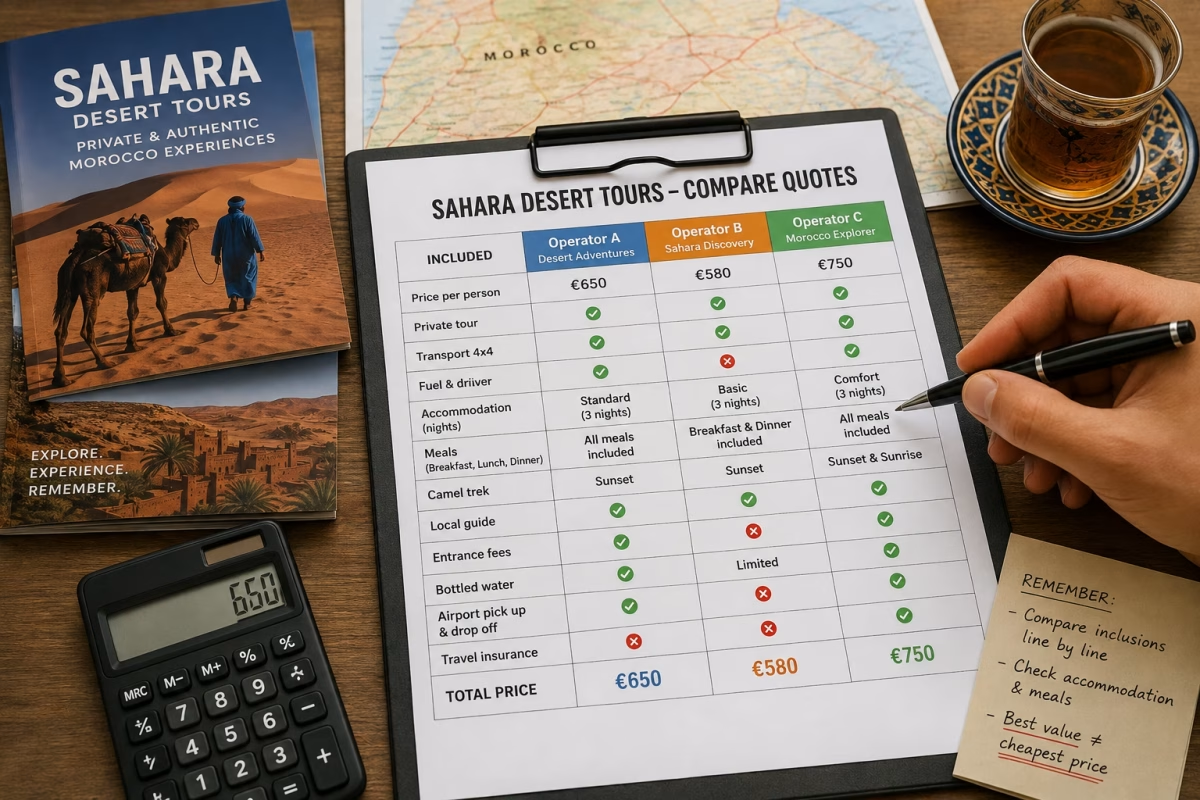
- Inclusions: Some quotes include all meals, entrance fees, and activities. Others cover only transport and accommodation. Always clarify what is included.
What Is Typically Included
Most private tour packages cover:
- Private vehicle and driver for the duration
- Accommodation (hotels and desert camp)
- Breakfast and dinner
- Camel trek
What Is Typically Not Included
- Lunches (usually paid separately at roadside restaurants)
- Drinks and snacks
- Entrance fees to specific attractions
- Tips for drivers, guides, and camp staff
- Activities like quad biking or sandboarding (often available as add-ons)
Recommendation: Request detailed quotes from at least two or three operators and compare what is included line by line. The cheapest option is not always the best value if it excludes meals or uses basic accommodation.
Best Time to Visit the Moroccan Sahara
The Sahara’s climate is extreme, and timing your visit correctly has a major impact on your comfort and enjoyment.
Seasonal Overview
Spring (March–May): Widely considered the best time for a desert tour. Daytime temperatures are warm but manageable, and the landscape may still show traces of green from winter rains. Nights are cool but not freezing.
Autumn (September–November): The second peak season. The intense summer heat has subsided, and conditions are similar to spring. October and November are particularly popular.
Winter (December–February): Days can be pleasant and sunny, but nighttime temperatures in the desert drop sharply, sometimes approaching freezing. Desert camps can feel very cold after dark, even luxury ones with heating. If you visit in winter, pack warm layers.
Summer (June–August): The Sahara is extremely hot in summer, with daytime temperatures that can make outdoor activities uncomfortable or unsafe. Many experienced travelers avoid the deep desert during July and August. If you must visit in summer, plan activities for early morning and late afternoon, and ensure your camp has adequate cooling.
Key Considerations
- The shoulder months of March, April, October, and November offer the best balance of comfortable temperatures and manageable crowd levels.
- Ramadan dates shift each year and may affect restaurant availability and tour schedules. Check the calendar for your travel dates.
- Sandstorms can occur at any time of year but are most common in late winter and early spring. They are usually brief but can disrupt camel treks and visibility.
What to Pack for a Sahara Desert Tour
Packing for the Sahara requires preparation for dramatic temperature swings and dusty conditions.
Clothing Essentials
- Lightweight, breathable layers for daytime (long sleeves protect against sun and sand)
- Warm jacket or fleece for evenings and early mornings, especially in winter
- Comfortable walking shoes or hiking sandals for the dunes
- Closed-toe shoes for rocky terrain and gorge walks
- Scarf or shemagh to protect your face and neck from sun and wind-blown sand
- Hat with a brim for sun protection
- Long pants for camel riding (prevents chafing)
Gear and Equipment
- Sunglasses with UV protection
- Sunscreen (high SPF — the desert sun is intense even in cooler months)
- Headlamp or small flashlight for navigating the camp at night
- Power bank for charging devices (electricity at camps may be limited)
- Reusable water bottle to stay hydrated throughout the day
- Small daypack for carrying essentials during the camel trek
Health and Practical Items
- Basic first-aid supplies (bandages, antiseptic, pain relievers)
- Any personal medications (pharmacies are scarce in the desert region)
- Toilet paper and hand sanitizer — while toilets are available at regular intervals along the main routes, supplies are not always guaranteed in remote areas
- Lip balm and moisturizer — the desert air is extremely dry
- Cash in Moroccan dirhams for small purchases, tips, and roadside toilet fees
Practical Tips for Your Desert Tour
Safety in the Sahara
The Moroccan Sahara is generally safe for tourists, and the main desert routes are well-traveled. However, basic precautions are sensible:
- Stay with your guide during camel treks and dune walks. The dunes can be disorienting, and distances are deceptive.
- Drink water consistently throughout the day, even if you don’t feel thirsty. Dehydration happens quickly in dry heat.
- Inform your tour operator of any medical conditions before departure. Medical facilities near Merzouga and in the desert region are basic.
- Keep valuables secure and out of sight in the vehicle.
Toilets and Facilities on the Road
Toilet availability is a common concern for first-time visitors. Along the main tourist routes between Marrakech, Fes, and Merzouga, modern toilets are available at restaurants and rest stops approximately every one to two hours. Most roadside facilities charge a small fee (a few dirhams) unless you are purchasing food or drinks.
In remote areas of the Atlas Mountains or deep desert, facilities may be basic or nonexistent. Carrying your own toilet paper and hand sanitizer is strongly recommended.
Connectivity and Cell Reception
Mobile phone coverage is available in most towns along the desert routes, including Merzouga. However, reception becomes unreliable once you enter the dunes. Desert camps that advertise WiFi typically offer limited bandwidth suitable for messaging but not for streaming or large uploads.
If staying connected is important, consider purchasing a local Moroccan SIM card at the airport upon arrival. Major providers offer affordable data packages with reasonable coverage in populated areas.
Currency and Payments
Morocco uses the Moroccan dirham (MAD). While some tour operators accept euros or credit cards for the initial booking, day-to-day expenses on the road — meals, tips, small purchases, toilet fees — are best paid in dirhams. ATMs are available in larger towns like Ouarzazate, Erfoud, and Merzouga, but they can be unreliable. Withdraw sufficient cash before leaving Marrakech or Fes.
Cultural Etiquette
Morocco is a Muslim country with conservative social norms, particularly in rural areas. A few guidelines will help you navigate interactions respectfully:
- Dress modestly outside of tourist areas. Covering shoulders and knees is appreciated, especially in small villages.
- Ask permission before photographing local people.
- During Ramadan, be discreet about eating and drinking in public during daylight hours.
- Tipping is customary and appreciated. A tip for your driver and guide at the end of the tour is standard practice.
How to Choose a Reputable Tour Company
The Moroccan desert tour market is competitive, and dozens of operators offer similar-sounding packages. Here is how to evaluate your options.
What to Look For
- Detailed itineraries: A reputable operator provides a clear day-by-day breakdown of the route, stops, and overnight locations. Vague descriptions are a warning sign.
- Transparent pricing: The quote should specify exactly what is included and what is not. Beware of unusually low prices that may hide additional costs.
- Vehicle information: Ask about the type and age of the vehicle. Well-maintained 4×4 vehicles are essential for comfort and safety, particularly on longer routes.
- Accommodation details: Request the names or categories of the hotels and camps you will use. Operators who are vague about accommodation may be planning to assign the cheapest available option.
- Reviews and references: Check independent review platforms for recent, detailed feedback from past travelers. Look for consistency in reviews rather than a handful of perfect scores.
- Communication quality: An operator who responds promptly and answers your questions thoroughly before booking is likely to provide good service during the tour.
Red Flags to Avoid
- Prices that seem significantly below market average
- Pressure to book immediately or pay a large deposit upfront
- Unwillingness to provide a written itinerary
- No clear contact information or physical business address
- Consistently negative reviews mentioning broken vehicles, bait-and-switch accommodation, or hidden fees
Booking Process and What to Confirm
Before confirming your reservation, make sure you have written confirmation of:
- Exact dates and pickup location
- Full itinerary with overnight stops
- Accommodation type and category
- Included meals and activities
- Total price and payment schedule
- Cancellation and refund policy
- Driver language capabilities
Plan Your Private Sahara Desert Tour
A private Moroccan Sahara desert tour is one of the most rewarding travel experiences available in North Africa. The combination of dramatic Atlas Mountain scenery, ancient kasbahs, vast dune landscapes, and Berber hospitality creates a journey that stays with you long after you return home.
The key to a successful trip is choosing the right departure city and duration for your schedule — whether that’s a quick 2 Days desert tour from Fes to Merzouga, a classic 3 Days desert tour from Marrakech to Fes, or an extended 7 Days desert tour from Casablanca that covers the full country. Select the desert region that matches your expectations, and book with a transparent, well-reviewed operator.
Start by deciding your arrival city and available dates. Then use the framework in this guide to evaluate tour options, compare itineraries, and ask the right questions before you book. The Sahara has been welcoming travelers for centuries — with a little preparation, your experience will be everything you hoped for.