5 Days Desert Tour from Tangier: Tangier to Merzouga Complete Morocco Itinerary
A 5 Days desert tour from Tangier is an ambitious way to experience several of Morocco’s most distinctive landscapes and cultural destinations in a single journey. The route connects northern Morocco with Chefchaouen and Fes before continuing through the Middle Atlas, the Ziz Valley and southeastern Morocco to reach Tangier to Merzouga and the Sahara around Erg Chebbi.
What makes this itinerary particularly appealing is its variety. Instead of focusing only on the desert, the journey combines historic medinas, mountain scenery, traditional villages, valleys, archaeological heritage and a genuine Sahara experience. Travelers can explore Tetouan, walk through the blue streets of Chefchaouen, discover the historic medina of Fes, cross the Middle Atlas and arrive in Merzouga for camel trekking and a night in a Merzouga desert camp.
The five-day format is designed for travelers with limited time who still want to experience the contrast between northern Morocco and the Sahara. However, it is important to understand that this is a long-distance itinerary. Several days involve substantial road travel, so the experience is better suited to travelers who value seeing a wide range of Morocco rather than spending several days relaxing in one destination.
This guide explains the route day by day, the main attractions, the desert experience, accommodation considerations, transportation, practical planning advice and how this itinerary compares with other Morocco desert tour options.
5 Days Desert Tour from Tangier at a Glance
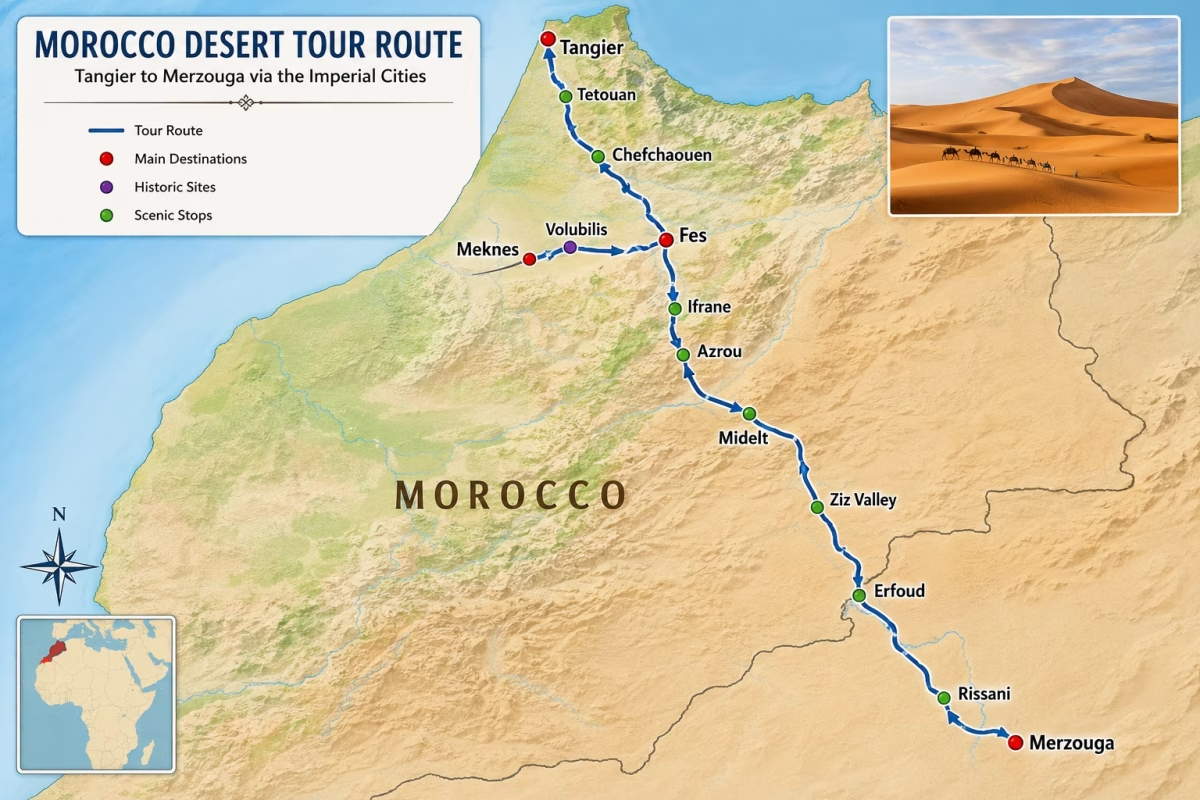
The journey follows a broad route through northern, central and southeastern Morocco:
- Day 1: Tangier → Tetouan → Chefchaouen
- Day 2: Chefchaouen → Fes
- Day 3: Fes → Ifrane → Azrou → Midelt → Ziz Valley → Erfoud → Merzouga
- Day 4: Merzouga → Rissani → Tafilalet → Atlas region → Meknes
- Day 5: Meknes → Volubilis → Tangier
The main experiences include:
- Exploring Tetouan and its historic areas.
- Walking through Chefchaouen’s blue medina.
- Taking a guided Fes city tour.
- Crossing the Middle Atlas Mountains.
- Visiting the cedar forest around Azrou.
- Traveling through Midelt and the Ziz Valley.
- Reaching Merzouga and the Erg Chebbi dunes.
- Enjoying Overnight in Merzouga desert & Camel trekking.
- Spending the night at a Merzouga desert camp.
- Passing through Rissani and the Tafilalet region.
- Exploring Meknes.
- Visiting Volubilis if the final-day schedule allows.
- Returning to Tangier.
Is a 5 Days Desert Tour from Tangier Right for You?
The main advantage of this itinerary is that it combines destinations that are often explored separately.
A traveler starting in Tangier can experience the Rif Mountains and Chefchaouen, continue to Fes, cross the Middle Atlas and reach the Sahara without needing to organize separate transportation between each region.
The itinerary is particularly attractive if your priorities include Tangier to Merzouga, Chefchaouen, Fes and the Sahara. It also works well for travelers who want their desert experience to be part of a larger Morocco itinerary rather than simply flying or transferring directly toward southeastern Morocco.
At the same time, five days is a relatively short period for such a large geographic route. The itinerary covers a considerable distance, so travelers should expect a combination of sightseeing and transportation.
This itinerary may suit you if you want to:
- Start your Morocco journey in Tangier.
- Visit Chefchaouen and Fes.
- Experience the Middle Atlas.
- Reach Merzouga and Erg Chebbi.
- Ride camels in the Sahara.
- Spend a night in a desert camp.
- See different Moroccan landscapes within one organized trip.
- Return to Tangier at the end of the journey.
It may be less suitable if your main priority is slow travel, long stays in each city or several nights in the Sahara.
The central decision is therefore variety versus pace. This route provides substantial variety, while a longer itinerary provides more time for individual destinations.
Understanding the Tangier to Merzouga Route
The geographic progression is one of the most interesting aspects of this journey.
The route begins in northern Morocco, moves through the Rif Mountains to Chefchaouen, continues to Fes, crosses the Middle Atlas and then gradually enters southeastern Morocco.
From there, the landscape changes again as the route approaches the Sahara around Merzouga.
The return journey takes a different direction through Rissani and Meknes before reaching Volubilis and Tangier.
This means the trip is not simply a direct journey to the desert and back. It introduces several distinct Moroccan environments:
- Northern Moroccan cities
- Rif Mountain landscapes
- Chefchaouen’s blue medina
- The historic city of Fes
- Middle Atlas forests and mountains
- Midelt and southeastern valleys
- The Ziz Valley
- Erfoud and the surrounding region
- Erg Chebbi and the Sahara
- Rissani and Tafilalet
- Meknes
- Volubilis
- Tangier
The result is a compact cross-country Morocco experience.
Day 1: Tangier to Tetouan and Chefchaouen
The first day begins in Tangier and heads toward Tetouan before continuing into the Rif Mountains to Chefchaouen.
Depending on the arrangement, pickup can take place from your accommodation, airport or port. The precise pickup details should always be confirmed before departure.
Exploring Tetouan
Tetouan is the first important cultural stop.
The city is known for its white architecture and its historic connection with Andalusian influences. The route can include areas such as Moullay El Mehdi Square, the Spanish Ensanche, the Jewish Quarter, Hassan II Square and the area around the Royal Palace.
Tetouan provides a useful introduction to northern Morocco before the journey continues toward Chefchaouen.
Rather than spending the entire first day on the road, the itinerary introduces travelers to an important northern Moroccan city before moving deeper into the Rif Mountains.
Continuing to Chefchaouen
The road continues toward Chefchaouen, one of Morocco’s most recognizable destinations.
Chefchaouen is particularly famous for its blue-painted buildings, narrow streets and mountain setting. The historic medina is best experienced on foot, allowing travelers to explore the small streets, local shops, courtyards and architectural details.
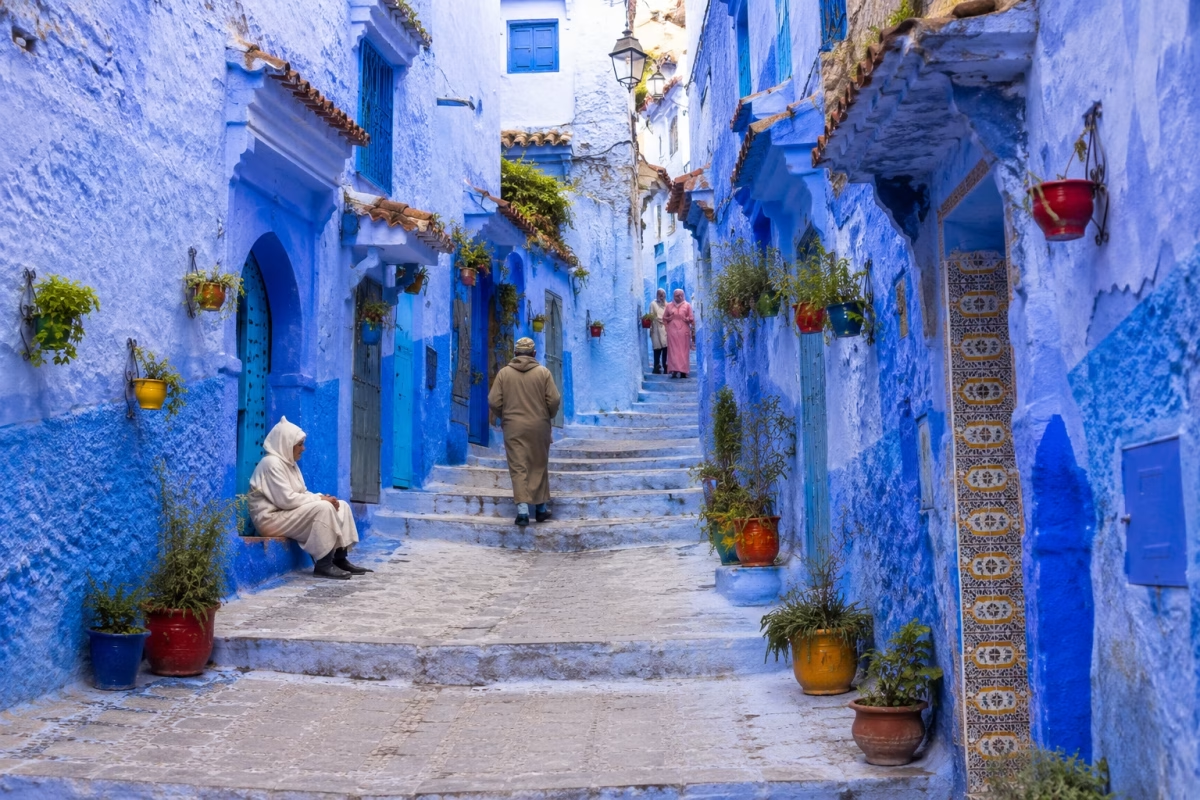
For photographers and travelers interested in architecture, Chefchaouen is one of the strongest visual highlights of the first day.
The overnight stay in Chefchaouen also makes the route more comfortable than trying to combine Tetouan, Chefchaouen and Fes into a single day.
Day 2: Chefchaouen to Fes
The second day continues from Chefchaouen toward Fes.
The route passes through mountainous landscapes and villages associated with northern Morocco before reaching one of the country’s most important historic cities.
Fes is not simply an overnight stop. A guided Fes city tour is one of the major cultural components of the itinerary.
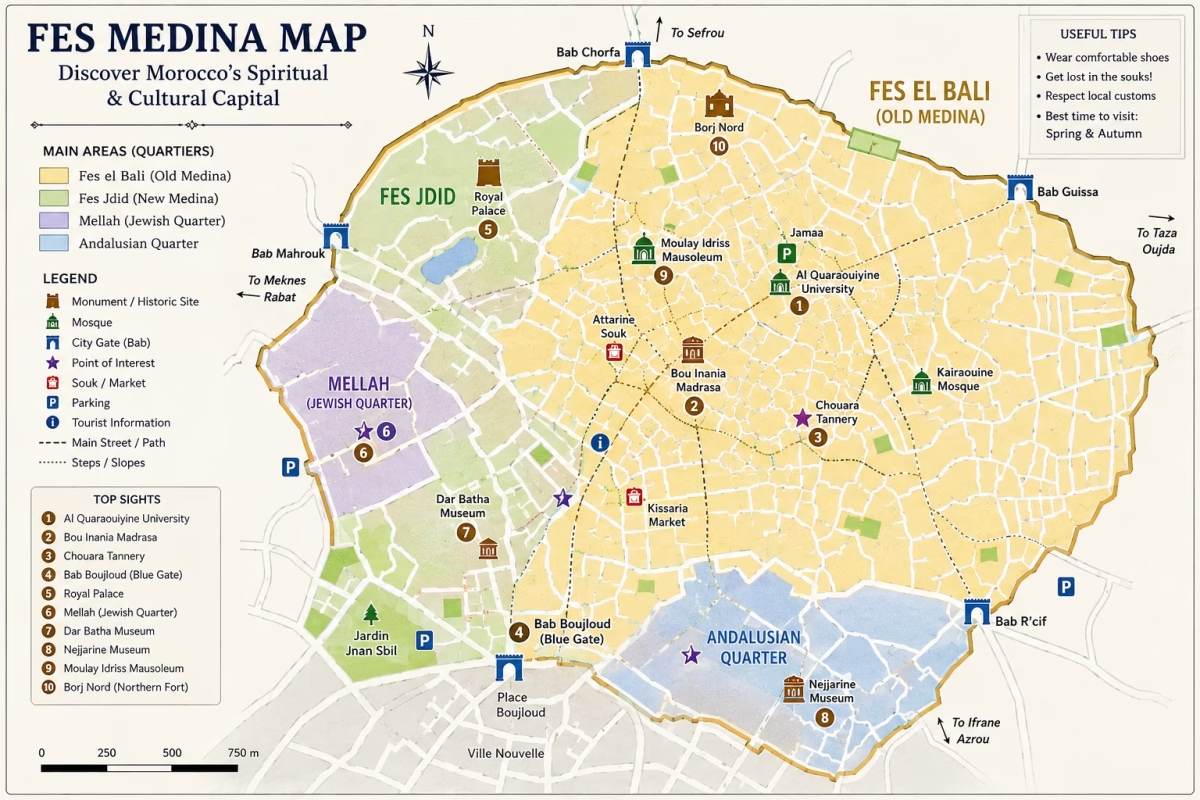
Exploring the Fes Medina
The historic medina of Fes provides a completely different atmosphere from Chefchaouen.
Its narrow streets contain traditional shops, workshops, food markets and craft businesses. The medina offers travelers an opportunity to see traditional Moroccan craftsmanship in a dense historic urban environment.
Depending on the sightseeing program, the visit can introduce travelers to areas associated with:
- Traditional Moroccan crafts
- Spices
- Fresh produce
- Carpets
- Leather
- Pottery
- Weaving
- Goldsmithing
- Historic architecture
- The King’s Palace area
- Traditional tanneries
- Pottery workshops
Why Fes Is Important on This Route
Including Fes prevents the journey from becoming only a transportation route to the Sahara.
The city adds cultural depth before the itinerary changes dramatically on Day 3.
After exploring the medina, travelers leave the urban environment behind and begin crossing the Middle Atlas toward southeastern Morocco.
That contrast is one of the strongest features of the five-day route.
Day 3: Fes to Merzouga Through the Middle Atlas
Day 3 is the major transition from northern and central Morocco toward the Sahara.
The route travels through Ifrane, Azrou, Midelt, the Ziz Valley and Erfoud before reaching Merzouga.
It is also the day with the greatest change in landscape.
The journey begins among mountain scenery and forests before gradually moving toward the drier landscapes of southeastern Morocco.
Ifrane
Ifrane is one of the first notable stops after leaving Fes.
The town has a distinctive architectural character and a mountain environment that makes it noticeably different from the historic medinas visited earlier in the journey.
For many travelers, Ifrane provides an interesting contrast before the route continues toward Azrou.
Azrou and the Cedar Forest
The route then reaches the area around Azrou and its cedar forest.
The forest is known for its mature cedar trees and the presence of Barbary macaques. Depending on conditions and where the vehicle stops, travelers may have an opportunity to observe them in their natural environment.
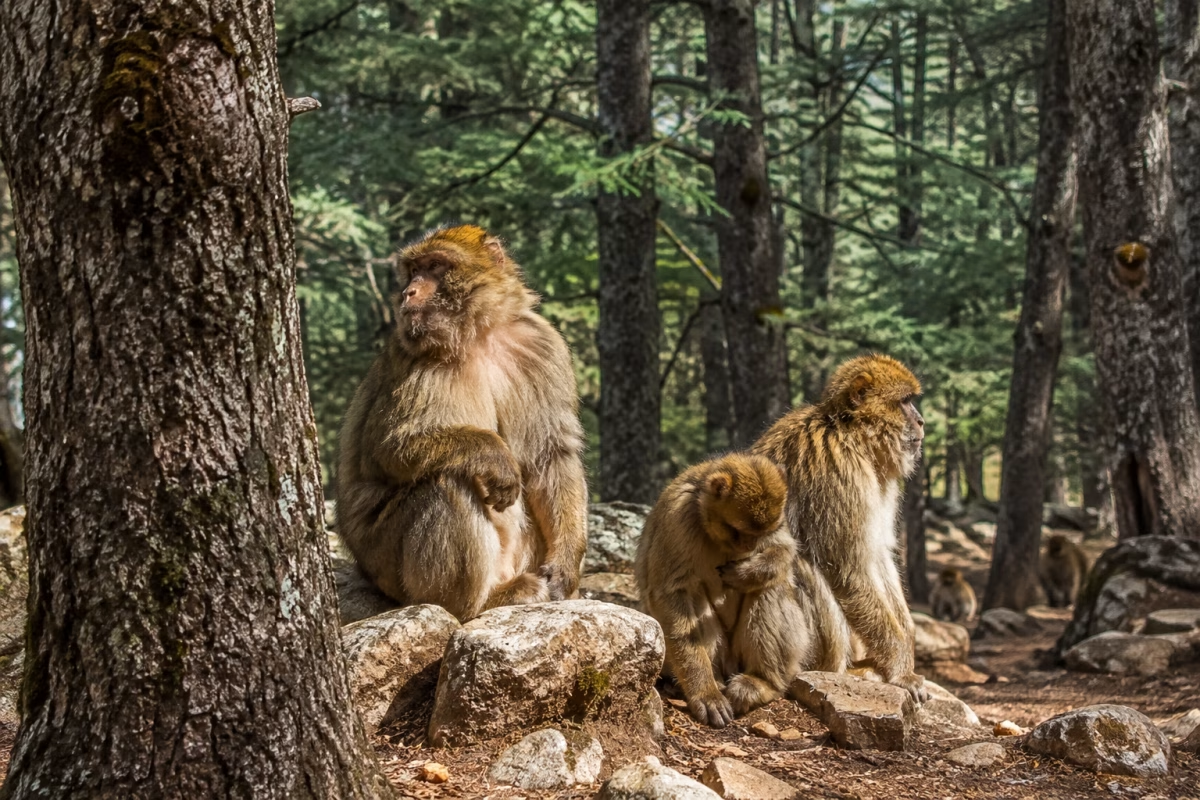
This stop adds a wildlife and nature component to an itinerary otherwise dominated by cities and desert landscapes.
Midelt
The journey continues toward Midelt, where the itinerary includes a lunch stop.
Midelt is an important transition point between the Middle Atlas and southeastern Morocco.
The landscape begins to change noticeably as the route continues farther south and east.
Rather than treating the drive as simply a means of reaching Merzouga, travelers can use this part of the journey to appreciate the changing geography of Morocco.
Ziz Valley
The route then continues through the Ziz Valley and its surrounding landscapes.
The valley provides another dramatic contrast with the forests and mountain scenery experienced earlier in the day.
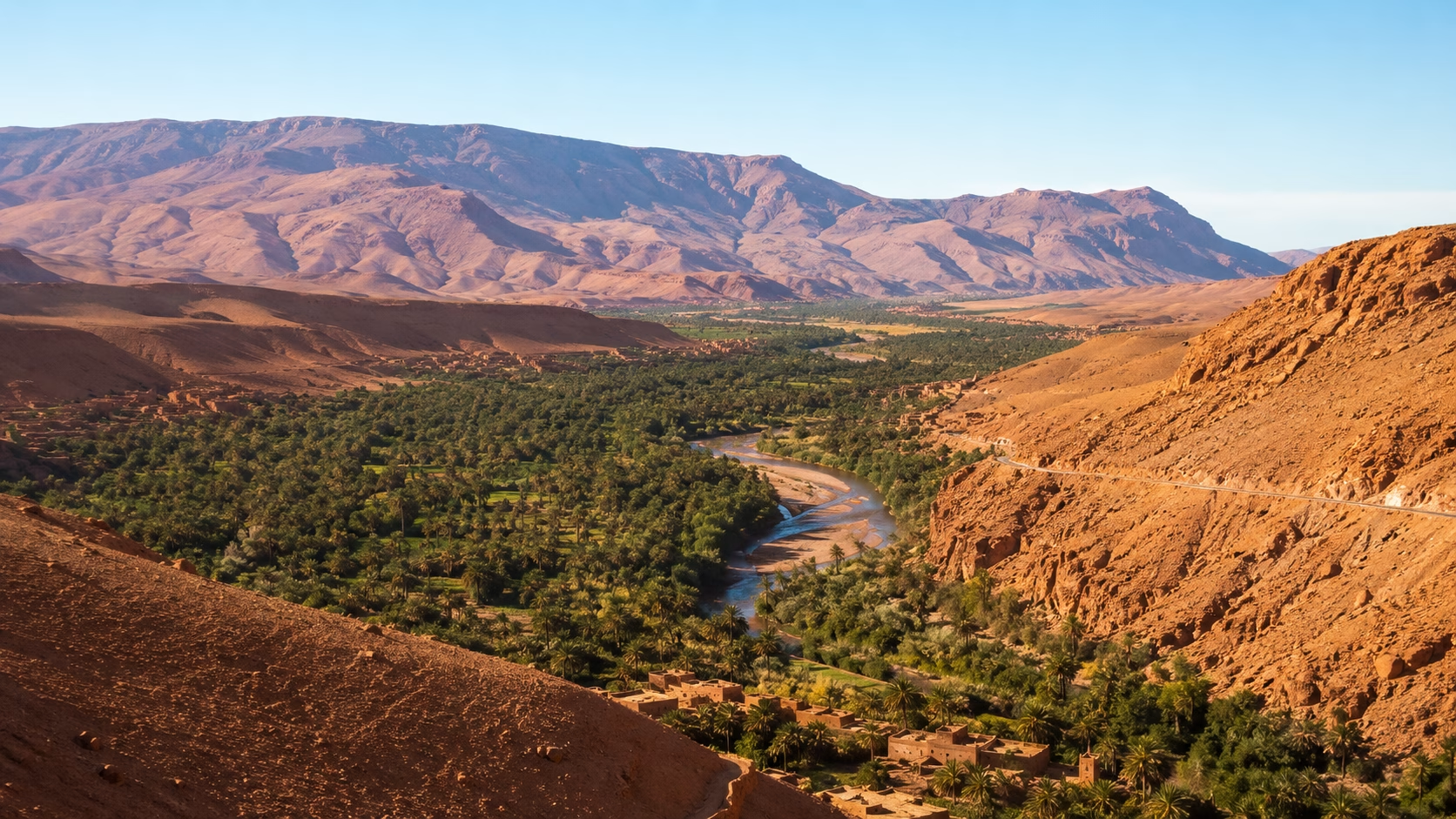
The Ziz Valley is an important visual part of the route because it helps demonstrate how quickly Morocco’s landscapes can change over a single journey.
Erfoud
The itinerary then passes through Erfoud before continuing toward Merzouga.
Erfoud is commonly associated with fossils and southeastern Moroccan landscapes, and it serves as another transition point before the final approach to the desert.
From here, the route continues toward Merzouga and the Erg Chebbi dunes.
Arriving in Merzouga
Arrival in Merzouga represents the central experiential moment of the journey.
After several days of northern cities, historic medinas, mountains and valleys, the environment changes to the wide open landscape of the Sahara.
The Merzouga area is associated with the dunes of Erg Chebbi and provides the setting for the camel trek and desert camp experience.
Overnight in Merzouga Desert and Camel Trekking
One of the most important experiences included in the itinerary is Overnight in Merzouga desert & Camel trekking.
The camel trek provides a traditional way to travel toward the desert camp while experiencing the dunes at a slower pace than the road journey of the previous days.
The experience is particularly atmospheric around sunset, when the light changes across the dunes.
The Merzouga Desert Camp
The overnight stay at a Merzouga desert camp is the centerpiece of the Sahara experience.
The itinerary describes a desert camp experience including dinner, traditional Berber music and drums.
After sunset, the surroundings become very different from the cities visited earlier in the trip. The absence of urban streets and the open desert environment create a completely different atmosphere.
Travelers should confirm the exact camp category and facilities before booking because the term “desert camp” can describe different accommodation standards.
What to Confirm About the Camp
Before booking, ask:
- What type of tent is provided?
- Is the accommodation private or shared?
- Is there a private bathroom?
- Is dinner included?
- Is breakfast included?
- Is the camel trek included?
- What time does the camel trek normally begin?
- Is alternative transportation available for travelers who do not want to ride a camel?
- What happens if weather or local conditions affect the planned desert activity?
These details are especially important because the desert night is one of the main reasons to choose this itinerary.
Day 4: Merzouga to Rissani and Meknes
The fourth day begins the journey north.
After the Sahara experience, the route leaves Merzouga and continues through southeastern Morocco toward Rissani, Tafilalet and the Atlas region before eventually reaching Meknes.
The landscape gradually changes as the journey moves away from the desert.
Rissani and Tafilalet
Rissani is an important historical stop in southeastern Morocco and is associated with the Tafilalet region.
This part of the route provides additional cultural context after the desert experience.
Instead of immediately returning to Tangier by the same route, the itinerary introduces another part of Morocco before reaching Meknes.
Continuing Toward Meknes
The journey eventually reaches Meknes, where the itinerary provides an overnight stay in a riad in the medina.
Meknes adds another imperial-city experience to the trip and gives travelers a final cultural stop before the return to Tangier.
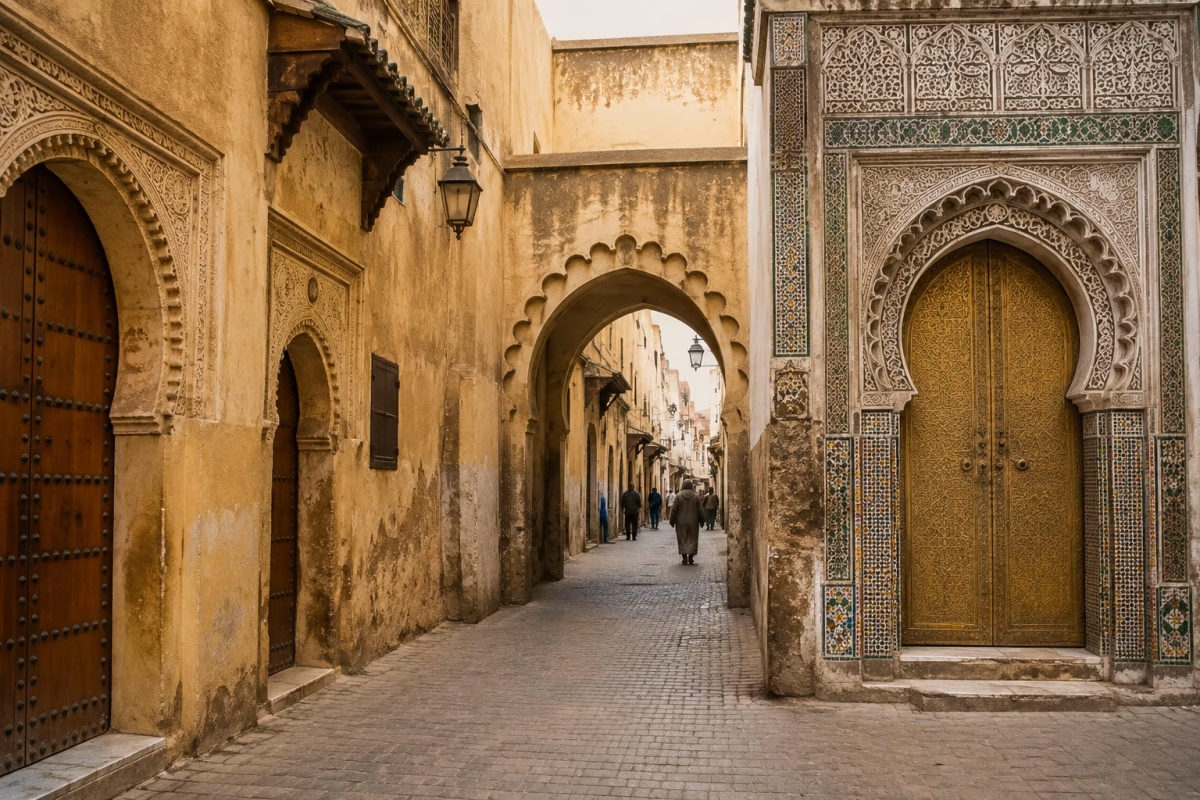
The overnight stay is also practical because it breaks up the long return journey from southeastern Morocco.
Day 5: Meknes, Volubilis and Tangier
The final day combines historical heritage with the return to northern Morocco.
After breakfast, the itinerary heads toward Volubilis.
Volubilis
Volubilis is an ancient Roman archaeological site located in northern Morocco.
The stop offers a completely different type of historical experience from the medinas of Fes and Meknes.
Travelers interested in archaeology and ancient history may find Volubilis particularly valuable because it adds another historical period to the journey.
The itinerary allows Volubilis to be optional, which can be useful depending on your interests and final-day schedule.
If you want to visit the site, confirm in advance how much time is available and how the stop affects your arrival in Tangier.
Returning to Tangier
After the historical stop, the journey continues toward Tangier through northern Moroccan landscapes, villages and agricultural areas.
The final transfer can be arranged toward your accommodation, airport or port depending on the tour arrangements.
Because the final day involves both sightseeing and a substantial road journey, travelers with a flight or ferry connection should confirm the expected arrival window rather than relying on an approximate schedule.
How Much Driving Should You Expect?
One of the most important considerations when choosing a 5 Days desert tour from Tangier is the amount of road travel.
The route covers a large part of Morocco in only five days. This means that transportation is an important component of the experience.
Day 3 is particularly demanding because it connects Fes with Merzouga while passing through Ifrane, Azrou, Midelt, the Ziz Valley and Erfoud before the camel trek.
The route is therefore best understood as a cross-country Morocco itinerary with sightseeing stops, rather than a relaxed five-day stay.
Before booking, ask the tour provider:
- What time does the vehicle leave each morning?
- How long are the planned sightseeing stops?
- Which stops are short photo breaks?
- Where are lunch stops scheduled?
- What is the expected arrival time in Merzouga?
- How long is the camel trek?
- What time does the return journey from Merzouga begin?
- What is the expected arrival window in Tangier?
Exact timings can change depending on traffic, road conditions, stops and the operator’s schedule, so current details should be confirmed before departure.
Transportation on a Tangier to Merzouga Tour
The quality of the transportation arrangement can significantly affect a multi-day Morocco tour.
Before booking, confirm whether the tour is private or shared and what type of vehicle is being used.
A private journey can offer greater flexibility over stops and pacing, while a shared tour may follow a more fixed schedule.
Important questions include:
- Is transportation private or shared?
- Is the driver also the guide?
- How much luggage can the vehicle accommodate?
- Are airport and port pickups available?
- Is hotel pickup included?
- Where does the final Tangier drop-off take place?
- What happens if the itinerary changes because of road conditions?
These questions are more useful than simply asking whether “transportation is included,” because the practical experience can vary considerably depending on the arrangement.
Accommodation on the 5-Day Route
The itinerary includes several different accommodation environments:
- Chefchaouen accommodation.
- Fes accommodation.
- Merzouga desert camp.
- Meknes riad.
Each type provides a different experience.
The Chefchaouen and Fes stays place travelers near historic urban environments, while the desert camp provides the Sahara experience and the Meknes riad returns the journey to traditional Moroccan accommodation.
Before booking, confirm:
- Accommodation category.
- Private or shared rooms.
- Bathroom arrangements.
- Breakfast inclusions.
- Desert camp facilities.
- Room configuration.
- Whether accommodation can change based on availability.
This is particularly important for travelers who have specific comfort requirements.
What Is Included in the Tour?
The itinerary clearly describes several experiences and accommodation components, but the exact inclusions can vary depending on the tour operator.
The route includes or describes:
- Initial pickup in Tangier.
- Sightseeing in Tetouan.
- Chefchaouen visit and overnight stay.
- Guided Fes city tour.
- Middle Atlas route.
- Merzouga camel trek.
- Desert camp overnight stay.
- Dinner and traditional music at the desert camp.
- Rissani and Tafilalet route.
- Meknes overnight stay.
- Breakfast at the Meknes riad.
- Return transfer toward Tangier.
However, travelers should not assume that every possible expense is included.
Confirm these details before booking
Ask about:
- Lunches.
- Drinks.
- Entrance fees.
- Additional local guides.
- Personal expenses.
- Optional activities.
- Travel insurance.
- Special accommodation requirements.
The safest approach is to request a complete list of inclusions and exclusions before paying for the tour.
What Should You Pack?
Because this journey crosses several different environments, packing only for the Sahara is not enough.
A practical packing list can include:
- Comfortable walking shoes.
- Lightweight clothing suitable for city exploration.
- Layers for changing temperatures.
- Sun protection.
- Personal toiletries.
- Necessary medication.
- A small day bag.
- Camera or smartphone.
- Chargers and power accessories.
- Luggage that is easy to move between accommodations.
The most useful approach is to pack for cities, mountains and desert conditions, rather than treating this as a single-environment trip.
Best Time for a Tangier to Merzouga Desert Tour
The ideal period depends on the type of experience you want and the conditions during your travel dates.
Because this itinerary combines northern Morocco, mountain areas and the Sahara, conditions can vary significantly between regions.
Rather than relying on one fixed “best month,” consider the priorities of your trip.
If your main goal is the Sahara, pay particular attention to expected conditions around Merzouga.
If your priority is walking through medinas and historic cities, consider how comfortable you are with longer sightseeing periods outdoors.
If you are particularly sensitive to weather or road conditions, ask the tour provider how seasonal conditions can affect the itinerary.
Current weather and road information should be checked close to the travel date because conditions can change.
Common Mistakes to Avoid
Choosing the itinerary only because it reaches Merzouga
The desert is a major highlight, but reaching Merzouga requires substantial travel.
If you want a relaxing Sahara holiday, a longer desert itinerary may be better.
Assuming every destination receives the same amount of time
Chefchaouen, Fes, Merzouga and Meknes have different roles in the itinerary.
Some locations receive dedicated sightseeing time, while others are primarily route stops.
Always ask how much time is planned at each destination.
Assuming every desert camp is the same
Accommodation standards vary.
Ask for clear information about tents, bathrooms, meals and the overall camp setup.
Ignoring the return journey
The journey does not end when you reach Merzouga.
The route still includes Rissani, the return toward northern Morocco, Meknes, possible Volubilis sightseeing and the final trip to Tangier.
Booking a flight or ferry immediately after the scheduled arrival
Even when an itinerary provides an expected arrival time, road travel can be affected by conditions outside the tour operator’s control.
If you have an important international flight or ferry connection, allow an appropriate buffer rather than relying on a tightly connected schedule.
The Main Experiences Along the Route
The strength of this itinerary comes from the contrast between its destinations.
Chefchaouen
Chefchaouen provides the visual highlight of northern Morocco, with its blue medina and mountain setting.
Fes
Fes contributes cultural and historical depth through its medina, traditional crafts and guided city experience.
Middle Atlas
Ifrane, Azrou and the cedar forest introduce mountains, forests and wildlife.
Ziz Valley
The Ziz Valley demonstrates the dramatic geographic transition toward southeastern Morocco.
Merzouga
Merzouga provides the central Sahara experience, including Erg Chebbi, camel trekking and desert camping.
Meknes
Meknes adds another historic Moroccan city to the return route.
Volubilis
Volubilis introduces Roman archaeological heritage before the journey returns to Tangier.
Together, these destinations make the itinerary much broader than a simple desert excursion.
How This Tour Compares With Other Morocco Desert Tours
Travelers often compare a 5 Days desert tour from Tangier with tours starting in other Moroccan cities.
The departure city makes a major difference to the route.
Tours From Marrakech
Tours From Marrakech are among the most common options for travelers who want to combine the High Atlas, Ait Ben Haddou and the Sahara.
Popular formats include a 2 Days desert tour from Marrakech to Zagora, a 3 Days desert tour from Marrakech to Merzouga, and a 4 Days desert tour from Marrakech to Merzouga.
Longer options such as a 6 Days desert tour from Marrakech to Merzouga allow more time for additional destinations and a slower pace.
Travelers may also find a 3 Days desert tour from Marrakech to Fes or a 4 Days desert tour from Marrakech to Fes if they want to combine the desert with an imperial city.
Tours From Fes
Tours From Fes are particularly convenient for travelers who want to reach Merzouga without beginning in northern Morocco.
Common options include a 2 Days desert tour from Fes to Merzouga and a 3 Days desert tour from Fes to Merzouga.
Travelers who want to finish in Marrakech can also consider a 3 Days desert tour from Fes to Marrakech, 4 Days desert tour from Fes to Marrakech, 5 Days desert tour from Fes to Marrakech, or 6 Days desert tour from Fes to Marrakech.
Compared with a Tangier departure, a Fes departure can reduce the amount of northern-city travel if Chefchaouen and Tangier are not priorities.
Tours From Casablanca
Tours From Casablanca are useful for travelers arriving through Morocco’s largest international gateway and wanting to connect the Atlantic coast with the interior.
Available formats can include a 5 Days desert tour from Casablanca, as well as longer 6 Days desert tour from Casablanca, 7 Days desert tour from Casablanca, 8 Days desert tour from Casablanca, 9 Days desert tour from Casablanca and 10 Days desert tour from Casablanca itineraries.
The longer formats can provide more flexibility for combining Casablanca, imperial cities, the Atlas region and the Sahara.
Tours From Agadir
Travelers based in southern Morocco can also consider Tours from Agadir.
One route format is a 6 Days Tour from Agadir to the Desert Via Marrakech, which combines the southern Atlantic region with Marrakech and the desert.
This can make sense for travelers who want to experience Marrakech as part of a larger desert journey rather than starting in northern Morocco.
Tours From Rabat
Tours from Rabat can be useful for travelers already exploring Morocco’s capital and the Atlantic coast.
A route such as an itinirary 5days desert tour from rabat to marrakech can be considered when the goal is to connect Rabat with Marrakech and desert destinations.
However, the exact route and sequence should always be checked because similar tour titles can describe substantially different itineraries.
Why Choose Tangier as Your Starting Point?
Tangier is particularly interesting as a departure city because it provides access to northern Morocco before the route heads toward Fes and the Sahara.
A traveler choosing Tours From Tangier can combine several destinations that are not always included in standard Marrakech-based desert itineraries.
This is especially valuable if Chefchaouen and northern Morocco are already on your travel wish list.
The main trade-off is distance. Starting farther north means the journey to Merzouga is longer than starting from Fes.
For that reason, the five-day Tangier format works best for travelers who want to see northern Morocco and the Sahara within the same trip.
Is Five Days Enough?
Five days can be enough to experience the major highlights of this route, but it is important to define what “enough” means.
If your goal is to see a broad selection of Morocco, experience Chefchaouen and Fes, cross the Middle Atlas, reach Merzouga and sleep in the Sahara, then five days creates a strong overview.
If your goal is to explore every destination deeply, five days will feel fast.
The difference is therefore not whether the itinerary is possible, but how much time you want to spend at each destination.
A longer itinerary can provide additional flexibility for rest, longer city visits, extra desert nights or alternative routes.
Should You Spend Two Nights in Merzouga?
For travelers who want the Sahara to be the central part of their journey, 2 nights in Merzouga desert and camel trekking can provide a more relaxed alternative to a one-night desert experience.
An additional night can reduce the feeling of immediately arriving at the desert and leaving again.
It can also allow more time to experience the Merzouga area instead of treating the desert entirely as an overnight stop.
However, adding nights in Merzouga generally requires a longer overall itinerary if you still want to include the northern destinations and return to Tangier.
This is one of the clearest trade-offs between a compact five-day journey and a slower Morocco itinerary.
A Practical Decision Framework
Choose this five-day Tangier itinerary if your priority is to combine northern Morocco, Fes and Merzouga within a relatively short trip.
Consider a longer itinerary if you want more time for:
- Fes exploration.
- Chefchaouen.
- Desert activities.
- Two nights around Merzouga.
- Relaxed travel days.
- Additional historic destinations.
- More flexibility for photography and independent exploration.
Consider a different departure city if northern Morocco is not important to you.
For example, travelers primarily interested in Fes and the Sahara may find Tours From Fes more efficient, while travelers already in Marrakech may prefer Tours From Marrakech.
The best departure city is therefore determined by the places you actually want to visit, not simply by which tour has the shortest title or lowest advertised duration.
What Makes This Five-Day Route Special?
The strongest feature of the itinerary is the progression of landscapes.
The journey begins with northern Moroccan cities and the Rif Mountains.
It then moves into the historic urban environment of Fes.
From Fes, the route crosses mountain forests and highland landscapes before entering southeastern Morocco.
The Ziz Valley introduces another visual transition.
Finally, Merzouga opens into the vast Sahara landscape of Erg Chebbi.
The return journey then changes the experience again by introducing Rissani, Meknes and Volubilis.
This sequence gives the trip a strong sense of geographic progression.
You are not simply visiting disconnected destinations. You are traveling through several of Morocco’s major environmental and cultural zones.
Final Planning Checklist
Before booking a 5 Days desert tour from Tangier, confirm the following.
Route
- Tangier pickup location.
- Tetouan sightseeing.
- Chefchaouen visit.
- Fes city tour.
- Middle Atlas route.
- Merzouga desert experience.
- Camel trekking.
- Desert camp overnight.
- Rissani and Tafilalet route.
- Meknes overnight.
- Volubilis option.
- Final Tangier transfer.
Transportation
- Private or shared vehicle.
- Vehicle type.
- Daily departure times.
- Approximate travel periods.
- Luggage capacity.
- Airport or port pickup.
- Final Tangier drop-off.
Accommodation
- Chefchaouen accommodation.
- Fes accommodation.
- Merzouga desert camp.
- Meknes riad.
- Private or shared rooms.
- Bathroom arrangements.
- Breakfast inclusions.
Desert Experience
- Camel trek.
- Camp category.
- Dinner.
- Traditional music.
- Morning arrangements.
- Alternative transport if camel riding is not suitable.
Costs and Inclusions
- Breakfast.
- Lunches.
- Dinners.
- Entrance fees.
- Local guides.
- Personal expenses.
- Optional activities.
- Travel insurance.
Schedule
- Departure times.
- Sightseeing duration.
- Longest driving days.
- Expected arrival in Merzouga.
- Desert camp timing.
- Expected arrival in Tangier.
- Effect of optional Volubilis visit.
Final Thoughts on the 5 Days Desert Tour from Tangier
A 5 Days desert tour from Tangier is best understood as a compact cross-country Morocco itinerary rather than a simple transfer from Tangier to the Sahara.
Its main strength is variety. Within five days, the journey can connect Tangier, Tetouan, Chefchaouen, Fes, the Middle Atlas, Midelt, the Ziz Valley, Erfoud, Merzouga, Rissani, Meknes and Volubilis.
The desert remains the emotional centerpiece, especially through the combination of camel trekking, Erg Chebbi dunes, a Merzouga desert camp, dinner and traditional music.
But the journey gains much of its character from everything surrounding the Sahara. Chefchaouen introduces northern Moroccan architecture, Fes provides cultural and historical depth, the Middle Atlas creates a dramatic landscape transition, and Meknes and Volubilis add further historical context on the return.
The main consideration is pace. Five days is enough for a broad and memorable overview, but the itinerary covers a large geographic area. Travelers should therefore choose this format because they value variety and efficient exploration, not because they expect a slow-paced holiday.
If your priority is to experience Tangier to Merzouga, visit Chefchaouen and Fes, cross the Atlas and spend a night in the Sahara within one organized journey, this five-day route offers a practical framework.
If you prefer more time in the desert, consider extending the itinerary to include 2 nights in Merzouga desert and camel trekking. If you are already based elsewhere in Morocco, compare the route with Tours From Fes, Tours From Marrakech, Tours From Casablanca, Tours from Agadir or Tours from Rabat to determine which starting point best matches your overall Morocco itinerary.
Before confirming the trip, always verify the current transportation arrangements, accommodation, desert camp facilities, meals, included activities and final arrival schedule. The more clearly these details are established in advance, the easier it is to choose a five-day Morocco tour that matches your travel style and expectations.